Abstract. In order to use water resources efficiently and sustainably, it is very important to determine the impact of climate change on water resources accurately. For this purpose, reference evapotranspiration (ET0), crop evapotranspiration (ETc), irrigation water requirement (IWR) was determined with CROPWAT 8.0 using climate data obtained from HadGEM2-ES and MPI-ESM-MR model reference period (1971-2000) and future short (2031-2040) and long (2051-2060) periods RCP4.5 and RCP8.5 scenario outputs for sunflower in TR21 Thrace Region. Afterwards, the results obtained for the reference period and future periods are compared and evaluated. As a result, it is estimated that ET0 values will increase by 6.3%-13.2% and 4.9%-26.9% in the upcoming short (2031-2040) and long (2051-2060) periods, respectively, compared to the reference period (1971-2000), and by 6.0%-13.0% and 3.4%-17.9% in the sunflower development period. ETc is predicted to increase by 3.5%-12.0% in the short term and 2.4%-16.9% in the long term, compared to the reference period, and IWR values are predicted to vary between 0.3%-19.9% in the short term and -7.0%-20.8% in the long term. In the TR21 Thrace Region, it is estimated that the annual average ET0, ET0 during the sunflower development period, and sunflower water consumption will be negatively affected by climate change in the future periods (2031-2040, 2051-2060) and will increase compared to the reference period. It is anticipated that there will be increases and decreases in irrigation water demand; however, the general trend is towards an increase, and it has been determined that these increases will be greater than the decreases. This study will guide producers, managers, and decision makers in carrying out adaptation activities against the impact of climate change on water resources.
Keywords: CROPWAT 8.0, Crop water requirement, Reference evapotranspiration, Irrigation water requirement, Helianthus annuus L., Penman-Monteith.
The impact of climate change on water resources is primarily due to changes in climate parameters, specifically changes in precipitation regimes and temperatures. Changes in temperatures affect crop evapotranspiration (ETc) rate, cloud characteristics, soil moisture, storm intensity, and snowfall and melting regimes. These changes occurring due to climate change can have very important consequences for the water cycle and water resources (RTMAFGDWM, 2020).
According to projections from various climate models based on different greenhouse gas emission scenarios, significant decreases in precipitation, water resources, and flows are expected over the next century, particularly for North Africa, the Mediterranean Basin, Türkiye, and the Middle East. There may be significant increases in surface air temperatures and evapotranspiration as well as extreme weather and climate events (Türkeş et al., 2013). Climate change reduces the availability and accessibility of water resources, increasing vulnerability and causing negative impacts on water-dependent sectors. Since Türkiye is in a semi-arid climate zone, it is of great importance to improve water quality, increase the amount of usable water, and ensure the sustainability of conservation and utilization balance (RTMEUCC, 2024).
Evaporation is an important component of the hydrological cycle, and knowing the water losses caused by evaporation within the scope of the hydrological cycle is an important issue in terms of water management and planning (Azlak, 2015). Evapotranspiration (ET) or ETc, one of the most important parameters of the hydrological cycle, is used extensively in the project design of irrigation systems, preparation of irrigation programs, and hydrological studies. Therefore, accurate estimation of ETc is important for water balance, environmental protection, design of irrigation systems, and water resources management. Insufficient and excessive irrigation in crop production negatively affects the soil, product, agricultural production input, and yield. In order to obtain quality and high-yield products, the most appropriate irrigation program must be created by taking into account plant water consumption (Bircan and Kızıl, 2021). Especially in Türkiye, which has an economy based on agriculture and where 70-75% of the water demand is generated by the agricultural sector, the management and planning of water is very important (Azlak, 2015).
Sunflower is one of the important agricultural products grown in Türkiye. Sunflower oil is the most common oilseed plant in Türkiye, as its share holds around 80-85% in vegetable oil consumption and 40% of its oil content. It should be increased to reduce the vegetable oil deficit. In Türkiye, sunflower oil is mainly produced in the Thrace Region and Konya. According to TURKSTAT (Turkish Statistical Institute) data, Tekirdağ (20.5%), Edirne (13.2%), Kırklareli (11.2%), Konya (10.5%), and Adana (8%) account for 63.5% of the oil sunflower cultivation area as of the 2021/2022 season. In terms of production, Tekirdağ ranks first with 18%, Konya 14.7%, Edirne 12.9%, Kırklareli 10.2%, and Adana 9.1% (Bozer, 2023). Therefore, the TR21 Thrace Region is a very potential region in terms of sunflower cultivation.
Some studies are using various models and Representative Concentration Pathways (RCP) scenarios for climate change predictions in Türkiye. These studies were conducted using HadGEM2-ES and MPI-ESM-MR models and RCP4.5 and RCP8.5 scenarios. These models were run using the RegCM4.3 Regional Climate Model, and outputs were produced with the RCP4.5 and RCP8.5 scenarios at ten-kilometer resolution (Akçakaya et al., 2013; Akçakaya et al., 2015; GDWM, 2016). Many studies have been conducted using these outputs. One of these is the “Impacts of Climate Change and Adaptation Strategies in TR21 Thrace Region” project carried out in the TR21 Thrace Region (Anonymous, 2019). With these outputs, climate predictions specific to the TR21 Thrace Region were made in ten-year periods, and evaluations were made for the region. At the same time, Deveci (2025) determined a great agreement between the monthly average temperature values obtained from the HadGEM2-ES, MPI-ESM-MR models, RCP4.5 and RCP8.5 scenario results, and the observed meteorological data, especially for the temperature data in the TR21 Thrace Region in the period 1915-2024. Therefore, these models and scenarios were preferred because they demonstrated consistency in the region and could be evaluated together with the studies conducted.
Several studies have been conducted around the world to determine the impact of climate change on reference evapotranspiration (ET0) (Chaouche et al., 2010; Irmak et al., 2012; Fan et al., 2016; Dinpashoh et al., 2019; Ma et al., 2019; Sun et al., 2020; Li et al., 2022; Reta et al., 2024; Youssef et al., 2024). In Türkiye, reassessment of existing irrigation projects with FAO (Food and Agriculture Organization of the United Nations ) criteria (Koç and Güner, 2005), the effect of climate change on seasonal plant water consumption (Bayramoğlu E., 2013), the effect of climate change on evaporation (Azlak, 2015), establishing an irrigation water program for eggplant (Kartal et al., 2019), determining the spatial variation of ET0 (Yıldırım et al., 2019), development of an android-based application to be used in ET0 calculation (Bircan and Kızıl, 2021), assessment of crop water requirements by using CROPWAT for sustainable water resources management in agriculture (Aydın-Kandemir and Yıldız, 2022), determining the impact of climate change on maize irrigation water requirements (Şen, 2023; Yetik and Şen, 2023) have been studied. In addition, studies have been carried out on determining the impact of climate change on ET0 in the Thrace Region (Deveci, 2015; Yıldırım, 2023; Yıldırım and Erdem, 2023; Deveci and Konukcu, 2024). These studies although the modeled region is the same, the reference period climate data, climate models’ prediction scenarios, and predicted futures are different, and thus, different calculation methods were used. In addition to the previous studies conducted in the Thrace Region, these studies have diversified by predicting ET0 in the future years with different climate models. In addition, the most important point that distinguishes this study from other studies is that, for the first time, the irrigation requirements of sunflower have been estimated for the future periods.
This study aims to estimate the change of ET0, ETc, and IWR in the future short (2031-2040) and long (2051-2060) periods compared to the reference period (1971-2000) by using HadGEM2-ES and MPI-ESM-MR model RCP4.5 and RCP8.5 scenario outputs for sunflower with CROPWAT 8.0 in TR21 Thrace Region. With the results obtained, the effect of climate change on irrigation water requirements in sunflower cultivation can be evaluated. Therefore, this study will guide producers, managers, and decision makers to carry out adaptation activities against the effects of climate change on water resources.
2. MATERIAL AND METHODS
2.1. Material
2.1.1. Study area
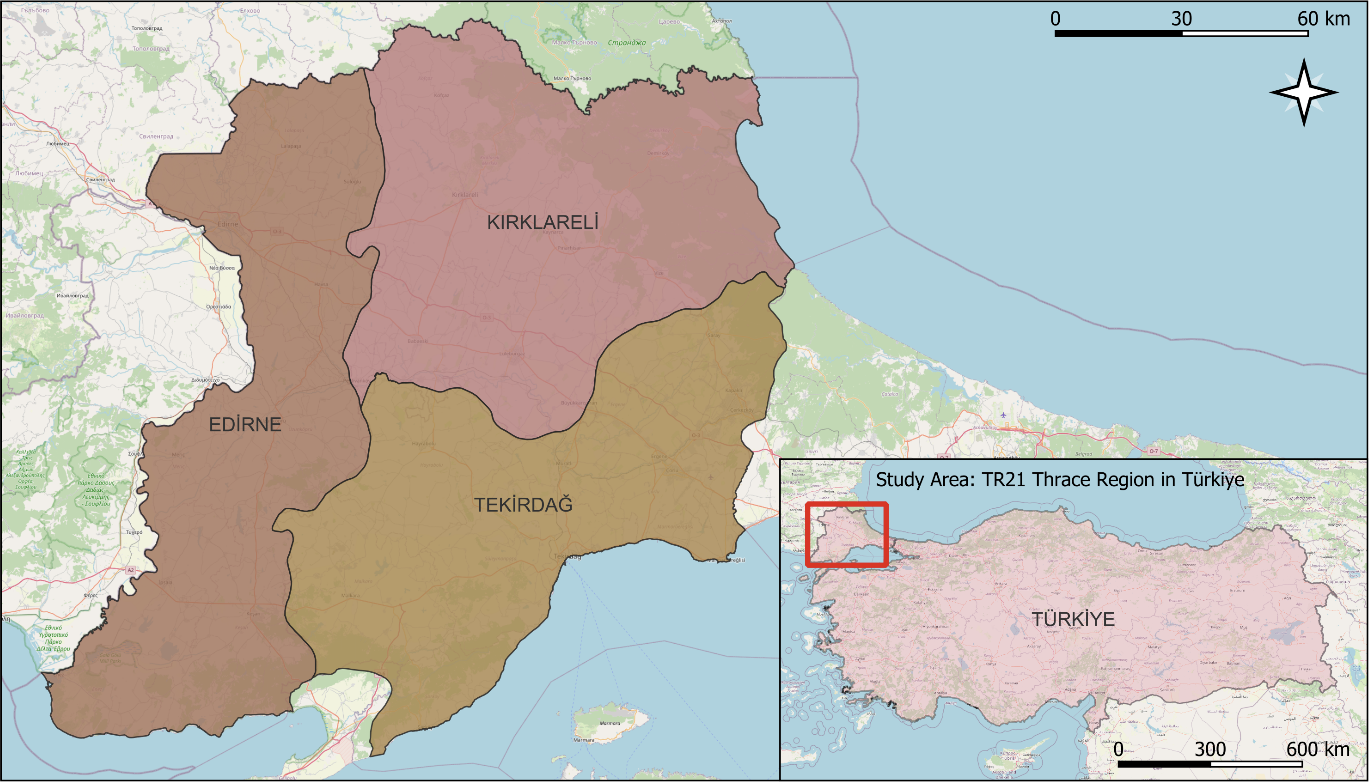
The research area is located in Türkiye. TR21 Thrace Region covers the provinces of Tekirdağ (TR211), Edirne (TR212), and Kırklareli (TR213). The surface area of the region (excluding lakes) is 18.665 km2. Agricultural activities are intensively carried out in the region, and the proportion of land suitable for agriculture is quite high (TDA, 2010). The study area is shown in Figure 1.
Figure 1. Geographical location of the study area (TR21 Thrace Region).
2.1.2. Climate of the research area
A continental climate prevails in the inner part of the TR21 Thrace Region. The Marmara Sea coastline is under the influence of the Black Sea-Mediterranean climate. Winters are cool and rainy; summers are dry and hot. Long-term climate data of the research area are shown in Table 1. Accordingly, the province with the highest (19.8oC) and lowest (8.5oC) average temperature is Edirne. The highest total annual rainfall (601 mm) is also seen in Edirne.
The climate data used in the study include the climate data produced within the scope of the “Impact of Climate Change on Water Resources Project” carried out by the General Directorate of Water Management of the Ministry of Forestry and Water Affairs of the Republic of Türkiye and obtained to be used in the “Climate Change Impacts and Adaptation Strategies in the TR21 Thrace Region” project (GDWM, 2016; Anonymous, 2019). Within the scope of the “Impact of Climate Change on Water Resources Project”, the RegCM4.3 regional climate model was run simultaneously for Türkiye using the outputs of three global models (HadGEM2-ES, MPI-ESM-MR, CNRM-CM5.1) selected from the CMIP5 (Coupled Model Intercomparison Project Phase 5) archive. Since the resolutions of the climate and earth system models reach hundreds of kilometers and there are uncertainties in these model outputs, dynamic downscaling was performed with the RegCM4.3 Regional Climate Model within the scope of the project. The data used in this study are the outputs of the HadGEM2-ES and MPI-ESM-MR models and the RCP4.5 and RCP8.5 scenarios. The period covers the reference period (1971-2000), short (2031-2040), and long (2051-2060) period data.
2.1.4. Plant data
The crop parameters of sunflower were defined in detail for each growth stage to ensure accurate estimation of irrigation water requirements within the CROPWAT 8.0 model. These include growth period durations, crop coefficients (Kc), rooting depth, critical depletion fraction, and yield response factor (ky). The values were obtained from national agricultural guidelines and FAO sources and applied at the provincial level, allowing for the modeling of regional variability. The crop characteristics of sunflower are presented in Table 2.
Table 2. The crop characteristics of sunflower for Edirne, Kırklareli, and Tekirdağ.
Crop Parameters
Edirne
Kırklareli
Tekirdağ
Reference
Crop Development Period (days)
Initial
25
25
25
(RTMAFGDARP, 2017)
Development
30
30
30
(RTMAFGDARP, 2017)
Mid-Season
60
60
60
(RTMAFGDARP, 2017)
Late-Season
30
30
30
(RTMAFGDARP, 2017)
Crop Coefficient (Kc)
Initial
0.38
0.36
0.40
(RTMAFGDARP, 2017)
Mid-Season
1.14
1.12
1.11
(RTMAFGDARP, 2017)
Late-Season
0.34
0.32
1.31
(RTMAFGDARP, 2017)
Rooting Depth (m)
Initial
0.30
0.30
0.30
(FAO, 2024a)
Late-Season
0.90
0.90
0.90
(Erdem, 2001)
Sowing Date
15 April
15 April
15 April
(RTMAFGDARP, 2017)
Vegetation Duration (days)
145
145
145
(RTMAFGDARP, 2017)
Critical Depletion (Fraction)
0.5
0.5
0.5
(Steduto et al., 2012)
Yield Response Factor (ky)
1.0
1.0
1.0
(Steduto et al., 2012)
RTMAFGDARP: Republic of Türkiye Ministry of Environment, Urbanization and Climate Change.
2.1.5. Soil data
In the study, a single soil type defined as “medium texture” in the CROPWAT 8.0 database was used to represent average field conditions across the TR21 Region. The selected soil profile reflects loamy soil properties, with moderate water holding capacity and infiltration characteristics, as shown in Table 3.
Table 3. Soil properties.
Soil Parameters
Values
Total available soil moisture (mm/m)
140.0
Maximum rain infiltration rate (mm/day)
40.0
Maximum rooting depth (cm)
900
Initial soil moisture depletion (%)
0
2.1.6. CROPWAT 8.0 model
CROPWAT 8.0 is developed by the Land and Water Development Division of FAO. It can be downloaded and used free of charge (FAO, 2024b). CROPWAT helps to calculate ET0, ETc, IWR, and scheme water demand. It develops irrigation schedules under various management conditions. Furthermore, it estimates rainfed production and drought effects. The program calculates ET0 using the FAO Penman-Monteith method (Allen et al., 1998).
CROPWAT 8.0 program works using the following climate, plant, and soil parameters:
– Climate parameters (minimum temperature (oC), maximum temperature (oC), humidity (%), rainfall (mm), wind speed (m/sec), sunshine hours (hours),
– Crop parameters (planting date (days), crop development period (days), crop coefficient (Kc), rooting depth (m), critical depletion, yield response factor (ky),
– Soil parameters (total available soil moisture (mm/m), maximum rain infiltration rate (mm/day), maximum rooting depth (cm), initial soil moisture depletion (%).
2.2. Method
In this study, monthly climate data for the reference period (1971-2000) and two future projection periods (2031-2040 and 2051-2060) were separately entered into the CROPWAT 8.0 software. The data were derived from the HadGEM2-ES and MPI-ESM-MR models under RCP4.5 and RCP8.5 scenarios. This approach allowed the evaluation of potential changes in sunflower irrigation water requirements under varying climate scenarios and time frames.
In CROPWAT 8.0, ET0 was calculated using the FAO Penman-Monteith method. Based on ET0 and Kc values defined for each growth stage of sunflower, ETc was estimated. Effective rainfall (Peff) was calculated using the USDA (United States Department of Agriculture) method, and IWR was determined by subtracting Peff from ETc (Deveci et al., 2025).
2. RESULTS
In this study, annual average ET0, ET0 during the sunflower growing period, ETc, and IWR were evaluated. For these calculations, climate data obtained from the HadGEM2-ES and MPI-ESM-MR models, reference period (1971-2000) and future short (2031-2040) and long (2051-2060) periods under the RCP4.5 and RCP8.5 scenarios were used.
2.1. Evaluation of annual average ET0
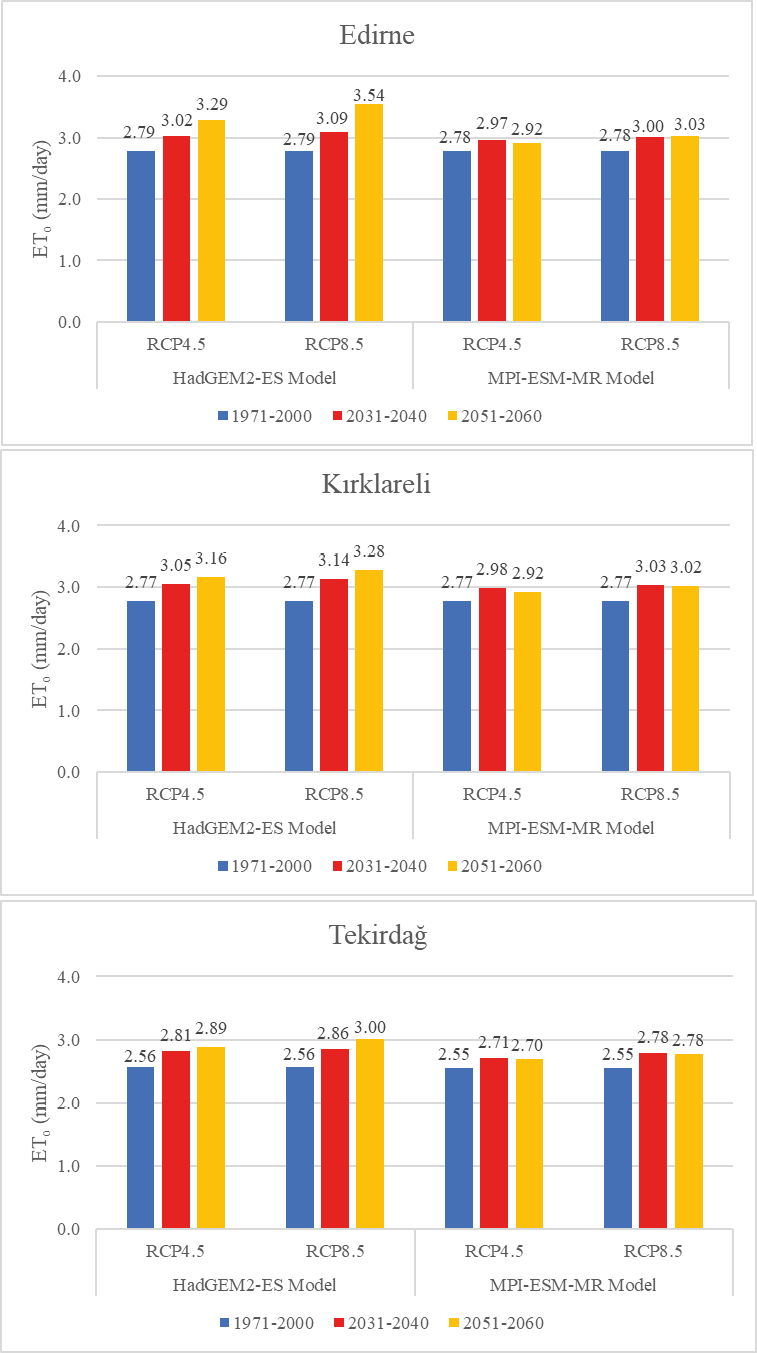
ET0 is predicted to increase in three locations in both models and both scenarios compared to the reference period (Edirne (4.9%-26.9%), Kırklareli (5.3%-18.3%), and Tekirdağ (5.7%-17.5%)) (Table 4).
Table 4. HadGEM2-ES and MPI-ESM-MR model annual average ET0 values change for the reference period (1971-2000) and future periods (2031-2040, 2051-2060) in sunflower.
Location
Future Periods
Deviation from the reference period (1971-2000) (%)
HadGEM2-ES Model
MPI-ESM-MR Model
RCP4.5
RCP8.5
RCP4.5
RCP8.5
Edirne
2031-2040
8.3
10.9
6.7
7.9
2051-2060
18.0
26.9
4.9
9.0
Kırklareli
2031-2040
10.2
13.2
7.7
9.5
2051-2060
14.0
18.3
5.3
9.0
Tekirdağ
2031-2040
9.9
11.7
6.3
9.1
2051-2060
12.9
17.5
5.7
8.9
Figure 2. Daily average ET0 values (mm/day) for the reference (1971-2000) and future periods (2031-2040, 2051-2060) according to HadGEM2-ES and MPI-ESM-MR climate models.
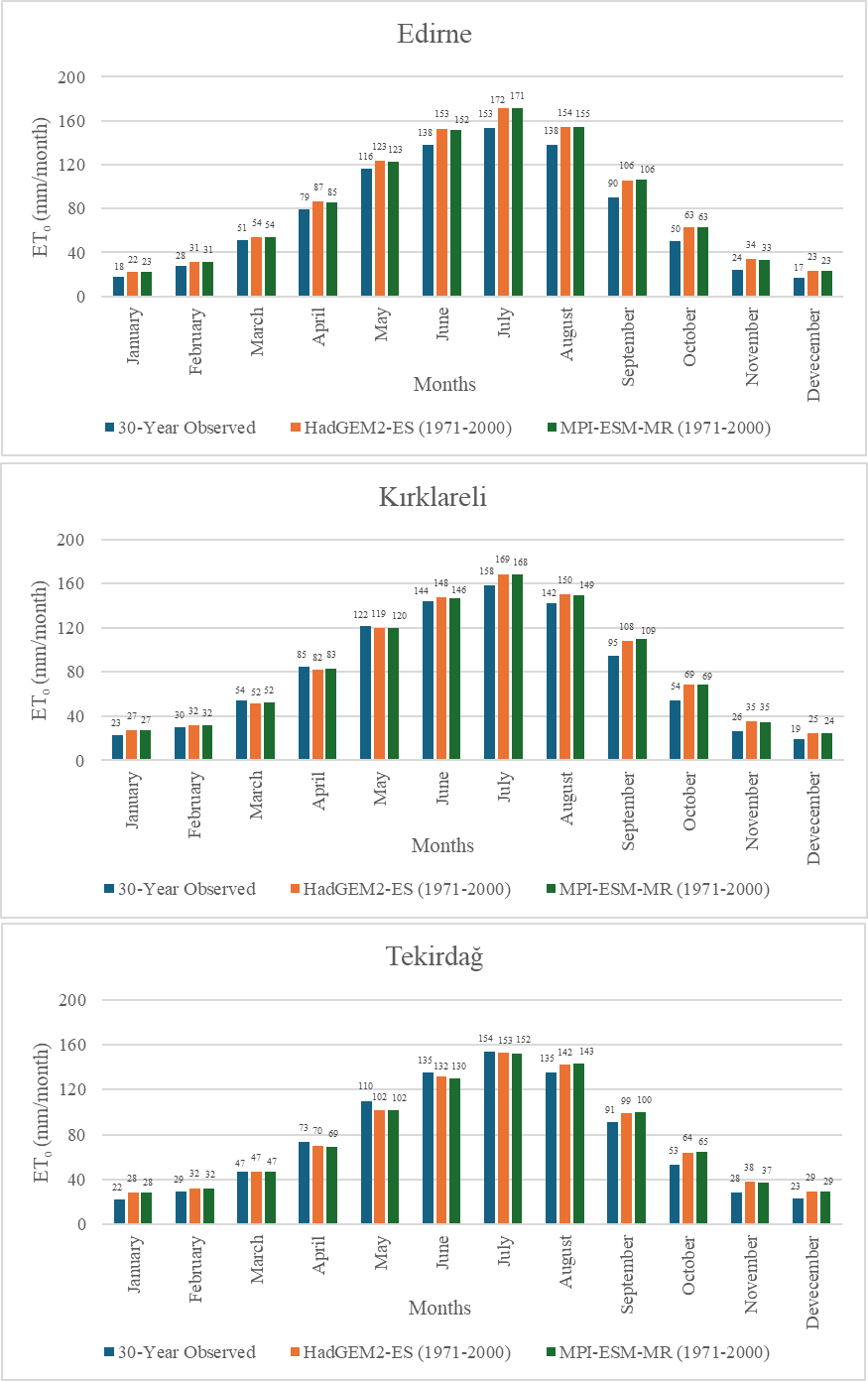
In this part of the study, the accuracy of HadGEM2-ES and MPI-ESM-MR model monthly ET0 values covering 30 years for the reference period 1971-2000 was evaluated. For this purpose, the ET0 values obtained from the reference period climate data were compared with the ET0 values calculated and published monthly for each province in Türkiye covering a long period of 30 years in the “Guide to Plant Water Consumption of Irrigated Crops in Türkiye” published by the General Directorate of Agricultural Research and Policies and State Hydraulic Works (RTMAFGDARP, 2017). In this guide, ET0 values were prepared by using quality-controlled 30-year daily climate data from 259 meteorological stations of the General Directorate of Meteorology throughout Türkiye. Parameters such as minimum, maximum, and average temperature, relative humidity, insolation time, insolation intensity, precipitation, and wind speed were taken into account in the preparation of the guide, missing data were completed by Allen et al. (1998) and solar radiation data were organized according to ASCE-EWRI (2004) principles. In this framework, monthly average ET0 values covering 30 years for Edirne, Tekirdağ, and Kırklareli provinces were obtained from the guide and compared with the values calculated with 30-year reference data of HadGEM2-ES and MPI-ESM-MR models, and a high level of agreement was found (Figure 3). For the correlation coefficients, it was calculated as 0.995 for Edirne, 0.987 for Kırklareli, and 0.987 for Tekirdağ in the HadGEM2-ES model. In the MPI-ESM-MR model, it was calculated as 0.995 for Edirne, 0.994 for Kırklareli, and 0.984 for Tekirdağ. In addition, the difference between the annual total ET0 values was 13.2% (Edirne), 6.6% (Kırklareli), and 4.1% (Tekirdağ) in the HadGEM2-ES model, while it was 13.0% (Edirne), 6.6% (Kırklareli), and 3.8% (Tekirdağ) in the MPI-ESM-MR model. These findings show that both model reference data used in the study overlap to a large extent with the 30-year ET0 values calculated with measured climate data for the region and that the data obtained from the models can be used reliably.
Figure 3. Comparison of monthly ET0 values obtained from 30-year observed data with HadGEM2-ES and MPI-ESM-MR model reference data.
2.2. Evaluation of ET0 during the sunflower vegetation period
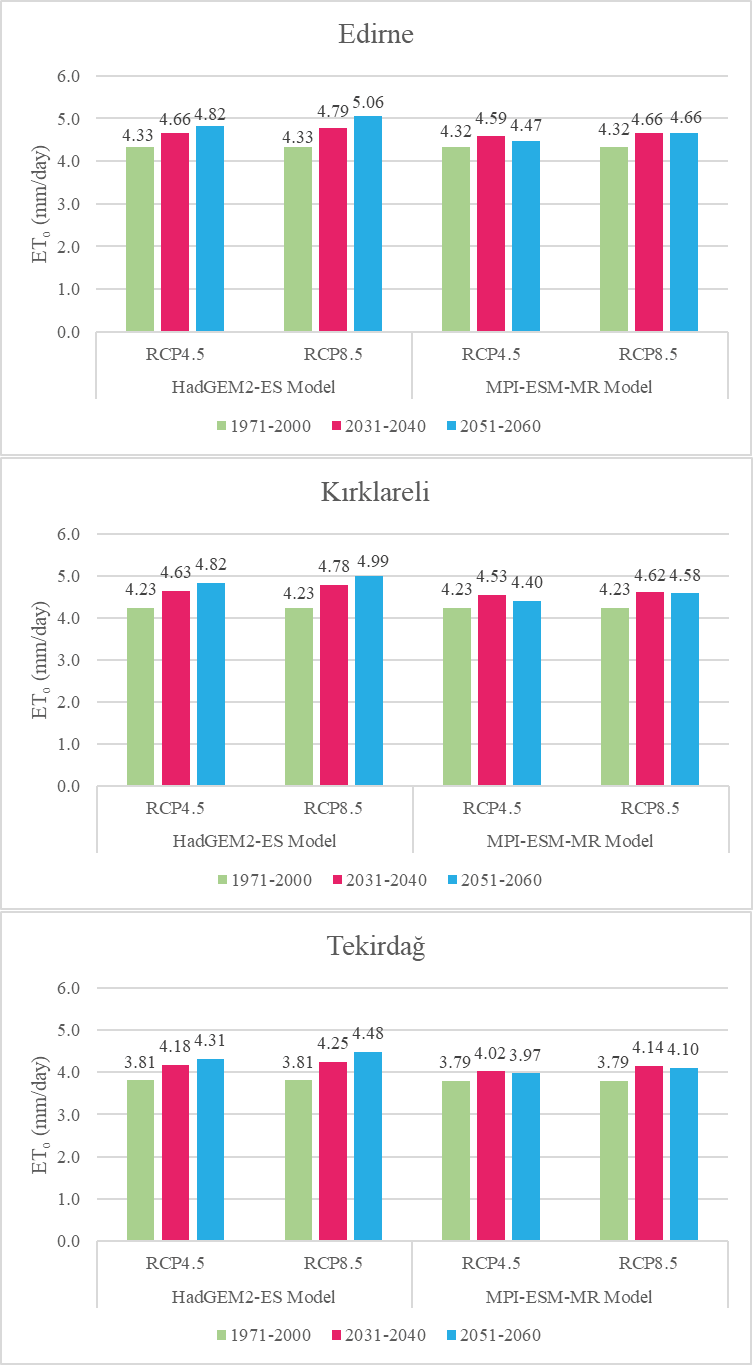
In general, ET0 (during the sunflower vegetation period) in the TR21 Thrace Region is projected to increase in both models, scenarios, and periods compared to the reference period (Table 5).
Table 5. HadGEM2-ES and MPI-ESM-MR model ET0 values change for the reference period (1971-2000) and future periods (2031-2040, 2051-2060) in the sunflower vegetation period.
Location
Future Periods
Deviation from the reference period (1971-2000) (%)
HadGEM2-ES Model
MPI-ESM-MR Model
RCP4.5
RCP8.5
RCP4.5
RCP8.5
Edirne
2031-2040
7.5
10.5
6.1
7.8
2051-2060
11.3
16.7
3.4
7.7
Kırklareli
2031-2040
9.5
13.0
7.1
9.1
2051-2060
14.1
17.9
3.9
8.1
Tekirdağ
2031-2040
9.8
11.6
6.0
9.2
2051-2060
13.2
17.6
4.7
8.1
Figure 4. HadGEM2-ES and MPI-ESM-MR model ET0 values for the reference period (1971-2000) and future periods (2031-2040, 2051-2060) for sunflower in the vegetation period.
2.3. Evaluation of ETc of (Sunflower)
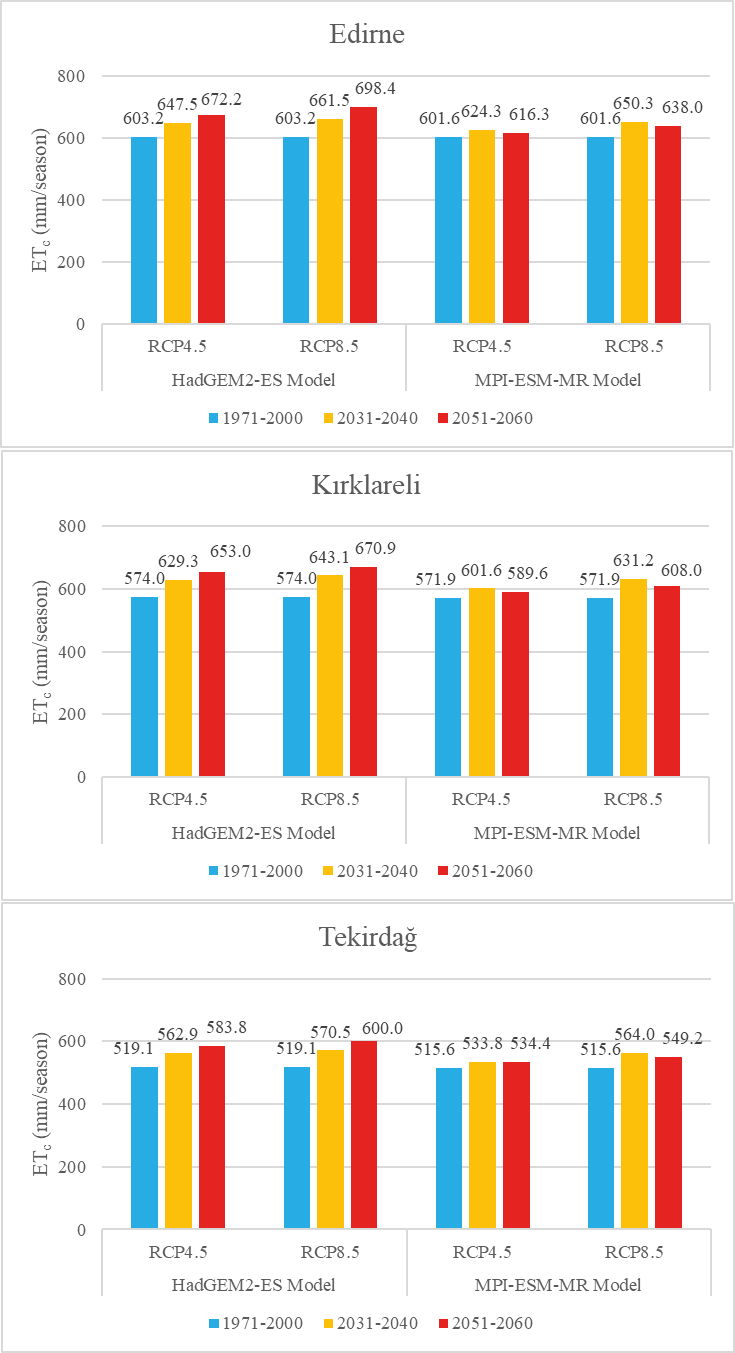
ETc in the TR21 Thrace Region is predicted to increase in both models, both scenarios, and both periods compared to the reference period (Table 6).
Table 6. HadGEM2-ES and MPI-ESM-MR model ETc values change for the reference period (1971-2000) and future periods (2031-2040, 2051-2060) in the sunflower vegetation period.
Location
Future Periods
Deviation from the reference period (1971-2000) (%)
HadGEM2-ES Model
MPI-ESM-MR Model
RCP4.5
RCP8.5
RCP4.5
RCP8.5
Edirne
2031-2040
7.3
9.7
3.8
8.1
2051-2060
11.4
15.8
2.4
6.0
Kırklareli
2031-2040
9.6
12.0
5.2
10.4
2051-2060
13.8
16.9
3.1
6.3
Tekirdağ
2031-2040
8.4
9.9
3.5
9.4
2051-2060
12.5
15.6
3.6
6.5
Figure 5. HadGEM2-ES and MPI-ESM-MR model ETc values for the reference period (1971-2000) and future periods (2031-2040, 2051-2060) for sunflower.
2.4. Evaluation of IWR
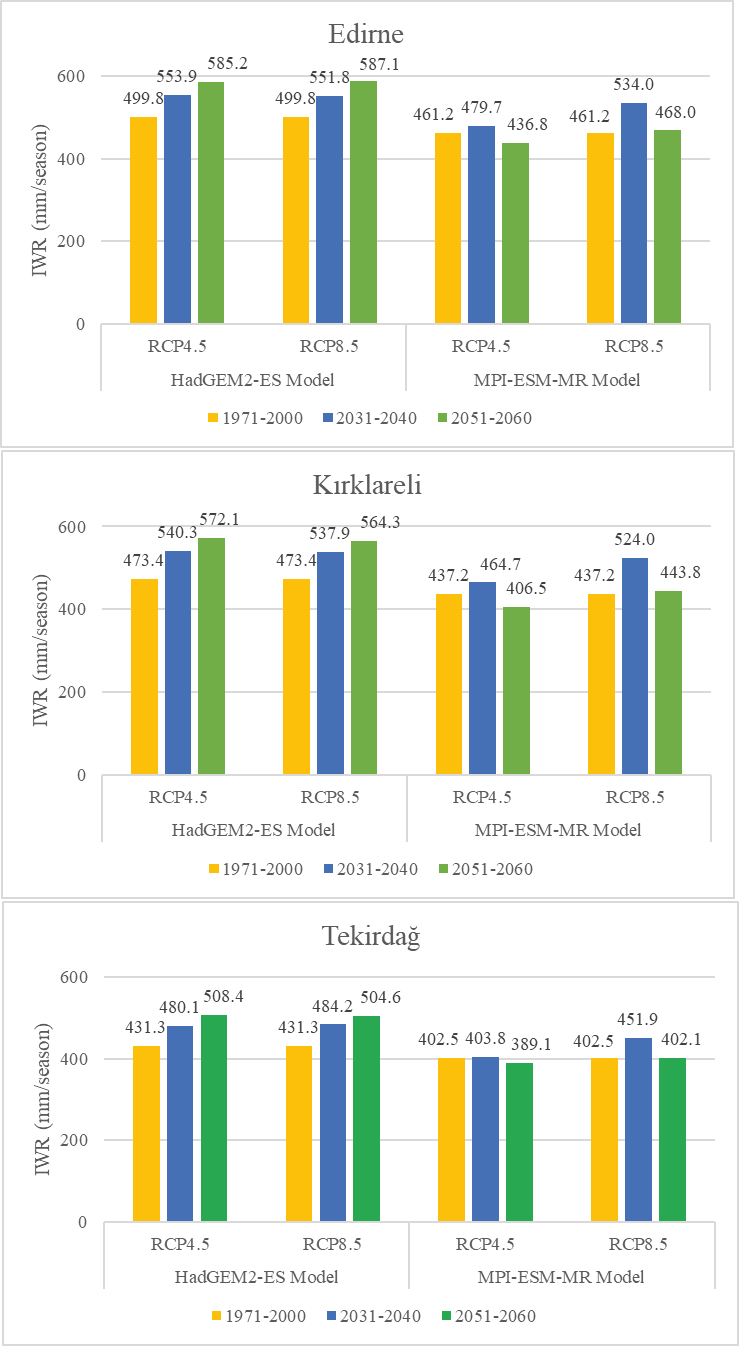
IWR is predicted to increase in the period 2051-2060 in Edirne, Kırklareli, and Tekirdağ in the RCP4.5 scenario in the MPI-ESM-MR model. In addition, in Tekirdağ, the same model predicted a decrease in the RCP8.5 scenario for the same period and an increase in all other forecasts (Table 7).
Table 7. HadGEM2-ES and MPI-ESM-MR model IWR values change for the reference period.
Location
Future Periods
Deviation from the reference period (1971-2000) (%)
HadGEM2-ES Model
MPI-ESM-MR Model
RCP4.5
RCP8.5
RCP4.5
RCP8.5
Edirne
2031-2040
10.8
10.4
4.0
15.8
2051-2060
17.1
17.5
-5.3
1.5
Kırklareli
2031-2040
14.1
13.6
6.3
19.9
2051-2060
20.8
19.2
-7.0
1.5
Tekirdağ
2031-2040
11.3
12.3
0.3
12.3
2051-2060
17.9
17.0
-3.3
-0.1
Figure 6. HadGEM2-ES and MPI-ESM-MR model IWR values for the reference period (1971-2000) and future periods (2031-2040, 2051-2060) for sunflower.
3.5. General evaluation
The general evaluation of the results is presented in Table 8. Accordingly, it is predicted that the annual average ET0 will vary between 2.70-3.54 mm/day in the TR21 Thrace Region, and ET0 will vary between 3.97-5.06 mm/day during the sunflower growing period. The change in annual average ET0 compared to the reference period was estimated to be 4.9%-26.9%, and the change in ET0 compared to the reference period during the sunflower growing period was estimated to be 3.4%-17.9%. ETc for sunflower was predicted to vary between 533.8-698.4 mm/season in the modeled periods, and this change was predicted to be 2.4%-16.9% compared to the reference period. IWR is predicted to vary between 389.1-587.1 mm/season, and this change is predicted to be -7.0%-20.8% in both models, both scenarios, and both periods compared to the reference period.
Table 8. General evaluation of ET0, ET0 (sunflower vegetation period), ETc (sunflower), and IWR.
Values
Deviation from the reference period
(1971-2000) (%)
Max.
Min.
Max.
Min.
ET0
(annual average)
Edirne HadGEM2-ES RCP8.5 2051-2060 3.54 mm/day
Tekirdağ MPI-ESM-MR RCP8.5 2051-2060 2.70 mm/day
Edirne HadGEM2-ES RCP8.5 2051-2060 %26.9
Edirne MPI-ESM-MR RCP8.5 2051-2060 %4.9
ET0 (sunflower vegetation period)
Edirne HadGEM2-ES RCP8.5 2051-2060 5.06 mm/day
Tekirdağ MPI-ESM-MR RCP8.5 2051-2060 3.97 mm/day
Kırklareli HadGEM2-ES RCP8.5 2051-2060 %17.9
Edirne MPI-ESM-MR RCP8.5 2051-2060 %3.4
ETc (sunflower)
Edirne HadGEM2-ES RCP8.5 2051-2060 698.4 mm/season
In TR21 Thrace Region, annual average ET0, ET0 during the sunflower growing period, and sunflower evapotranspiration (ETc) are estimated to be negatively affected by climate change and to increase compared to the reference period. It is estimated that ET0 values will increase by 6.3%-13.2% and 4.9%-26.9% in the upcoming short (2031-2040) and long (2051-2060) periods, respectively, compared to the reference period (1971-2000), and by 6.0%-13.0% and 3.4%-17.9% in the sunflower development period, respectively. ETc is predicted to increase by 3.5%-12.0% in the short term and 2.4%-16.9% in the long term, compared to the reference period. It is anticipated that there will be increases and decreases in irrigation water demand. Because it has been determined that IWR values will vary between 0.3%-19.9% in the short term and -7.0%-20.8% in the long term. However, the general trend is towards an increase, and it has been determined that these increases will be greater than the decreases.
3. DISCUSSION
In the “Impacts of Climate Change and Adaptation Strategies in TR21 Thrace Region” project carried out in the region, climate assessments were made in ten-year periods (Anonymous, 2019). Accordingly, it is predicted that there will be temperature increases in both models and scenarios in Edirne, Kırklareli, and Tekirdağ in the short (2031-2040) and long (2051-2060) periods, and periodic increases and decreases in precipitation. Possible temperature increases are projected to vary between 1.08oC and 2.90oC, while the change in precipitation is projected to be between -13.70 and 11.46 mm (Hanedar et al., 2019). In this study, it is predicted that the annual average ET0 will vary between 2.70 and 3.54 mm/day in the TR21 Thrace Region, and ET0 will vary between 3.97 and 5.06 mm/day during the sunflower growing period. The change in annual average ET0 compared to the reference period is estimated to be 4.9%-26.9%, and the change in ET0 compared to the reference period during the sunflower growing period is estimated to be 3.4%-17.9%. In another study conducted in the region, Deveci and Konukcu (2024) evaluated the reference (1961-1990) and future A2 SRES scenario outputs of the ECHAM5 General Circulation Model in Pınarbaşı Basin in the Thrace Region and predicted an average temperature increase of 0.12°C between 2016-2025, 1.43°C between 2046-2055 and 3.05°C between 2076-2085 compared to the model reference years (1970-1990). It is also predicted that total precipitation will increase by 60 mm between 2016-2025 (9%), total precipitation will decrease by 91 mm between 2046-2055 (14%), and total precipitation will decrease by 78 mm between 2076-2085 (12%). In 2012, an experiment was conducted and it was estimated that while the average ET0 values were 3.0 mm/day in 2012, they would increase to 3.2 mm/day (+7%) between 2016-2025, 3.6 mm/day (+20%) between 2046-2055 and 4.0 mm/day (+33%) between 2076-2085. In addition, when compared with the reference period (1970-1990), ET0 values change by 9% and 21% in the medium 2046-2055 and long 2076-2085 terms, respectively. Even though the reference periods, future periods, forecast models, and scenarios used in these studies are different, the results of this research support each other. In addition, De Oliveira et al. (2021) stated that the ET0 value, which is an important component in calculating the water requirement of plants, can be affected by climate change. Arabi and Candoğan (2022) estimated ET0 values for 18 meteorological stations in the Marmara Region using monthly climate data between 1990 and 2020 and found statistically significant increasing trends in ET0 values in Edirne, Kırklareli, and Tekirdağ. These results and the results found in this study are in the same direction. When other studies conducted in Türkiye are evaluated, it is estimated that ET0 increases with temperature increases in the Çukurova Region (Şen, 2023; Yetik and Şen, 2023). In the study conducted by Anlı (2014) for the Southeastern Anatolia region, the change in ET0 values over time was investigated, and it was determined that there were significant increasing trends in ET0 values. Selçuk (2021) calculated the monthly ET0 values for the years 1959-2019 using the FAO Penman-Monteith method, using the climate data of 17 meteorological stations within the borders of Malatya province, and revealed that increasing temperature values increased Malatya ET0 values by 3%. In the worldwide studies, Irmak et al. (2012) found that at reference (potential) evapotranspiration (ETref), precipitation, and relative humidity were significantly (P<0.05) inversely correlated, while mean temperature, maximum temperature, vapor pressure deficit, solar radiation and net radiation values had significant and positive correlations. Goyal (2004), in his study on long-term climate data for 32 years (1971-2002) in Rajasthan (India), determined that there would be a 14.8% increase in total ET with a 20% increase in temperature (maximum 8°C). As a result, all these studies are in line with the conclusion that the annual average ET0 and ET0 values during the sunflower growing period will increase with the predicted climate change in the region.
Şen et al. (2008) predicted a decrease in effective precipitation and thus in water resources in the Seyhan Basin, but an increase in plant water requirements. Although climatic factors are not the sole determinant of sunflower yield, they have significant effects on yield, and according to the results of the analysis, it was determined that temperature and humidity parameters have a significant effect on sunflower yield (Gürkan et al., 2016). In this study, sunflower ETc was predicted to vary between 533.8-698.4 mm/season during the modeled periods, and this change could be 2.4%-16.9% compared to the reference period. Together with the predicted temperature increases in the region (1.08oC-2.90oC), this situation was considered as probable. Similarly, Deveci et al. (2025) determined that ETc would increase with temperature increases in wheat and canola in the same region, even though the plants were different.
In this study, IWR was predicted to change between 389.1-587.1 mm/season, and this change was predicted to be -7.0%-20.8% in both models, both scenarios, and both periods compared to the reference period. It is predicted that there will be increases and decreases in irrigation water demand; the general trend is in the direction of increase, and proportionally, these increases will be more than the amount of decrease. In the MPI-ESM-MR model, it is estimated that there will be a decrease in Edirne (-5.3%), Kırklareli (-7%) and Tekirdağ (-3.3%) in the period 2051-2060 in the RCP4.5 scenario and also in Tekirdağ in the same model, same period RCP8.5 scenario (-0.1%), and an increase in all other forecasts (Table 7). Looking at the 3 situations that draw attention as a decrease, it is estimated that the temperature will increase by 1.36oC in Edirne, 1.34oC in Tekirdağ and 1.34oC in Kırklareli, and precipitation will increase by 5.71 mm in Edirne, 9.75 mm in Tekirdağ and 11.46 mm in Kırklareli (Hanedar et al., 2019). Therefore, it is seen that there is a close change in temperatures. Increases in precipitation were observed during this period. Precipitation is more decisive. Therefore, the decrease in IWR with increases in precipitation was considered normal. In fact, it is interpreted that these precipitations probably occurred during the development period of the plant, and the need for irrigation water is likely to decrease.
The calculated IWR values represent the net water requirement of the crop, independent of the irrigation method and application efficiency. However, the efficiency of irrigation systems used in practice can significantly affect the actual amount of water applied in the field. For instance, while the application efficiency of traditional surface irrigation methods is typically around 30–40%, it may reach 55–70% in furrow irrigation and 90–95% in drip irrigation systems (Qureshi et al., 2015; Yara, 2024). Therefore, even if similar IWR values are estimated for different regions, the total volume of water that needs to be applied in the field can vary depending on the irrigation method used. Similar findings in the literature have emphasized that irrigation methods play a critical role in meeting increased or altered water demands under the influence of climate change (Lakhiar et al., 2024).
Overall, the findings of this study are largely consistent with both regional and national literature, indicating that climate change directly affects irrigation water requirements, and the magnitude of this effect varies depending on local climatic conditions, precipitation patterns, and the irrigation techniques employed.
4. CONCLUSIONS
In this study, the effect of climate change on the irrigation water requirement of sunflower in the TR21 Thrace Region was modeled. As a result, in this study, annual average ET0, ET0 during the sunflower growth period, and sunflower evapotranspiration in the TR21 Thrace Region were predicted to be negatively affected by climate change and to increase compared to the reference period. Decreases in IWR are predicted only in the MPI-ESM-MR Model, it is estimated that there will be a decrease in Edirne (-5.3%), Kırklareli (-7%) and Tekirdağ (-3.3%) in the period 2051-2060 in the RCP4.5 scenario and also in Tekirdağ in the same model, same period RCP8.5 scenario (-0.1%), and an increase in all other forecasts and the general trend is upward. Increases in IWR are expected to proportionally outweigh decreases. Accurately determining the impact of climate change on ET0, ETc, and IWR is crucial for designing irrigation systems and preparing irrigation programs. These results suggest that the currently widespread rainfed sunflower cultivation in the TR21 Thrace Region may become insufficient under future climate conditions, potentially necessitating the use of supplementary irrigation. Therefore, the efficient, planned, and sustainable management of regional water resources is of great importance. In this context, the findings may serve as a guide for producers, irrigation planners, and policymakers in developing adaptation strategies to climate change.
Akçakaya A., Sümer U.M., Demircan M., Demir Ö., Atay H., Eskioğlu O., Gürkan H., Yazıcı B., Kocatürk A., Şensoy S., Bölük E., Arabacı H., Açar Y., EKİCİ M., Yağan S., Çukurçayır F., 2015. Türkiye Climate Projections with New Scenarios and Climate Change TR2015-CC. https://www.mgm.gov.tr/FILES/iklim/iklim-degisikligi-projeksiyon2015.pdf
Allen R.G., Pereira L.S., Raes D., Smith M., 1998. Crop evapotranspiration-Guidelines for computing crop water requirements-FAO Irrigation and drainage paper 56. Rome, Italy, 300 (9): D05109.
Anlı A.S., 2014. Temporal variation of reference evapotranspiration (ET0) in Southeastern Anatolia Region and meteorological drought analysis through RDI (Reconnaissance Drought Index) method. Journal of Agricultural Sciences, 20 (2014): 248-260. https://doi.org/10.15832/tbd.82527
Arabi C., Candoğan B.N., 2022. Spatial and temporal change of reference crop evapotranspiration in Marmara Region. International Journal of Agriculture and Wildlife Science, 8 (2): 268-281. https://doi.org/10.24180/ijaws.1080376
ASCE-EWRI 2004. The ASCE Standardized Reference Evapotranspiration Equation. Technical Committee report to the Environmental and Water Resources Institute of the American Society of Civil Engineers from the Task Committee on Standardization of Reference Evapotranspiration. 173 p.
Aydın-Kandemir F., Yıldız D., 2022. Assessment of crop water requirements by using cropwat for sustainable water resources management in agriculture (Akhisar-Manisa, Turkey). International Journal of Water Management and Diplomacy, 1 (5): 5-20.
Azlak M., 2015. Possible Effects of Climate Change on Evaporation. MSc. Thesis. İstanbul Technical University, İstanbul.
Bayramoğlu E., 2013. Evapotranspiration seasonal effects of climate change in Trabzon: the Penman-Monteith Method. Kastamonu University Journal of Forestry Faculty, 13 (2): 300-306.
Bircan N., Kızıl Ü., 2021. Development of an android-based application to be used in the calculation of reference evapotranspiration. COMU Journal of Agriculture Faculty, 9 (2): 247-257. https://doi.org/10.33202/comuagri.970742
Chaouche K., Neppel L., Dieulin C., Pujol N., Ladouche B., Martin E., Salas D., Caballero Y., 2010. Analyses of precipitation, temperature and evapotranspiration in a French Mediterranean region in the context of climate change. Comptes Rendus. Géoscience, 342 (3): 234-243. https://doi.org/10.1016/j.crte.2010.02.001
De Oliveira R.G., Valle Júnior L.C.G., da Silva J.B., Espíndola D.A.L.F., Lopes R.D., Nogueira J.S., Curado L.F.A., Rodrigues T.R., 2021. Temporal trend changes in reference evapotranspiration contrasting different land uses in southern Amazon basin. Agricultural water management, 250: 106815. https://doi.org/10.1016/j.agwat.2021.106815
Deveci H., 2015. Modelling the Effect of Climate Change on Surface Water Resources, Soil Water Profile and Plant Yield in Thrace Region. Ph.D. Thesis. Namık Kemal University, Türkiye.
Deveci H., 2025.Determination of the accuracy of average temperature values obtained from different climate models in TR21 Thrace Region. In: 9th International Conference on Global Practice of Multidisciplinary Scientific Studies, Havana, Cuba. https://www.izdas.org/_files/ugd/614b1f_c300ca6abbdf45db9aed0060cde06741.pdf
Deveci H., Konukcu F., 2024. Modeling the Effect of Climate Change on Evapotranspiration in the Thrace Region. Atmosphere, 15 (10): 1188. https://doi.org/10.3390/atmos15101188
Deveci H., Önler B., Erdem T., 2025. Modeling the effects of climate change on the irrigation water requirements of wheat and canola in the TR21 Thrace Region using CROPWAT 8.0. Frontiers in Sustainable Food Systems, 9. https://doi.org/10.3389/fsufs.2025.1563048
Dinpashoh Y., Jahanbakhsh-Asl S., Rasouli A., Foroughi M., Singh V., 2019. Impact of climate change on potential evapotranspiration (case study: west and NW of Iran). Theoretical and Applied Climatology, 136: 185-201. https://doi.org/10.1007/s00704-018-2462-0
Fan J., Wu L., Zhang F., Xiang Y., Zheng J., 2016. Climate change effects on reference crop evapotranspiration across different climatic zones of China during 1956–2015. Journal of Hydrology, 542: 923-937. https://doi.org/10.1016/j.jhydrol.2016.09.060
Goyal R., 2004. Sensitivity of evapotranspiration to global warming: a case study of arid zone of Rajasthan (India). Agricultural water management, 69 (1): 1-11. https://doi.org/10.1016/j.agwat.2004.03.014
Gürkan H., Bayraktar N., Bulut H., Koçak N., Eskioğlu O., Demircan M., 2016.Analyzing of the potential impact of climate change on yield of sunflower (Helianthus annuus L.): example of the Marmara Region. In: XII. National Agricultural Economics Congress, Isparta, Türkiye.
Hanedar A., Ferat Ç., Erdem G., Konukcu F., Altürk B., Albut S., 2019. TR21 Region Climate Assessment: Current Situation and Projections, in: F. Konukcu, et al. (Eds.), Effects of Climate Change and Adaptation Strategies in TR21 Thrace Region, Tekirdağ Namık Kemal University, Tekirdağ. pp. 1-22.
Irmak S., Kabenge I., Skaggs K.E., Mutiibwa D., 2012. Trend and magnitude of changes in climate variables and reference evapotranspiration over 116-yr period in the Platte River Basin, central Nebraska–USA. Journal of Hydrology, 420: 228-244. https://doi.org/10.1016/j.jhydrol.2011.12.006
Kartal S., Çolak Y.B., Gönen E., Özfidaner M., 2019. Using CROPWAT program for irrigation scheduling of eggplant in Tarsus Region. Turkish Journal of Agricultural and Natural Sciences, 6 (2): 332-342.
Koç A., Güner Ü., 2005. Reassessment of existing irrigation projects with fao criteria: TavasPlain example. Dumlupınar University Science Institute Journal, 9: 93-106.
Lakhiar I.A., Yan H., Zhang C., Wang G., He B., Hao B., Han Y., Wang B., Bao R., Syed T.N., Chauhdary J.N., Rakibuzzaman M., 2024. A Review of Precision Irrigation Water-Saving Technology under Changing Climate for Enhancing Water Use Efficiency, Crop Yield, and Environmental Footprints. Agriculture, 14 (7): 1141.
Li Y., Qin Y., Rong P., 2022. Evolution of potential evapotranspiration and its sensitivity to climate change based on the Thornthwaite, Hargreaves, and Penman–Monteith equation in environmental sensitive areas of China. Atmospheric Research, 273: 106178. https://doi.org/10.1016/j.atmosres.2022.106178
Ma Z., Yan N., Wu B., Stein A., Zhu W., Zeng H., 2019. Variation in actual evapotranspiration following changes in climate and vegetation cover during an ecological restoration period (2000-2015) in the Loess Plateau, China. Science of the Total Environment, 689: 534-545. https://doi.org/10.1016/j.scitotenv.2019.06.155
Qureshi A.L., Gadehi M.A., Mahessar A.A., Memon N.A., Soomro A.G., Memon A.H., 2015. Effect of drip and furrow irrigation systems on sunflower yield and water use efficiency in dry area of Pakistan. American-Eurasian Journal of Agricultural & Environmental Sciences, 15 (10): 1947-1952. https://doi.org/10.5829/idosi.aejaes.2015.15.10.12795
Reta B.G., Hatiye S.D., Finsa M.M., 2024. Crop water requirement and irrigation scheduling under climate change scenario, and optimal cropland allocation in lower kulfo catchment. Heliyon, 10 (10): e31332. https://doi.org/10.1016/j.heliyon.2024.e31332
Selçuk E.B., 2021. Evaluation of the Impact of Global Warming and Climate Change on Temperature and Reference Evapotranspiration: the Case of Malatya Province. MSc. Thesis. İnönü University, Türkiye.
Steduto P., Hsiao T.C., Fereres E., Raes D., 2012. Crop yield response to water. FAO Rome, Italy.
Sun J., Wang G., Sun X., Lin S., Hu Z., Huang K., 2020. Elevation‐dependent changes in reference evapotranspiration due to climate change. Hydrological Processes, 34 (26): 5580-5594. https://doi.org/10.1002/hyp.13978
Şen B., 2023. Determining the changing irrigation demands of maize production in the cukurova plain under climate change scenarios with the CROPWAT model. Water, 15 (24): 4215. https://doi.org/10.3390/w15244215
Şen B., Topcu S., Giorgi F., Xunqiang B., Kanıt E., Dalkılıç T., 2008.Climate Change and Agricultural Water in Seyhan Basin Effects on Use. In: TMMOB 2nd Water Policy Congress, Ankara, Türkiye.
Yetik A.K., Şen B., 2023. Evaluation of the impacts of climate change on irrigation requirements of maize by CROPWAT Model. Gesunde Pflanzen, 75 (4): 1297-1305. https://doi.org/10.1007/s10343-022-00751-x
Yıldırım E.A., 2023. Investigation of climate change in Tekirdag conditions on reference evapotranspiration. MSc. Thesis. Tekirdağ Namık Kemal University, Türkiye.
Yıldırım E.A., Erdem T., 2023. Investigation of the effect of climate change on reference evapotranspiration in Tekirdağ, Türkiye. Revista de Climatología, 23: 35-45. https://doi.org/10.59427/rcli/2023/v23.35-45
Yıldırım Y.E., Taş İ., Özaydın K.A., 2019. Determination of spatial variation of reference evapotranspiration case study of Gediz Basin. Soil Water Journal: 153-161. https://doi.org/10.21657/topraksu.655582
Youssef M.A., Peters R.T., El-Shirbeny M., Abd-ElGawad A.M., Rashad Y.M., Hafez M., Arafa Y., 2024. Enhancing irrigation water management based on ET0 prediction using machine learning to mitigate climate change. Cogent Food & Agriculture, 10 (1): 1-17. https://doi.org/10.1080/23311932.2024.2348697