Modeling the impact of climate change on the climatic suitability of some horticultural crops
Tekirdağ Namık Kemal University, Vocational School of Technical Sciences, Tekirdağ, Türkiye
Email: huzurdeveci@nku.edu.tr
Abstract. Summer and winter vegetable cultivation is widely practiced in Türkiye. Therefore, when unexpected situations such as wars and epidemics occur with climate change, it is important to accurately determine how the cultivation areas of vegetables, which have an important place in the food sector and agriculture, will change due to climate change. This study aimed to estimate how climate change would affect the geographical distribution of tomato, watermelon, onion, and cucumber to be planted in Türkiye in the future by using a climatic suitability model. For this purpose, climatic suitability estimation was done using the EcoCrop module included in the DIVA-GIS program for tomato, watermelon, onion, and cucumber under the results of the HADGEM2_ES model RCP4.5 and RCP8.5 scenarios in the future period (2050s) and the reference period (1950-2000) in Türkiye. The results of the research were evaluated, and it was determined that the climatic suitability for watermelon would be positively affected, while the climatic suitability for tomato, onion, and cucumber would be negatively affected in Türkiye. It is estimated that in the 2050s, climatically suitable areas for tomato (13–16%), onion (3–7%), and cucumber (4–12%) cultivation will decrease, while suitable areas for watermelon (26–35%) cultivation will increase. While it is estimated that Türkiye will fall further behind in tomato and onion production in the world rankings in the 2050s, the rankings for watermelon and cucumber will not change. The changes in production due to the decrease in climatic suitability for tomatoes and cucumbers and the increase in climatic suitability for watermelon will impact the economy. It is recommended that production be based on these estimates to maintain the diversity of vegetables on our tables in the future and to ensure the sustainability of these products.
Keywords: EcoCrop Model, DIVA-GIS, Türkiye, suitability, sustainability.
Climate change is considered the biggest environmental disaster today, and its effects are increasing in the current period. Many studies conducted on a global and regional scale show that the adverse effects of climate change and variability on water, soil, and agricultural resources may become stronger in the future (Çaltı and Somuncu, 2019). Türkiye is among the risk group countries in terms of the effects of global warming (WBG, 2022). The negative impacts of climate change on the agricultural sector will indirectly affect the national economy. Therefore, the importance of mitigation and adaptation policies emerges once again (Temur, 2017).
Türkiye ranks fourth in the world in vegetable production (26.6 million tons), third in tomato production (13.0 million tons), second in watermelon (3.4 million tons) and cucumber (1.9 million tons) production, and sixth in onion production (2.4 million tons) (Table 1). When the data in Table 1 is evaluated, it is seen that tomato, watermelon, onion, and cucumber are among the vegetables with significant production amounts in the world. Additionally, Türkiye ranks high in the world in terms of cultivation. Therefore, it is very important to determine how vegetables, which have an important place in human nutrition, will be affected by climate change in the future.
| Vegetable Production (million tons) |
Tomato (million tons) |
Watermelon (million tons) |
Onion (million tons) |
Cucumber (million tons) |
|---|---|---|---|---|
| China (616) | China (68.2) | China (60.4) | India (31.7) | China (77.3) |
| India (145) | India (20.7) | Türkiye (3.4) | China (24.5) | Türkiye (1.9) |
| United States (27.1) | Türkiye (13.0) | India (3.3) | Egypt (3.7) | Russia (1.6) |
| Türkiye (26.6) | United States (10.2) | Algeria (2.0) | United States (2.9) | Mexico (1.1) |
| Vietnam (17.8) | Egypt (6.3) | Brazil (1.9) | Bangladesh (2.5) | Uzbekistan (0.9) |
| Nigeria (16.1) | Italy (6.1) | Russia (1.6) | Türkiye (2.4) | Ukraine (0.8) |
Climate change affects cucumber and watermelon cultivation (Oyediran et al., 2018; Melo et al., 2020; Aparna et al., 2023). Litskas et al. (2019) stated that tomato cultivation will be negatively affected by climate change in Türkiye. Biratu (2018) expects that possible changes in the context of climate change, such as increased air temperature, changes in precipitation, long-term water scarcity, etc., will have a significant impact on tomato performance, which in turn will have a serious impact on food security. Hancı and Cebeci (2015) stated that the importance of abiotic stress factors emerged distinctively with global warming and that the most important abiotic factors in onion cultivation were salinity and drought. When these and other studies investigating the effects of climate change on these plants are evaluated, it is seen that precautions should be taken to adapt these plants to climate change.
The EcoCrop model was used to determine climatic suitability in the study. Initially, the EcoCrop database was created by the Food and Agriculture Organization (FAO) as a database containing plant characteristics and crop environmental requirements for more than 2000 plants (FAO, 2023). This database was integrated into DIVA-GIS by Hijmans et al. (2001) and named EcoCrop. The reason for choosing this model is primarily its high accuracy (Jarvis et al., 2012; Ramirez-Villegas et al., 2013). In addition, it can perform suitability analysis for many plant species in large areas over a long period. It is a great advantage that it can determine climatic suitability with high accuracy with limited data and contribute to agricultural production by providing important predictions. Ignoring other environmental factors can be considered a disadvantage. However, it is possible to diversify and develop studies by integrating environmental factors into these results.
Climatic suitability has been determined for various vegetables around the world (Egbebiyi et al., 2019; Egbebiyi et al., 2020; Gardner et al., 2021; Møller et al., 2021; Zagaria et al., 2023). In Türkiye, climatic suitability has been investigated in plants such as safflower, corn, millet, canola, wheat, cotton, spinach, and sunflower (Aydın and Sarptaş, 2018; Deveci, 2023; Deveci, 2024; Şen et al., 2024). Studies on climatic suitability estimation in Türkiye are quite limited. Therefore, to reduce the negative effects of climate change, such studies should be supported and increased by conducting trials in different regions with various models, especially with strategic plants. One of the most important features that distinguishes this study from other studies is that tomato, watermelon, onion, and cucumber, the most widely cultivated vegetables in Türkiye and the world, and occupy an important place in human nutrition, were selected and evaluated for climatic suitability. In recent years, research on the effects of climate change on horticultural crops has been frequently conducted in Türkiye, including the species examined in this study. However, this study is the first to address the spatio-temporal distribution of climatic suitability for these vegetables at the Türkiye level through modeling using climate change projections. It is also very significant in terms of ensuring diversity and sustainability.
This study aims to estimate climatic suitability for tomato, watermelon, onion, and cucumber in Türkiye for the reference period (1950-2000) and future (2050s) according to the outputs of the HADGEM2_ES model RCP4.5 and RCP8.5 scenarios with the EcoCrop module in the DIVA-GIS program. In this context, the effects of temperature and precipitation, which are the most important factors for plant cultivation, on the areas where these vegetables can be planted have been tried to be revealed. When unforeseen situations arise with climate change, accurately estimating the areas where these vegetables, which have an important place in the agriculture and food sector, can be planted will guide producers and those working in this field while planning.
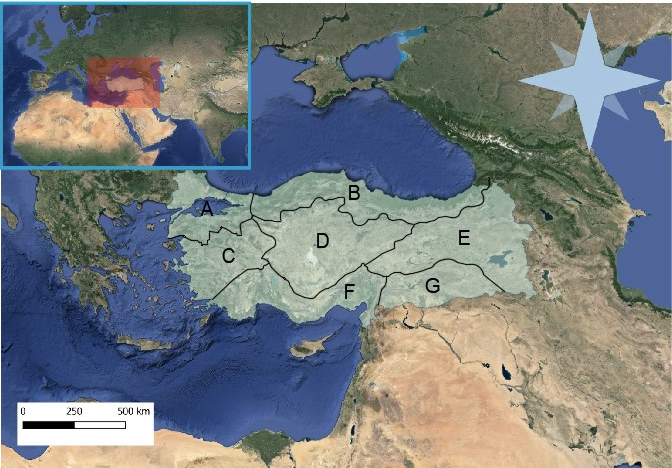
Türkiye is located between 26°-45° E longitude and in 36°-42° N latitude in the Northern Hemisphere. Its surface area is approximately 780000 km2. 3% of Türkiye’s surface area is in the European continent (Thrace) and 97% is in the Asian continent (Anatolia). Türkiye is bordered to the west by Bulgaria and Greece, to the east by Iran, Georgia, Armenia, Azerbaijan/Nahcivan, and to the south by Iraq and Syria (GDSHW, 2023). The research area and seven geographical regions in Türkiye are shown in Figure 1. According to the 2022 data of the Turkish Statistical Institute, Türkiye’s total utilized agricultural land is 38501 thousand hectares. Cereals and other plant products are 16529 thousand hectares, vegetable gardens are 718 thousand hectares, ornamental plants are 6 thousand hectares, and fruits, beverages, and spice crops are 3671 thousand hectares. While meadow and pasture lands cover an area of 14617 thousand hectares, 2960 thousand hectares of land are left fallow (TurkStat, 2024a).
2.2 Climate of the research area
Türkiye is located between the temperate zone and the subtropical zone. The fact that Türkiye is surrounded by seas on three sides, the extension of the mountains, and the diversity of landforms have led to the emergence of climate types with different characteristics. In the coastal regions of Türkiye, milder climate characteristics are observed with the effect of the seas. Continental climate characteristics are observed in the interior of Türkiye. Based on the criteria used in worldwide climate classifications, Türkiye has continental climate (Southeastern Anatolia Continental Climate, Eastern Anatolia Continental Climate, Central Anatolia Continental Climate, Thrace Continental Climate), Mediterranean climate, Marmara (transition) climate, and Black Sea climate (Atalay, 1997). According to long-term (1970-2024) climate data averages for Türkiye, average maximum temperature is 19.2 °C (TSMS, 2023a), average minimum temperature is 7.9 °C (TSMS, 2023b), average mean temperature is 13.3 °C (TSMS, 2023c), average annual total precipitation is 593.3 mm (TSMS, 2023d), average relative humidity is 63.5% (TSMS, 2023e).
2.3 Climate model and scenarios used in the research
HadGEM2 is a second-generation global model developed by the Hadley Center, a research organization of the United Kingdom Meteorological Service, and stands for Global Environment Model Version 2. There are many versions of this model with similar physical properties but in different configurations. The HadGEM2 series includes a coupled atmosphere-ocean configuration and an Earth system configuration that includes dynamic vegetation, ocean biology, and atmospheric chemistry (Collins et al., 2011; Gündoğan et al., 2017), while the HadGEM2-ES version includes terrestrial carbon cycle, chemistry, ocean biochemistry, ocean and sea ice, troposphere, aerosols, land surface, and hydrology configuration(Martin et al., 2011).
In 2007, the Intergovernmental Panel on Climate Change (IPCC) Experts Meeting in the Netherlands defined four Representative Concentration Pathways (RCPs) for characteristics and radiative forcing levels and pathways. RCP4.5 used in the study is the medium stabilization path and assumes that radiative forcing stabilizes at 4.5 W/m2 between 2100 and 2150. The other scenario in the study, RCP8.5, is the high radiative forcing and concentration path (Moss et al., 2008; Gündoğan et al., 2017).
2.4 Crop suitability model: EcoCrop
EcoCrop within DIVA-GIS only considers monthly precipitation and temperature to determine plant suitability (Hijmans et al., 2001; Hijmans et al., 2005). The parameters used by EcoCrop are minimum length of growing season (Gmin), maximum length of growing season (Gmax), killing temperature during rest (KTmp), minimum temperature (Tmin), the maximum optimum temperature (TOPmax), minimum optimum temperature (TOPmn), maximum temperature (Tmax), minimum precipitation (Rmin), maximum precipitation (Rmx), minimum optimum precipitation (ROPmn), and maximum optimum precipitation (ROPmx). The model gives suitability maps according to suitability index values as output. The suitability index varies between 0 and 100 in EcoCrop (Ramirez-Villegas et al., 2013). EcoCrop’s working logic and the method of calculating the suitability index have been explained in detail with formulas and graphs by many researchers (Ramirez-Villegas et al., 2013; Wichern et al., 2019; Joshi, 2021; Labaioui and Bouchoufi, 2021). The classifications are as follows in EcoCrop: 0% is not-suited, 1–20% is very marginal, 21–40% is marginal, 41–60% is suitable, 61–80% is very suitable, and 81–100% is excellent. The EcoCrop parameters for tomato, watermelon, onion, and cucumber are shown in Table 2 (FAO, 2023).
| Crop growth thresholds | Units | EcoCrop Parameters | |||
|---|---|---|---|---|---|
| Tomato | Watermelon | Onion | Cucumber | ||
| Killing temperature (KTmp) | °C | 0 | 0 | 0 | 0 |
| Minimum temperature (Tmin) | °C | 7 | 15 | 4 | 6 |
| Minimum optimum temperature (TOPmn) | °C | 20 | 20 | 12 | 18 |
| Maximum optimum temperature (TOPmax) | °C | 27 | 30 | 25 | 32 |
| Maximum temperature (Tmax) | °C | 35 | 35 | 30 | 38 |
| Minimum length of the growing season (Gmin) | days | 70 | 80 | 85 | 40 |
| Maximum length of the growing season (Gmax) | days | 150 | 160 | 175 | 180 |
| Minimum precipitation (Rmin) | mm | 400 | 400 | 300 | 400 |
| Minimum optimum precipitation (ROPmn) | mm | 600 | 500 | 350 | 1000 |
| Maximum optimum precipitation (ROPmx) | mm | 1300 | 750 | 600 | 1200 |
| Maximum precipitation (Rmx) | mm | 1800 | 1800 | 2800 | 4300 |
In this study, climatic suitability maps were generated for four different vegetables (tomato, watermelon, onion, and cucumber), which play a significant role in human nutrition. Since the climatic suitability maps were modeled for four crops, it was thought that it would be more appropriate to use only one climate model (HadGEM2_ES model, the most comprehensive version of the HadGEM2 series) and two scenarios (RCP4.5 and RCP8.5) due to the high plant diversity. There are many reasons why the HadGEM2_ES model RCP4.5 and RCP8.5 scenarios are preferred. Firstly, climate predictions have been made using these models and scenarios in Türkiye (Akçakaya et al., 2013; Akçakaya et al., 2015; GDWM, 2016). This is very important in terms of comparability. Moreover, it was also determined that the HadGEM2_ES model produced highly accurate estimates of temperature data (Deveci, 2025). The scenarios used in this research were RCP scenarios within the scope of AR5. As is well known, RCP scenarios directly consider radiative forcing and are classified according to the energy balance that will be achieved by 2100. These scenarios are simple to implement and are compatible with the contents of CMIP5 (Coupled Model Intercomparison Project Phase 5) and CMIP6 (Coupled Model Intercomparison Project Phase 6). RCP scenarios are currently employed by many researchers, particularly in conjunction with SSP (Deveci et al., 2025; Dokuyucu et al., 2025; Duvan et al., 2025; Khazaei, 2025; Zhang et al., 2025).
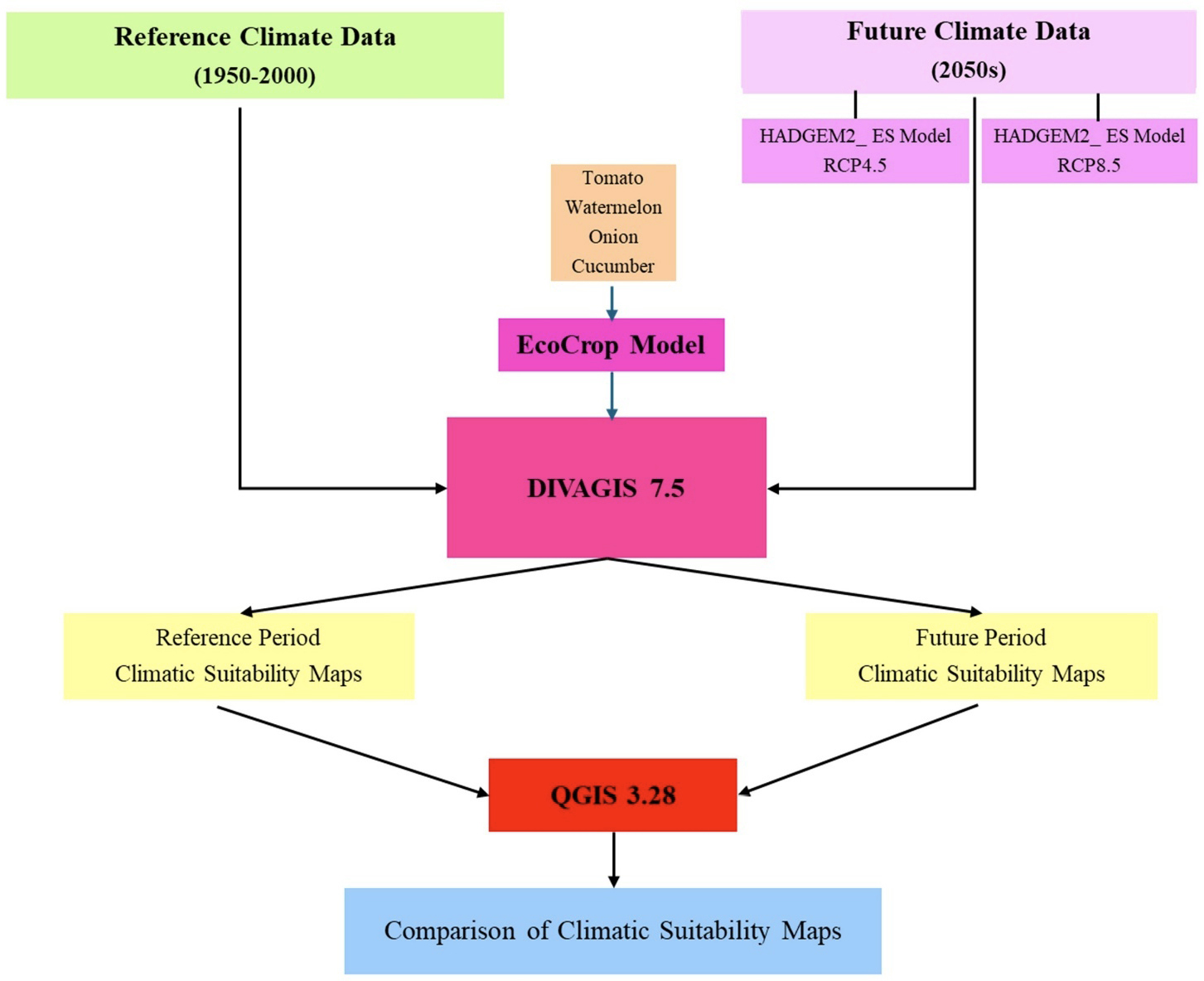
The schematic representation of the method applied in the research is given in Table 2). Climatic suitability indexes for tomato, watermelon, onion, and cucumber in Türkiye for the reference and future periods were calculated with the EcoCrop module in DIVA-GIS 7.5 software. The working principle of the EcoCrop model is explained below (Ramirez-Villegas et al., 2013).
– The duration of the crop’s growing season is defined. The length of the growing season is the average of the minimum and maximum days specified in the crop cycle. Here, the calculation is made by assuming that each month is potentially the first month of the crop’s growing season for 12 months separately.
– The temperature suitability percentage is found. It is calculated for each month. It is the minimum value of all 12 potential growing seasons (TSUIT).
– The rainfall suitability percentage is found. It is calculated for each growing season (RSUIT).
– After calculating temperature and precipitation suitability, total suitability is obtained by multiplying these two values (Equation 1).
SUIT= TSUIT* RSUIT(1)
SUIT: Suitability
TSUIT: Temperature suitability
RSUIT: Rainfall suitability
Then, reference and future period maps were created in DIVA-GIS 7.5 according to the calculated suitability indices. In the last stage, these maps were transferred to QGIS version 3.28, analyzed, and evaluated. QGIS, also known as Quantum GIS, was preferred because it is an open-access, free, and continuously updated software. With this software, mapping, data analysis, and editing layers can be done, and vector and raster data types can be used and processed. It is also possible to find many details, such as geographic coordinate systems, symbols, labels, and data analysis tools in this software (QGIS, 2023).
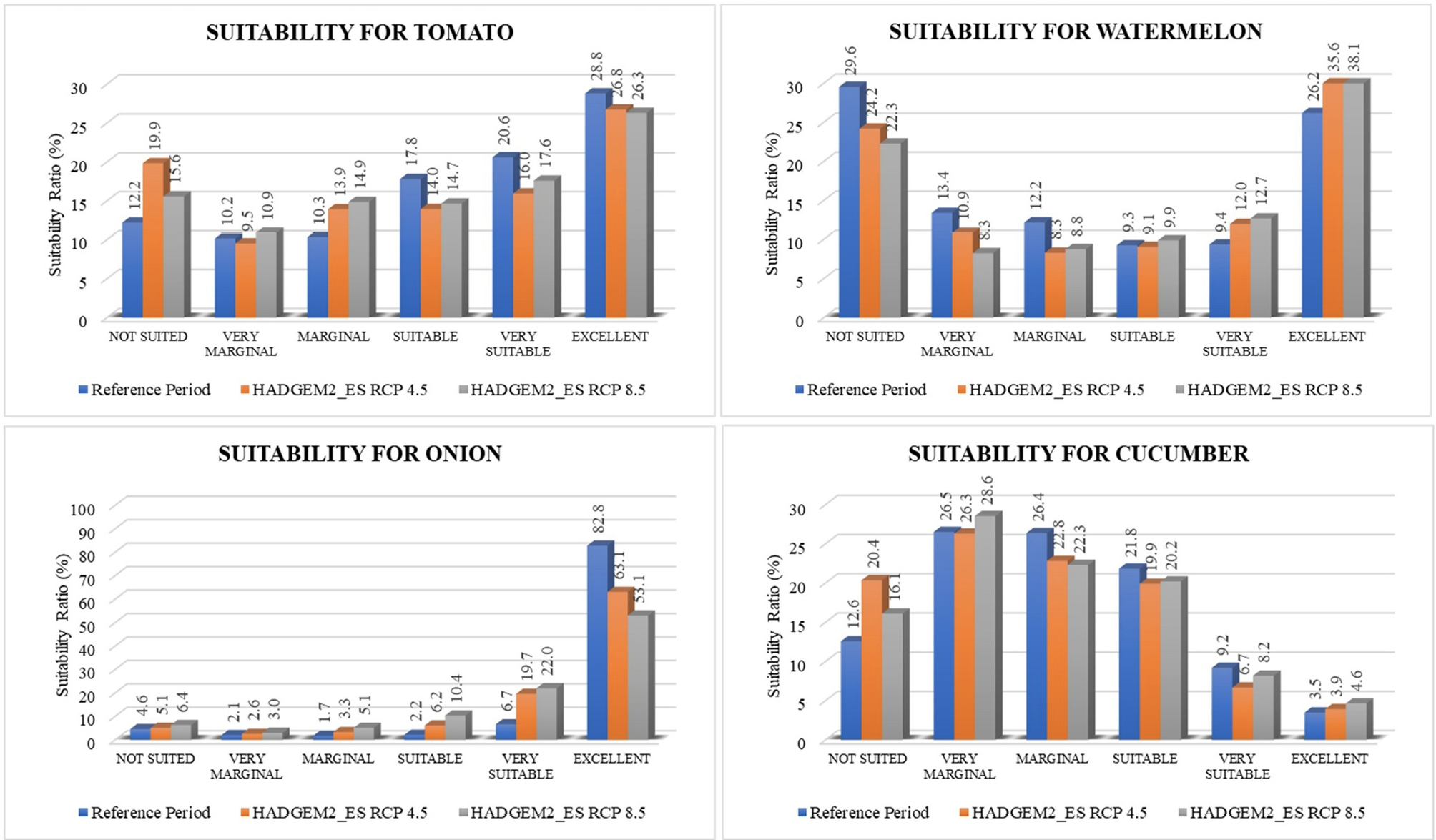
The climatic suitability obtained for reference and future periods for tomato, watermelon, onion, and cucumber is presented in Figure 3. When reference and future period climatic suitability results for tomato were evaluated, it was determined that not suited and marginal areas increased in both scenarios, and suitable, very suitable, and excellent areas decreased in both scenarios according to the reference period. In the 2050s, very marginal areas increased in the HADGEM2_ES model RCP8.5 and decreased in RCP4.5. In watermelon, in both scenarios, very suitable and excellent areas increased, while unsuitable, very marginal, and marginal areas decreased. Suitable areas increased to RCP8.5 and decreased to RCP4.5 compared to the reference period. When the climatic suitability results for onion were evaluated in the 2050s, it was determined that the excellent areas decreased in both scenarios compared to the reference period, while all other areas (unsuitable, very marginal, marginal, suitable, and very suitable areas) increased. In the future, in cucumber, while not suited and excellent areas increased in both scenarios, marginal, suitable, and very suitable areas decreased. Very marginal areas decreased to RCP4.5 and increased to RCP8.5 compared to the reference period.
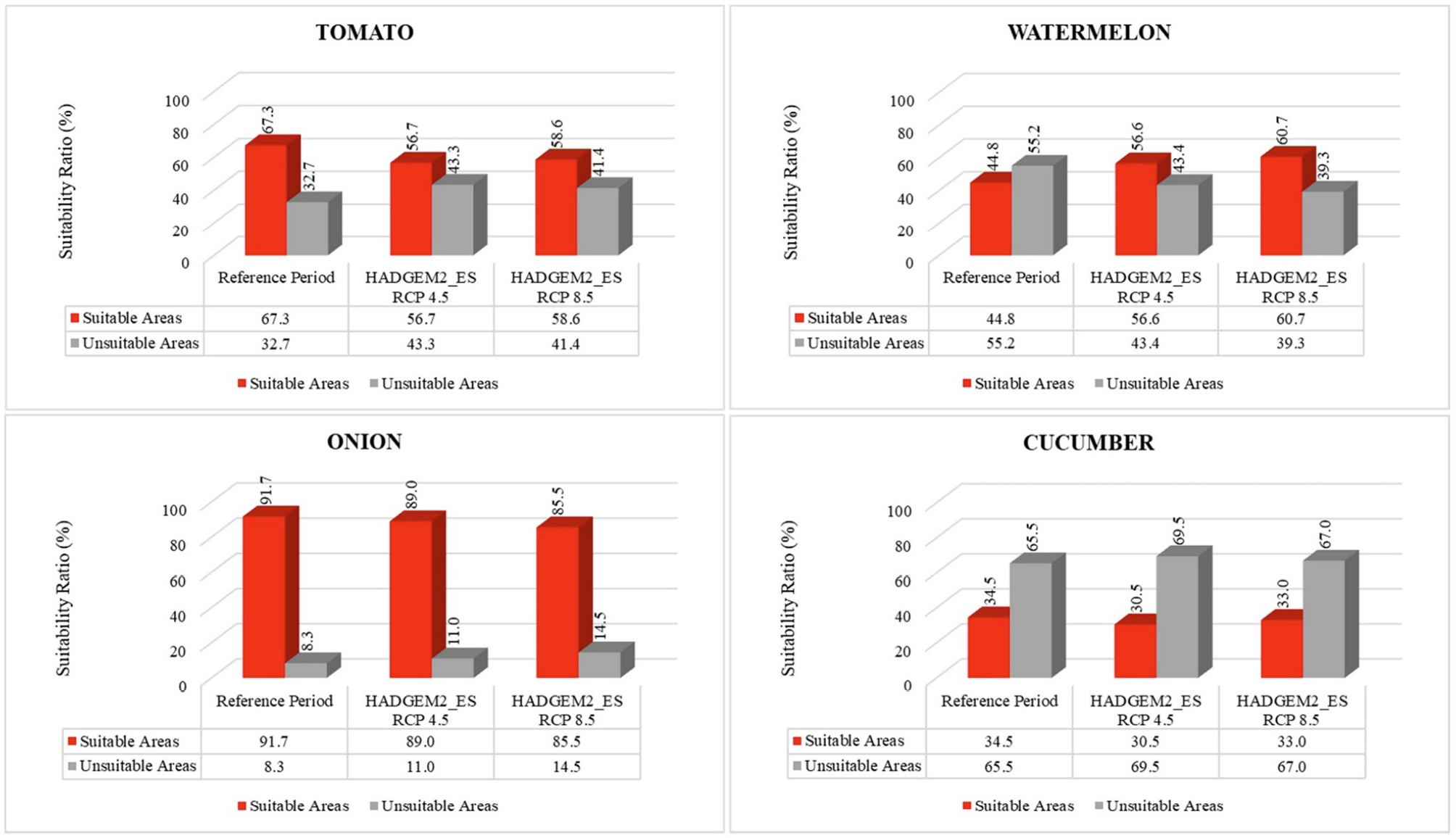
Climatical suitable and unsuitable areas for tomato, watermelon, onion, and cucumber cultivation in Türkiye are shown in Figure 4. It is estimated that the areas suitable for tomato cultivation in Türkiye will decrease in RCP4.5 and RCP8.5. This decrease will be greater in the RCP4.5 scenario. For watermelon, it is estimated that suitable areas will increase, and unsuitable areas will decrease in RCP4.5 and RCP8.5, respectively. In contrast, the opposite is true for onions. In other words, in the RCP4.5 and RCP8.5 scenarios, climatic unsuitable areas are expected to increase while suitable areas are expected to decrease, respectively. It can also be said that these increasing and decreasing rates will not change much. For cucumber, it is predicted that suitable areas will decrease, with a further decrease in RCP4.5.
HADGEM2_ES model reference period (1950-2000) and future period (2050s) climatic suitability maps for tomato, watermelon, onion, and cucumber cultivation in Türkiye are given in Figure 5. When the climatic suitability maps for tomato cultivation in Türkiye were evaluated, it was seen that the unsuitable areas in the Central Anatolia Region increased in the 2050s. This increase was estimated to be greater at RCP4.5. According to the reference period, it has been determined that tomato cultivation areas in the Black Sea Region will expand and become more suitable areas in the future. While unsuitable areas in the northeast of Türkiye turn into more suitable areas in the future, on the contrary, it was understood that the suitability of suitable areas in the southeast of Türkiye will decrease in future estimates. Another important change is that while tomato cultivation could be done in southern latitudes in the reference period, there will be a shift towards northern latitudes in 2050 due to the effect of climate change.
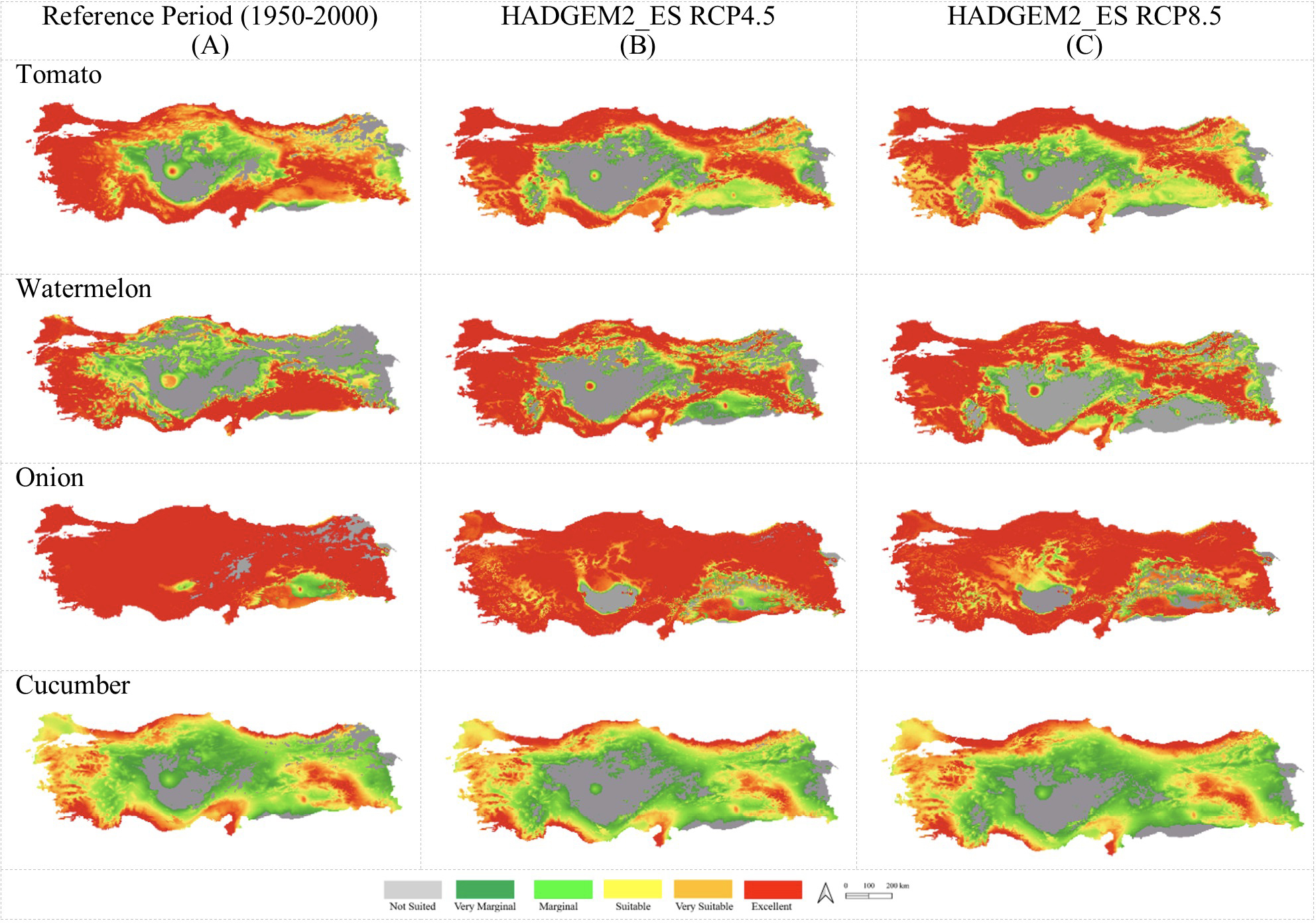
When the climatic suitability maps for watermelon cultivation in Figure 5 are evaluated, it is determined that the unsuitable areas in the north of Türkiye will become more suitable in the RCP4.5 and RCP8.5 scenarios, respectively. In the southeast, it is estimated that the suitable areas will gradually become unsuitable, and this situation will be more pronounced in RCP8.5. It is understood that the suitable areas will expand in the west of Türkiye. Here, the transformation of watermelon cultivation, which can be done intensively in the Southeastern Anatolia Region, into unsuitable areas in the 2050s has emerged as an important change.
In Türkiye, it is estimated that the areas that were not suitable for onion cultivation in the reference period will become more suitable in the future in both scenarios (Figure 5A, it is determined that while a small area in the Central Anatolia Region is marginal, these areas will turn into unsuitable areas in the future in both scenarios. It is estimated that a part of the southeastern side, which was suitable in the reference period, will turn into marginal, very marginal, and unsuitable areas in the future. A particularly striking situation is that the onion, whose homeland is Western Asia, has shown excellent climatic suitability in most parts of Türkiye and has adapted well.
Climatic suitability maps for cucumber cultivation are evaluated in Figure 5C). In the RCP8.5 scenario, it is determined that climatic suitability for cucumber cultivation will increase in the Black Sea Region compared to the reference period. In the reference period, it is predicted that the unsuitable gray areas in the north will shift to the east of Türkiye in the 2050s.
The change of suitable and unsuitable areas for tomato, watermelon, onion, and cucumber cultivation in Türkiye in the 2050s compared to the reference period in line with the HADGEM2_ES model RCP4.5 and RCP8.5 scenarios is summarized in Table 3. In the 2050s, suitable areas for tomato cultivation are projected to decrease by (13%-16%) and unsuitable areas are projected to increase by (26%-32%); suitable areas for onion cultivation are projected to decrease by (3%-7%) and unsuitable areas are projected to increase by (32%-74%); suitable areas for cucumber cultivation are projected to decrease by (4%-12%) and unsuitable areas are projected to increase by (2%-6%); suitable areas for watermelon cultivation are projected to increase by (26%-35%) and unsuitable areas are projected to decrease by (21%-29%). In general, it is estimated that watermelon cultivated areas will be positively affected, and tomato, onion, and cucumber cultivated areas will be negatively affected by the possible climate change in the 2050s.
| Areas | Vegetables | Reference Period | HADGEM2_ES Model | Deviation from Reference Period | ||
|---|---|---|---|---|---|---|
| RCP 4.5 |
RCP 8.5 |
RCP 4.5 (%) | RCP 8.5 (%) | |||
| Suitable Areas | Tomato | 67.3 | 56.7 | 58.6 | -16 | -13 |
| Watermelon | 44.8 | 56.6 | 60.7 | 26 | 35 | |
| Onion | 91.7 | 89.0 | 85.5 | -3 | -7 | |
| Cucumber | 34.5 | 30.5 | 33.0 | -12 | -4 | |
| Unsuitable Areas | Tomato | 32.7 | 43.3 | 41.4 | 32 | 26 |
| Watermelon | 55.2 | 43.4 | 39.3 | -21 | -29 | |
| Onion | 8.3 | 11.0 | 14.5 | 32 | 74 | |
| Cucumber | 65.5 | 69.5 | 67.0 | 6 | 2 | |
In this study, when comparing the change in climatic suitability for tomato, watermelon, onion, and cucumber growing areas in Türkiye during the 2050s with the reference period (1950-2000), it was determined that climatic suitability for tomato, onion, and cucumber would be negatively impacted, while climatic suitability for watermelon would be positively impacted. It is estimated that in the 2050s, climatically suitable areas for tomato (13%-16%), onion (3%-7%), and cucumber (4%-12%) cultivation will decrease, while suitable areas for watermelon (26%-35%) cultivation will increase.
Türkiye is among the countries that will be affected by climate change (WBG, 2022). Therefore, there are important studies on climate change prediction in the research area (Dalfes et al., 2008; GDWM, 2016). Deveci (2023) modeled climate change in Türkiye during the 2050s with the HADGEM2_ES model under the RCP4.5 and RCP8.5 scenarios. This study overlaps with the current research in terms of the model used, scenarios, and selected period range. According to Deveci (2023), while the average temperature data was 10.8 °C for the reference period (1950-2000), it was estimated to be 13.9 °C in the HADGEM2_ES model RCP4.5 scenario and 14.8 °C in the HADGEM2_ES model RCP8.5 scenario in the 2050s. While the average annual precipitation data was 594 mm for the reference period (1950-2000), it was estimated to be 560 mm in the HADGEM2_ES model RCP4.5 scenario and 573 mm in the HADGEM2_ES model RCP8.5 scenario in the 2050s. In the HADGEM2_ES model RCP4.5 scenario, the temperature increase was 3.1 °C, and the highest precipitation decrease reached 34 mm. In the RCP8.5 scenario, although the temperature increase was 4 °C, precipitation throughout Türkiye did not decrease as much as in the RCP4.5 scenario (only 21 mm) (Deveci, 2023). This situation was interpreted as the temperatures will increase and precipitation will decrease in the research area in the 2050s.
In Türkiye, temperature increases have negatively affected tomato cultivation and caused tomato planting areas to decrease. Rhiney et al. (2018) found that tomatoes would be negatively affected by a 1.5 °C temperature increase on the Caribbean Island of Jamaica, while Egbebiyi et al. (2019) determined that tomatoes would be negatively impacted by decreased rainfall associated with a 1-4.5 °C temperature increase in West Africa. In Türkiye, tomato cultivation was possible in the southern latitudes during the reference period, but with the impact of climate change, there is a shift to northern latitudes. Both studies were conducted in a region in the south, which was hot according to the climate of Türkiye. As the region in the south gets even hotter, the appropriate temperatures for tomato are exceeded, and tomato cultivation areas are negatively influenced by the temperature. The reason for the increase in tomato cultivation areas in the north of Türkiye (Black Sea Region) in the future is that the region, which is currently cool in terms of tomato cultivation, will become more suitable for tomato cultivation with the increase in temperature averages in the future. Similarly, it was observed that the south of Türkiye (Southeastern Region) is very suitable for tomato cultivation currently. In the forecasts for the future, it was estimated that the areas suitable for tomato cultivation would decrease in both scenarios due to the further increase in temperature and decrease in precipitation in these regions, which are already the hottest in the country, and would turn into not suited, marginal, and very marginal areas. The occurrence of this situation is considered normal. The results of this study are consistent with Rhiney et al. (2018) and Egbebiyi et al. (2019) show similar results. Saadi et al. (2015) found in their study in the Mediterranean that changes in precipitation will affect tomato cultivation less. Therefore, since it was observed that temperature changed more than precipitation in the research area, this study also confirms the results.
Climate change affects watermelon cultivation (Stewart and Ahmed, 2020; Walters et al., 2021). Watermelon does not like cool temperatures and is extremely sensitive to frost (Şalk et al., 2008; Kumar and Reddy, 2021). Watermelon is a plant species that can adapt to arid conditions and is suitable for tolerating the water it contains, as well as being a high-yielding species under irrigated conditions (Yokota et al., 2002). There is a positive relationship between the climate requirements required to cultivate watermelon and the climate change estimation results given by the climate change estimation model in the study. In the Inner Aegean Region and Central Anatolia Region of Türkiye, the higher temperatures compared reference period caused more suitable conditions for watermelon cultivation, and it was estimated that watermelon cultivation areas in these regions would be positively impacted by possible climate change. Contrary to this situation, in the future, watermelon production will decrease or even become impossible in regions where the optimum temperature required for watermelon cultivation is exceeded (Southeast Anatolia Region) due to increasing temperatures. This situation is slightly different in the Black Sea Region. In this region, the reference period is cool and very rainy. It is estimated that watermelon cultivation will be more significantly positively affected by climate change in the HADGEM2_ES RCP8.5 map. The reason for this is that the temperature has increased more in the HADGEM2_ES model RCP8.5 scenario than in the HADGEM2_ES model RCP4.5 scenario. It is estimated that the climatic suitability for watermelon will increase, although it varies regionally in Türkiye.
In the research, it was predicted that there would be changes in suitable areas in the climatic suitability maps for onion, that is, they would turn into unsuitable areas. It is thought that this is because the necessary climatic growing conditions for onion in Türkiye have been exceeded. Simões et al. (2022) stated that an increase in temperature may cause a decrease in the production of onion varieties, and Brewster (2018) stated that temperature is an important determinant of onion growth duration and yield. Additionally, according to Rao (2016), water is the primary limiting factor in reducing onion yield. Therefore, the results of this study on estimating the effect of climate change on onion cultivation showed that onion, as a cool climate vegetable, was negatively affected by the increase in temperature and decrease in precipitation, by the results given by the above researchers for onion cultivation conditions. In the HADGEM2_ES RCP4.5 and RCP8.5 scenarios, the increase in temperature created not suited areas, especially in the Central Anatolia region, while it caused the areas to become suitable in the Eastern Black Sea Region. Wurr et al. (1998) suggested that a warmer climate would be advantageous for producing onions in Britain. This result contrasts with the results of the study estimated for Türkiye. This situation can be explained as follows. Because Türkiye is located further south, the climate is more suitable for onion cultivation. With the increase in temperature, onion cultivation will be disrupted as cool climate conditions will turn to hot climate, while more favorable conditions will be created for onion seed production.
Cucumber is one of the oldest cultivated and most widely grown vegetable species and is grown in almost all countries of the temperate belts (Tatlıoglu, 1993). Temperature, relative humidity, and radiation are the main climatic parameters that significantly impact cucumber growth and yield (Singh et al., 2017). Constantly changing temperature is an important factor for the growth, development, and yield of cucumber. Higher temperature in both air and soil reduces overall growth by affecting various physiological processes, such as reduced rate of photosynthesis and increased transpiration rate (Li et al., 2014; Ding et al., 2016). The annual water consumption of the cucumber plant is 400-650 mm. Cucumber is very sensitive to water. It is desired that the root area is always moist (Cemek et al., 2005). When these conditions are evaluated, it is understood that cucumber is negatively impacted by temperature increase and is sensitive to water. The fact that cucumber will be negatively influenced by the increase in temperatures and decrease in precipitation in the 2050s in Türkiye is in line with these studies. According to the results of this study, it was concluded that cucumber would be negatively impacted in the 2050s due to changes in growing temperature and water requirement, according to possible climate change prediction results. The change in cucumber cultivation in the future with climate change is less affected than the other vegetables (tomato, watermelon, onion), according to the research. Because when Table 3 is analyzed, it is estimated that there will be changes in both unsuitable areas (6%-2%) and suitable areas (12%-4%) in the HADGEM2_ES model future periods compared to reference periods. Therefore, the lowest rates of change are observed in cucumber.
In the research, the decrease in suitable areas with the effect of possible climate change on tomato cultivation in Türkiye also shows that its contribution to the country’s economy will decrease in economic terms. There will be deficiencies in human nutrition in terms of the nutritional values given by tomato after the decrease in the cultivation areas of tomato, which is very common on the tables. Tomatoes, which are easily accessible and found on every table today, will become difficult to purchase and obtain due to geographical and climatic reasons. According to TurkStat (2024b), Türkiye’s tomato production, which exceeds 85 million population by 2024, ranks third in the world (Table 1). With the possible climate change in the 2050s, it is estimated that Türkiye will fall further in the world ranking. This will have a negative economic impact not only on the Turkish economy but also on the tomato market in the countries where Türkiye produces and exports tomatoes. Türkiye ranks second after China in watermelon production. It is estimated that watermelon production in Türkiye will increase further with the positive effect of climatic suitability. However, it is estimated that this increase will not cause a significant change in the ranking since there is a huge difference in production between China (60.4 million tons) and Türkiye (3.4 million tons) (Table 1). It is thought that this expected increase in watermelon production will have a positive impact first in Türkiye and then in the world regarding both the economy and human nutrition. It is estimated that Türkiye, which ranks sixth in the world in onion production in Table 1, will remain in the same rank or fall to a lower rank. This is because it is predicted to be adversely affected by climate change (especially temperature increases), likely to occur in the 2050s. Since the production amount of onion, which has a large place in food preparation in the world and Türkiye and is in high demand, will decrease due to the negative impact on its cultivation in Türkiye, it will be used less in human nutrition and the onion market will be impacted economically, as in the case of tomatoes. As the climatic suitability of cucumber in Türkiye decreases, the amount of production will decrease, and the economy of Türkiye will be negatively affected by this situation. Türkiye, which ranks second in the world in terms of cucumber production, is expected to maintain its position between China and Russia in the world ranking since it is estimated that there will not be a dramatic increase in unsuitable areas.
There may be some possible limitations in this study. One of these limitations is the lack of previous research studies on this topic. This study is the first to address the spatio-temporal distribution of climatic suitability for these vegetables at the level of Türkiye through modelling using climate change projections. Therefore, it has been difficult to compare and consider all aspects of the research. The EcoCrop model only takes into account the effects of temperature and precipitation when modeling climate suitability. However, there are many environmental factors that affect cultivation. Determining climatic suitability by considering the effects of climate change, topography of the land, soil temperature and soil type, soil quality, and water availability, etc., will provide a more comprehensive picture. Perhaps, in a region that is climatically suitable, it will be difficult to cultivate that plant because there is no water, or it will not be possible to cultivate that plant. In addition, even if it is not suitable for that region to cultivate any plant due to the structure of the land, it may be classified as very suitable on maps. Diversifying research with current scenarios will be useful in understanding the effects of climate change. If similar maps can be obtained with different scenarios, the predictions can be verified, and if other results are obtained, the reasons for the differences can be investigated and evaluated. In addition, the lack of a recent suitability classification study for these plants to calibrate the model is another limitation of the study.
The research predicts that, in the future, watermelon and tomato cultivation areas are predicted to decrease in the south and increase in the north of Türkiye, while cucumber and onion cultivation areas are expected to vary regionally. Alternative crops should be encouraged instead of these crops in regions where production decreases due to climate change. There is a generally negative trend in tomato, onion, and cucumber cultivation in Türkiye. It was observed that especially the increase in temperatures and the decrease in precipitation, even if slightly, were effective in this negative trend. The differentiated impact of climate change on the cultivation areas (positively affecting watermelon, while negatively impacting tomato, onion, and cucumber) highlights the complex nature of climate change effects on agriculture. To understand this complex structure, such studies need to be diversified with different models, different scenarios, and different periods. While it is estimated that Türkiye will fall further behind in tomato and onion production in the world rankings in the 2050s, the rankings for watermelon and cucumber will not change. The changes in production due to the decrease in climatic suitability for tomatoes and cucumbers and the increase in climatic suitability for watermelon will impact the economy. It is important to estimate and evaluate the future cultivation areas of these plants, which have a very important place in nutrition in the world and Türkiye, and to direct the future.
Huzur Deveci: Conceptualization, Methodology, Software, Investigation, Resources, Data curation, Writing –original draft, Writing – review & editing, Visualization.
Akçakaya A., Eskioğlu O., Atay H., Demir Ö., 2013. Climate Change Projections for Türkiye With New Scenarios. Meteorology General Directorate Printing House, Türkiye. https://mgm.gov.tr/FILES/iklim/IKLIM_DEGISIKLIGI_PROJEKSIYONLARI.pdf
Akçakaya A., Sümer U.M., Demircan M., Demir Ö., Atay H., Eskioğlu O., Gürkan H., Yazıcı B., Kocatürk A., Şensoy S., Bölük E., Arabaci H., Açar Y., Eki̇ci̇ M., Yağan S., Çukurçayir F., 2015. Türkiye Climate Projections with New Scenarios and Climate Change TR2015-CC. https://www.mgm.gov.tr/FILES/iklim/iklim-degisikligi-projeksiyon2015.pdf
Aparna A.S., Pląder W., Pawełkowicz M., 2023. Impact of climate change on regulation of genes involved in sex determination and fruit production in cucumber. Plants, 12 (14): 2651. https://doi.org/https://doi.org/10.3390/plants12142651
Atalay İ., 1997. Geography of Türkiye. Ege University Publications, İzmir, Türkiye.
Aydın F., Sarptaş H., 2018. The impact of the climate change to crop cultivation: the case study with model crops for Turkey. Pamukkale University Journal of Engineering Sciences, 24 (3): 512-521. https://doi.org/10.5505/pajes.2017.37880
Biratu W., 2018. Review on the effect of climate change on tomato (Solanum Lycopersicon) production in Africa and mitigation strategies. Journal of Natural Sciences Research, 8 (5): 2225-0921.
Brewster J.L., 2018. Physiology of Crop Growth and Bulbing, Onions and Allied Crops, CRC press. pp. 53-88. https://doi.org/https://doi.org/10.1201/9781351075169-3
CCAFS 2023. GCM Downscaled Data Portal. Climate change agriculture and food security. https://www.ccafs-climate.org/
Cemek B., Apan M., Demir Y., Kara T., 2005. Effects of different irrigatin water applications on growth, development and yield of cucumber grown in greenhouse. Anadolu Journal of Agricultural Sciences, 20 (3): 27-33.
Collins W.J., Bellouin N., Doutriaux-Boucher M., Gedney N., Halloran P., Hinton T., Hughes J., Jones C.D., Joshi M., Liddicoat S., Martin G., O’Connor F., Rae J., Senior C., Sitch S., Totterdell I., Wiltshire A., Woodward S., 2011. Development and evaluation of an Earth-System model – HadGEM2. Geoscientific Model Development, 4 (4): 1051-1075. https://doi.org/https://doi.org/10.5194/gmd-4-1051-2011
Çaltı N., Somuncu M., 2019. The impact of climate change on agriculture in Turkey and farmers’ ttitudes to climate change, 1st Istanbul International Geography Congress Proceedings Book, İstanbul, Türkiye. pp. 890-912. https://doi.org/https://doi.org/10.26650/PB/PS12.2019.002.084
Dalfes N., Karaca M., Şen Ö.L., Kindap T., Önol B., Turunçoğlu U., Bozkurt D., Fer I., Akın H.S., Çankur R., Ural D., Kılıç G., Coşkun M., Demir İ. (2008) Climate scenarios for Türkiye, TÜBİTAK. Proje No:105G015.
Deveci H., 2023. Estimation of the impact of climate change on spinach cultivation areas in Türkiye. Sustainability, 15 (21): 15395. https://doi.org/10.3390/su152115395
Deveci H., 2024. Modeling the impact of climate change on cotton cultivation. COMU Journal of Agriculture Faculty, 12 (1): 96-107. https://doi.org/10.33202/comuagri.1449471
Deveci H., 2025.Determination of the accuracy of average temperature values obtained from different climate models in TR21 Thrace Region. In: 9th International Conference on Global Practice of Multidisciplinary Scientific Studies, Havana, Cuba. https://www.izdas.org/_files/ugd/614b1f_c300ca6abbdf45db9aed0060cde06741.pdf
Deveci H., Önler B., Erdem T., 2025. Modeling the effects of climate change on the irrigation water requirements of wheat and canola in the TR21 Thrace Region using CROPWAT 8.0. Frontiers in Sustainable Food Systems, 9. https://doi.org/10.3389/fsufs.2025.1563048
Ding X., Jiang Y., He L., Zhou Q., Yu J., Hui D., Huang D., 2016. Exogenous glutathione improves high root-zone temperature tolerance by modulating photosynthesis, antioxidant and osmolytes systems in cucumber seedlings. Scientific reports, 6 (1): 35424. https://doi.org/https://doi.org/10.1038/srep35424
DIVAGIS 2023. DIVA-GIS. https://www.diva-gis.org/climate
Dokuyucu Ö., Eskioğlu O., Özgökçe M.S., Ülgentürk S., 2025. Predicting future distribution and generation number of mulberry scale, Pseudaulacapis pentagona under climate change scenarios in Turkiye. Phytoparasitica, 53 (3): 41. https://doi.org/10.1007/s12600-025-01261-y
Duvan A., Aktürk G., Yıldız O., 2025. Assessing spatiotemporal characteristics of meteorological droughts in the Marmara Basin using HadGEM2-ES global climate model data. Environmental Monitoring and Assessment, 197 (4): 436. https://doi.org/10.1007/s10661-025-13884-z
Egbebiyi T.S., Crespo O., Lennard C., 2019. Defining crop–climate departure in West Africa: improved understanding of the timing of future changes in crop cuitability. Climate, 7 (9): 101. https://doi.org/10.3390/cli7090101
Egbebiyi T.S., Crespo O., Lennard C., Zaroug M., Nikulin G., Harris I., Price J., Forstenhausler N., Warren R., 2020. Investigating the potential impact of 1.5, 2 and 3 degrees C global warming levels on crop suitability and planting season over West Africa. PeerJ, 8: e8851. https://doi.org/10.7717/peerj.8851
FAO 2023. Food and Agriculture Organization of the United Nations. Database of crop constraints and characteristics. https://gaez.fao.org/pages/ecocrop
Gardner A.S., Gaston K.J., Maclean I.M.D., Scheiter S., 2021. Accounting for inter‐annual variability alters long‐term estimates of climate suitability. Journal of Biogeography, 48 (8): 1960-1971. https://doi.org/10.1111/jbi.14125
GDSHW 2023. General Directorate of State Hydraulic Works. Türkiye’s Location. https://dsi.gov.tr/Sayfa/Detay/754
GDWM 2016. General Directorate of Water Management. Impact of climate change on water resources project project final report. ttps://www.tarimorman.gov.tr/SYGM/Belgeler/iklim%20de%C4%9Fi%C5%9Fikli%C4%9Finin%20su%20kaynaklar%C4%B1na%20etkisi/Iklim_NihaiRapor.pdf
Gündoğan A.C., Aydın C.İ., Voyvoda E., Turhan E., Özen İ.C., 2017. The Price of Inertia: An Assessment of the Costs to Turkey of Failing to Achieve Climate Change Targets through Common Socioeconomic Pathways. Earth Association Publications, Ankara, Türkiye. https://wwftr.awsassets.panda.org/downloads/ataletin_bedeli_rapor___yeryuzu_dernegi___ab.pdf?7180/ataletinbedeli
Hancı F., Cebeci E., 2015. The effects of salinity and drought on onion production. Bahçe, 44 (1): 23-29.
Hijmans R.J., Cameron S.E., Parra J.L., Jones P.G., Jarvis A., 2005. Very high resolution interpolated climate surfaces for global land areas. International Journal of Climatology: A Journal of the Royal Meteorological Society, 25 (15): 1965-1978. https://doi.org/https://doi.org/10.1002/joc.1276
Hijmans R.J., Guarino L., Cruz M., Rojas E., 2001. Computer tools for spatial analysis of plant genetic resources data: 1. DIVA-GIS. Plant genetic resources newsletter, 127: 15-19.
Jarvis A., Ramirez-Villegas J., Herrera Campo B.V., Navarro-Racines C., 2012. Is cassava the answer to African climate change adaptation? Tropical Plant Biology, 5 (1): 9-29. https://doi.org/10.1007/s12042-012-9096-7
Joshi N., 2021. Future crop suitability assessment and the integration of Orphan crops into Kenya’s food systems. MSc. Thesis. University of Cape Town, South Africa.
Khazaei M.R., 2025. Projected changes to drought characteristics in Tehran under CMIP6 SSP-RCP climate change scenarios. Heliyon, 11 (2). https://doi.org/10.1016/j.heliyon.2025.e41811
Kumar R., Reddy K.M., 2021. Impact of Climate Change on Cucurbitaceous Vegetables in Relation to Increasing Temperature and Drought, in: S. S. Solankey, et al. (Eds.), Advances in Research on Vegetable Production Under a Changing Climate Vol. 1, Springer International Publishing, Cham. pp. 175-195. https://doi.org/https://doi.org/10.1007/978-3-030-63497-1_9
Labaioui A., Bouchoufi K., 2021. Assessing the impact of climate change on land suitability for crops in El Hajeb province Morocco. African and Mediterranean Agricultural Journal Al Awamia, 132: 65-90.
Li H., Liu S.S., Yi C.Y., Wang F., Zhou J., Xia X.J., Shi K., Zhou Y.H., Yu J.Q., 2014. Hydrogen peroxide mediates abscisic acid‐induced HSP 70 accumulation and heat tolerance in grafted cucumber plants. Plant Cell Environment, 37 (12): 2768-2780. https://doi.org/https://doi.org/10.1111/pce.12360
Litskas V.D., Migeon A., Navajas M., Tixier M.-S., Stavrinides M.C., 2019. Impacts of climate change on tomato, a notorious pest and its natural enemy: small scale agriculture at higher risk. Environmental Research Letters, 14 (8): 084041. https://doi.org/https://doi.org/10.1088/1748-9326/ab3313
Martin G.M., Bellouin N., Collins W.J., Culverwell I.D., Halloran P.R., Hardiman S.C., Hinton T.J., Jones C.D., McDonald R.E., McLaren A.J., O’Connor F.M., Roberts M.J., Rodriguez J.M., Woodward S., Best M.J., Brooks M.E., Brown A.R., Butchart N., Dearden C., Derbyshire S.H., Dharssi I., Doutriaux-Boucher M., Edwards J.M., Falloon P.D., Gedney N., Gray L.J., Hewitt H.T., Hobson M., Huddleston M.R., Hughes J., Ineson S., Ingram W.J., James P.M., Johns T.C., Johnson C.E., Jones A., Jones C.P., Joshi M.M., Keen A.B., Liddicoat S., Lock A.P., Maidens A.V., Manners J.C., Milton S.F., Rae J.G.L., Ridley J.K., Sellar A., Senior C.A., Totterdell I.J., Verhoef A., Vidale P.L., Wiltshire A., 2011. The HadGEM2 family of Met Office Unified Model climate configurations. Geosci. Model Dev., 4 (3): 723-757. https://doi.org/https://doi.org/10.5194/gmd-4-723-2011
Melo T.K., Sobrinho J.E., Medeiros J.F., Figueiredo B.V., Silva J.S., SÁ F.V.S., 2020. Impacts of cimate change scenarios in the Brazilian Semiarid Region on watermelon cultivars. Revista Caatinga, 33 (3): 794-802. https://doi.org/10.1590/1983-21252020v33n323rc
Møller A.B., Mulder V.L., Heuvelink G.B.M., Jacobsen N.M., Greve M.H., 2021. Can we use machine learning for agricultural land suitability assessment? Agronomy, 11 (4): 703. https://doi.org/10.3390/agronomy11040703
Moss R.H., Babiker M., Brinkman S., Calvo E., Carter T., Edmonds J.A., Elgizouli I., Emori S., Lin E., Hibbard K., 2008. Towards new scenarios for analysis of emissions, climate change, impacts, and response strategies. Intergovernmental Panel on Climate Change.
Oyediran W.O., Omoare A.M., Alaka F.A., Shobowale A.A., Oladoyinbo O.B., 2018. Rural Farmers’ Coping Strategies to Effects of Climate Change on Watermelon Production in Igboora, Oyo State, Nigeria. International Journal of Sustainable Agricultural Research, 5 (2): 19-26. https://doi.org/10.18488/journal.70.2018.52.19.26
Ramirez-Villegas J., Jarvis A., Läderach P., 2013. Empirical approaches for assessing impacts of climate change on agriculture: The EcoCrop model and a case study with grain sorghum. Agricultural and Forest Meteorology, 170: 67-78. https://doi.org/10.1016/j.agrformet.2011.09.005
Rao N.K.S., 2016. Onion, in: N. K. S. Rao, et al. (Eds.), Abiotic Stress Physiology of Horticultural Crops, Springer India, New Delhi. pp. 133-149. https://doi.org/https://doi.org/10.1007/978-81-322-2725-0_8
Rhiney K., Eitzinger A., Farrell A.D., Prager S.D., 2018. Assessing the implications of a 1.5 °C temperature limit for the Jamaican agriculture sector. Regional Environmental Change, 18 (8): 2313-2327. https://doi.org/10.1007/s10113-018-1409-4
Saadi S., Todorovic M., Tanasijevic L., Pereira L.S., Pizzigalli C., Lionello P., 2015. Climate change and Mediterranean agriculture: Impacts on winter wheat and tomato crop evapotranspiration, irrigation requirements and yield. Agricultural water management, 147: 103-115. https://doi.org/https://doi.org/10.1016/j.agwat.2014.05.008
Simões W.L., Angelotti F., Guimarães M.J.M., Silva J.S.d., Silva R.M., Barros J.R.A., 2022. Water-use efficiency and onion quality in future climate scenarios. Pesquisa Agropecuária Tropical, 52: e72212.
Singh M.C., Singh J.P., Pandey S.K., Mahay D., Srivastava V., 2017. Factors affecting the performance of greenhouse cucumber cultivation-a review. International Journal of Current Microbiology and Applied Sciences, 6 (10): 2304-2323. https://doi.org/https://doi.org/10.20546/ijcmas.2017.610.273
Stewart A.L., Ahmed S., 2020. Effects of climate change on fruit nutrition, in: A.K. Srivastava and Chengxiao Hu (Eds.), Fruit crops, Elsevier, Amsterdam, The Netherlands. pp. 77-93. https://doi.org/https://doi.org/10.1016/B978-0-12-818732-6.00007-1
Şalk A., Arın L., Deveci M., Polat S., 2008. Special Vegetables. Onur Graphics, Printing and Advertising, Tekirdağ, Türkiye.
Şen A.S., Deveci H., Konukcu F., 2024. Modelling the adaptation of some cultural plants produced in Thrace Region to climate change. Journal of Tekirdag Agricultural Faculty, 21 (2): 501-516. https://doi.org/10.33462/jotaf.1312707
Tatlıoglu T., 1993. Cucumber, in: G. Kalloo and B. O. Bergh (Eds.), Genetic Improvement of Vegetable Crops, Pergamon, Amsterdam. pp. 197-234. https://doi.org/10.1016/b978-0-08-040826-2.50017-5
Temur B., 2017. The impact of global warming on agricultural sector in Turkey: An application of the ARDL model. MSc. Thesis. Anadolu University, Türkiye.
TSMS 2023a. Türkiye State Meteorological Service. Türkiye maximum temperature average. https://www.mgm.gov.tr/FILES/resmi-istatistikler/parametreAnalizi/2024-maksimum-sicaklik.pdf
TSMS 2023b. Türkiye State Meteorological Service. Türkiye minimum temperature average. https://www.mgm.gov.tr/FILES/resmi-istatistikler/parametreAnalizi/2024-minimum-sicaklik.pdf
TSMS 2023c. Türkiye State Meteorological Service. Türkiye Average Temperature. https://www.mgm.gov.tr/FILES/resmi-istatistikler/parametreAnalizi/2024-ortalama-sicaklik.pdf
TSMS 2023d. Türkiye State Meteorological Service. Annual total precipitation average in Türkiye. https://www.mgm.gov.tr/FILES/resmi-istatistikler/parametreAnalizi/2024-yagis.pdf
TSMS 2023e. Türkiye State Meteorological Service. Türkiye average humidity. https://www.mgm.gov.tr/FILES/resmi-istatistikler/parametreAnalizi/2024-ortalama-nem.pdf
TurkStat 2024a. Turkish Statistical Institute. Statistical Tables of Agricultural Areas. https://data.tuik.gov.tr/Search/Search?text=tar%C4%B1m%20alanlar%C4%B1
TurkStat 2024b. Turkish Statistical Institute. World Population Day. https://data.tuik.gov.tr/Bulten/Index?p=Dunya-Nufus-Gunu-2024-53680#:~:text=T%C3%BCrkiye%2C%2085%20milyon%20372%20bin,1%2C1’ini%20olu%C5%9Fturdu.
Walters S.A., Abdelaziz M., Bouharroud R., 2021. Local melon and watermelon crop populations to moderate yield responses to climate change in North Africa. Climate, 9 (8): 129. https://doi.org/https://doi.org/10.3390/cli9080129
WBG 2022. World Bank. Group. Türkiye Country Climate and Development Report, CCDR Series; World Bank: Washington, DC, USA. https://openknowledge.worldbank.org/entities/publication/01826a0c-059f-5a0c-91b7-2a6b8ec5de2f
Wichern J., Descheemaeker K., Giller K.E., Ebanyat P., Taulya G., van Wijk M.T., 2019. Vulnerability and adaptation options to climate change for rural livelihoods – A country-wide analysis for Uganda. Agricultural Systems, 176: 102663. https://doi.org/https://doi.org/10.1016/j.agsy.2019.102663
WPR 2024a. World Population Review, Vegetable production by Country 2022. https://worldpopulationreview.com/country-rankings/vegetable-production-by-country
WPR 2024b. World Population Review, Tomato Production by Country 2022. https://worldpopulationreview.com/country-rankings/tomato-production-by-country
WPR 2024c. World Population Review, Watermelon Production by Country 2022. https://worldpopulationreview.com/country-rankings/watermelon-production-by-country
WPR 2024d. World Population Review, Onion Production by Country 2022. https://worldpopulationreview.com/country-rankings/onion-production-by-country
WPR 2024e. World Population Review, Cucumber Production by Country 2022. https://worldpopulationreview.com/country-rankings/cucumber-production-by-country
Wurr D.C.E., Hand D.W., Edmondson R.N., Fellows J.R., Hannah M.A., Cribb D.M., 1998. Climate change: a response surface study of the effects of CO2 and temperature on the growth of beetroot, carrots and onions. The Journal of Agricultural Science, 131 (2): 125-133. https://doi.org/https://doi.org/10.1017/S0021859698005681
Yokota A., Kawasaki S., Iwano M., Nakamura C., Miyake C., Akashi K., 2002. Citrulline and DRIP-1 protein (ArgE homologue) in drought tolerance of wild watermelon. Annals of Botany, 89 (7): 825-32. https://doi.org/10.1093/aob/mcf074
Zagaria C., Schulp C.J.E., Malek Ž., Verburg P.H., 2023. Potential for land and water management adaptations in Mediterranean croplands under climate change. Agricultural Systems, 205: 103586. https://doi.org/10.1016/j.agsy.2022.103586
Zhang Y., Lv J., Wang T., Zhang K., Wu Y., 2025. Assessment of ecological risk under different SSP-RCP scenarios of the Xinjiang province in China. Scientific reports, 15 (1): 8345. https://doi.org/10.1038/s41598-024-81879-w