Quantifying the effect of ENSO on Mangosteen yield using multi-year data in Indonesia
1 Research Center for Climate and Atmospheric, National Research and Innovation Agency (BRIN), Jl. Raya Puspiptek 60, Tangerang Selatan 15310, Indonesia
2 Research Center for Horticulture, Indonesian Agency for Research and Innovation (BRIN), Jl. Raya Jakarta-Bogor KM 46, Cibinong, Kab. Bogor – 16915, Indonesia
*Corresponding author. E-mail: yeli002@brin.go.id
Abstract. The El Niño–Southern Oscillation (ENSO) is a major driver of inter-annual climate variability in Indonesia and has significant implications for agricultural productivity. Mangosteen (Garcinia mangostana), a perennial tropical fruit and one of Indonesia’s key export commodity, is highly sensitive to climate fluctuations. Understanding how ENSO affects mangosteen production is critical for developing climate-informed cultivation strategies. This study investigates the impact of ENSO on mangosteen production dynamics in Indonesia using provincial-scale data from 1997 to 2020, including the number of harvested plants, yield, and total annual production. The Oceanic Niño Index (ONI) was used to classify each year into El Niño, La Niña, or Neutral phases. Number of harvested plants, yield and production during El Niño and La Niña years were then compared to those of neutral years to assess ENSO-related impacts. Results show that the impact of ENSO on mangosteen varies across different regions of Indonesia. Generally, the number of harvested plants increased during El Niño years but declined during La Niña years. In contrast, yield is generally lower in both El Niño and La Niña years compared to neutral years in most production centre area except in Bali- Nusa Tenggara and Maluku- Papua. Overall production increased slightly (1–12%) during El Niño but dropped significantly (2–40%) during La Niña, indicating that excessive rainfall during La Niña has a more detrimental effect on mangosteen yields than drought during El Niño. These findings highlight the importance of ENSO monitoring as a basis for climate risk management in perennial fruit crops. Early warning systems and adaptive measures, such as irrigation planning for dry years and drainage infrastructure for wet years, are essential to mitigate ENSO-related production losses.
Keywords: ENSO, Mangosteen, climate variability, rainfall, economic loss.
– The effects of ENSO on mangosteen differ across various regions in Indonesia
– Mangosteen yields decline during both El Niño and La Niña, with La Niña except in Bali- Nusa Tenggara and Maluku- Papua. While annual production increase slightly in El- Niño Year (1-12 %) and drop during La-Niña (2-40%)
– El Niño increases harvested plant numbers, slightly boosting total production despite lower yields.
– ENSO monitoring and adaptive measures (e.g., irrigation in dry years, drainage in wet years) are critical to reduce climate-related losses.
The mangosteen (Garcinia mangostana L.) is one of Indonesia’s leading horticultural commodity with high potential to contribute to national economic development, public health, and rural livelihoods. It is rich in minerals and vitamins particularly vitamin C (Aizat et al., 2019; Ansori et al., 2020; Ovalle-Magallanes et al., 2017) and contains xanthones in its rind, which have been identified for their antioxidant, anti-inflammatory, anticancer, and cardiovascular health benefits (Ansori et al., 2022; Kalick et al., 2023; Nauman & Johnson, 2022). In 2023, Indonesia exported 42.8 thousand tons of mangosteen, generating USD 112 thousand in foreign exchange (Ministry of Agriculture, 2024). This makes mangosteen the second-largest contributor to fruit-based foreign exchange income. Given its economic and health benefits, sustainable production of mangosteen is crucial to improving societal well-being.
Despite Indonesia’s favourable agroclimatic conditions and genetic diversity with 14 registered cultivars mangosteen productivity remains low, only reaching 5–8 tons/ha, compared to Thailand’s 10 tons/ha (Directorate General of Horticulture, 2021). Climate is one of the most influential abiotic factors affecting mangosteen development (Jaroensutasinee et al., 2023; Raju et al., 2024; Sayruamyat et al., 2021) . Climate affects flowering, pollination, fruit formation, pest and disease attacks, as well as fruit production and quality (Apiratikorn et al., 2012; Jaroensutasinee et al., 2023b; Mansyah, 2009; Ounlert et al., 2017). Studies have shown that climatic variability accounts for nearly one-third of plant growth and productivity (Leng et al., 2016; Ray et al., 2015). However, the impacts of specific climatic phenomena on mangosteen yield and quality remain underexplored (Tengsetasak et al., 2024). The sustainability of production in Indonesia requires support from various research and development efforts on mangosteen, particularly in increasing production and controlling pests and diseases affecting mangosteen (Mansyah et al., 2013).
Indonesia’s climate is strongly influenced by interannual variability, particularly the El Niño–Southern Oscillation (ENSO) (Aldrian & Susanto, 2003; Arrigo & Wilson, 2008; Hendrawan et al., 2019; Hidayat & Ando, 2018) and Indian Ocean Dipole (IOD) (Mulyana, 2002; Nur’utami & Hidayat, 2016). ENSO refers to the recurring pattern of climate variability in the eastern Pacific Ocean, marked by sea surface temperature anomalies (SSTA) and changes in sea level. The warming of sea surface temperatures indicates an El Niño event, while the cooling signifies a La Niña event. El Niño typically delays the onset of the rainy season and extends the dry season in Indonesia ((El Ramija et al., 2021; Hidayati & Chrisendo, 2010; Iskandar et al., 2019; Karuniasa & Pambudi, 2022; Nugraheni et al., 2024a; Sidauruk et al., 2023). Conversely, La Niña tends to bring an earlier onset of the rainy season and a shorter dry season (Alhadid & Budi Nugroho, 2024; Endah Ardhi Ningrum Abdullah et al., n.d.; Harahap et al., 2023; Hidayat et al., 2018; Nugraheni et al., 2024b; Supari et al., 2018)
ENSO has been shown to affect flowering periods and harvest dynamics in tropical fruit crops, including mangosteen (Sarvina & Sari, 2018) (Apiratikorn et al., 2014). With increasing occurrences of extreme ENSO events due to climate change (Chen et al., 2024; Xie et al., 2022), understanding their impact on mangosteen production is essential for developing adaptive agricultural strategies.
This study aims to assess the influence of interannual climate variability focusing on ENSO on the production dynamics of mangosteen in Indonesia. The findings are expected to support climate-smart mangosteen farming through the development of cultivation calendars and adaptive agronomic planning.
This study uses mangosteen production data, specifically the number of haversted plant and yield all provinces across regions in Indonesia for the period 1997–2020. The data were obtained from the Central Bureau of Statistics (BPS), compiled in the Indonesian Fruit and Vegetable Statistics Book. The ENSO indicator used in this study was the Oceanic Niño Index (ONI), covering the same period as the available production data. This data was obtained from the National Oceanic and Atmospheric Administration (NOAA) and downloaded from the website http://www.cpc.ncep.noaa.gov/products/. The ONI represents a three-month running average of sea surface temperature (SST) anomalies in the Niño 3.4 region (5°N–5°S, 120°–170°W). Sea surface temperature in the Niño 3.4 region is a widely recognized indicator of variability that significantly affects Indonesia (Hidayat et al., 2018; Surmaini et al., 2015)). The ONI data is used to identify years of La Niña and El Niño years.
The data on the harvested plants and yield were grouped according to the years of Neutral, El Niño, and La Niña events. This method has been widely used to examine the influence of ENSO on agricultural commodity production (Cirino et al., 2015; Cobon et al., 2016; Ramirezrodrigues et al., 2014; Sarvina & Sari, 2018) . This approach is known as the anomaly approach. The ENSO years selected include El Niño and La Niña events with moderate, strong, and very strong intensities. For each year, the average values were calculated. The number of harvested plants and yield during El Niño and La Niña years were compared to those in neutral years, providing information on the increase or decrease in production during El Niño and La Niña compared to neutral conditions. Furthermore, the increases and decreases in the number of harvested plants and yield were mapped spatially to identify the regions experiencing the greatest changes in production thus identifying the most impacted areas.
The uneven distribution of mangosteen production in Indonesia highlights a concentration in Java and Sumatra, with limited expansion to other regions. This spatial limitation is compounded by the predominance of traditional cultivation practices, where mangosteen is often grown in home gardens with minimal inputs and without standardized agronomic management, resulting in generally low yields and quality. Figure 1 illustrates the number of harvested mangosteen plants across major islands during different ENSO phases. Analytical results indicate that La Niña events are associated with a reduction in the number of harvested plants across most islands, reflecting possible negative impacts of excess rainfall or prolonged wet conditions on flowering and fruiting processes. However, Maluku and Papua deviate from this trend, showing a notable increase in productive trees during La Niña, which may be attributed to differing agroecological conditions or adaptive local cultivation practices.
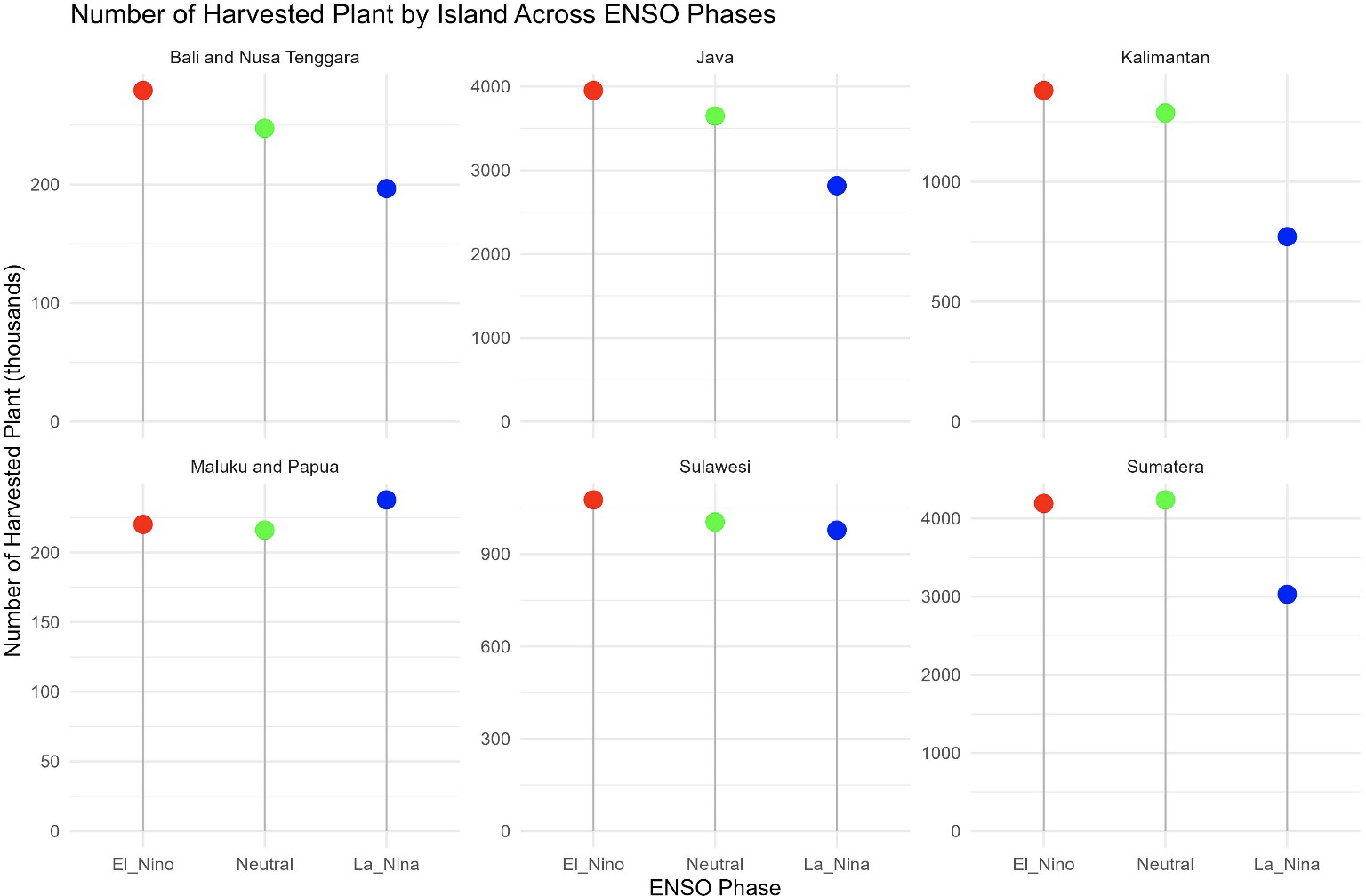
In contrast, El Niño years generally correspond with a higher number of productive trees compared to Neutral years, potentially due to drier conditions favouring flowering induction in mangosteen, which is known to respond positively to stress prior to fruiting. The only exception is Sumatra, where a slight decline in number harvested plant was recorded during El Niño years, suggesting regional variability in mangosteen response to climatic stressors. These findings underscore the importance of understanding regional responses to ENSO variability for improving adaptive strategies in mangosteen cultivation across Indonesia.
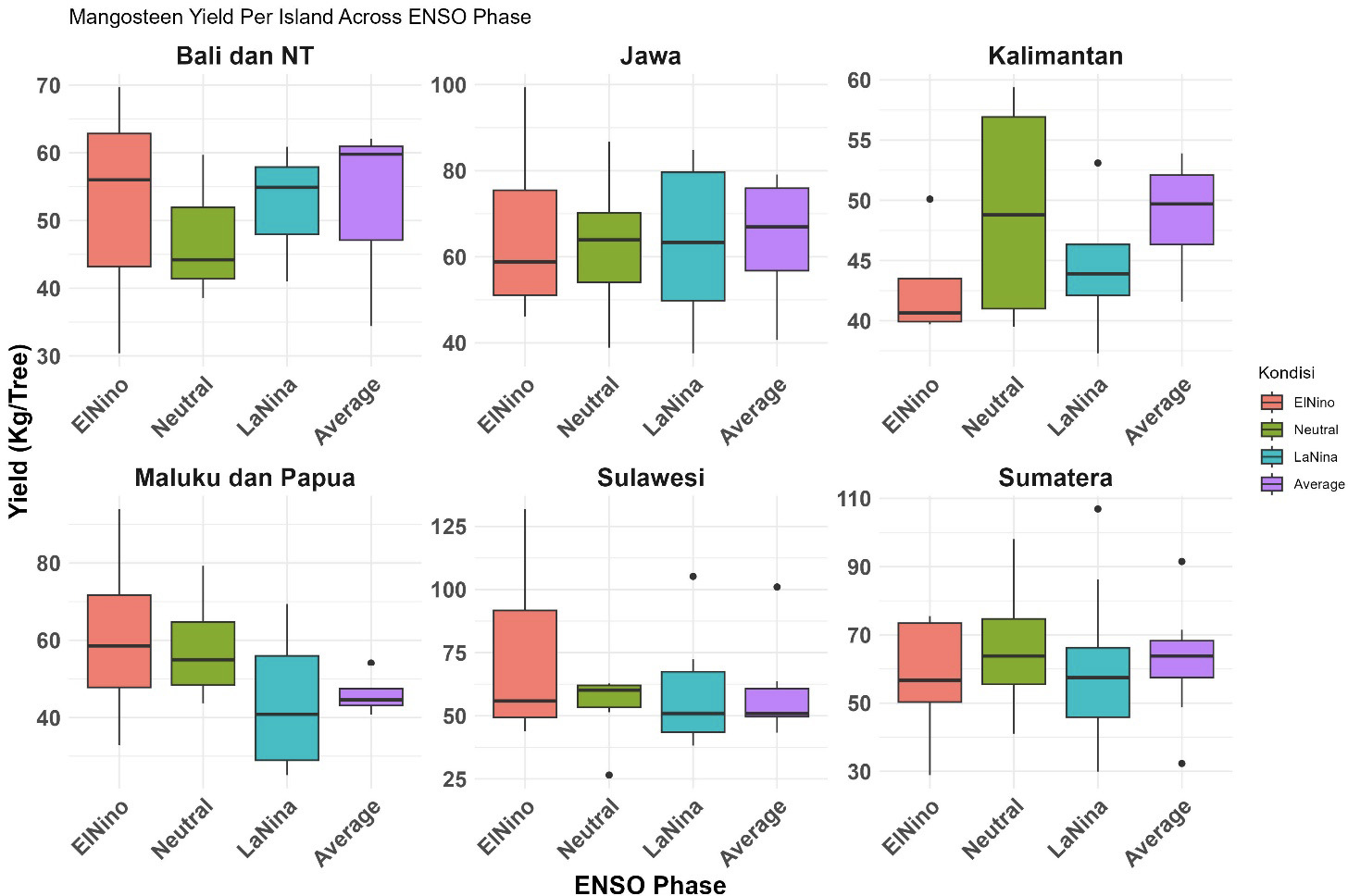
The yield of mangosteen during Neutral, El Niño, and La Niña years in Indonesia is presented in a boxplot in Figure 2. The highest mangosteen yield in Indonesia is found in Java and Sumatra, ranging between 60–70 kg/tree, while the lowest productivity is found in Kalimantan, Maluku, and Papua, at below 50 kg/tree. This indicates that in eastern Indonesia, the crop has not yet been cultivated optimally. There is still significant potential to increase productivity, thus further research and studies on productivity improvement are needed.
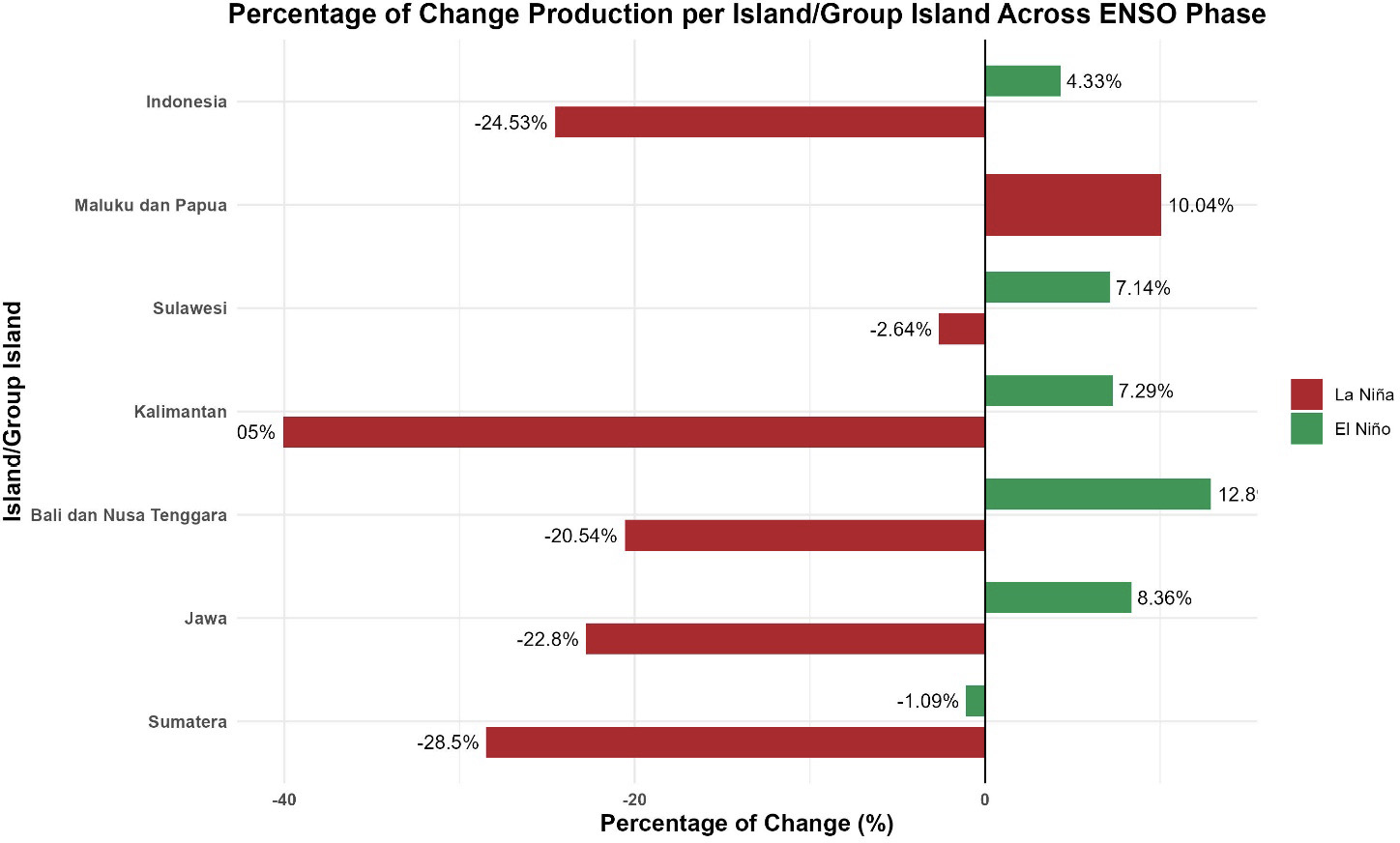
The differing patterns of yield increase and number of harvested plants during El Niño and La Niña events affect mangosteen production patterns. Changes in mangosteen production during El Niño and La Niña years are presented in Figure 3, which shows that, in general, mangosteen production in Indonesia increased during El Niño years, except in Sumatra. Conversely, during La Niña years, production generally decreased, except in Maluku and Papua. During El Niño years, production increased by approximately 1–12%, while during La Niña years, production declined by 2–40%.
The distribution map of production changes during La Niña and El Niño years by province is presented in Figure 4. During La Niña years, it is observed that most provinces in Java, Kalimantan, and Sumatra experienced a decline in production. These regions are the main mangosteen production centers in the country thus production declines in these areas can trigger substantial national level supply fluctuations. The regions with the largest decline in production during La Niña years are Kalimantan, Sumatra, and Java. The regions where production increased during El Niño years are Java, Bali, and Nusa Tenggara.
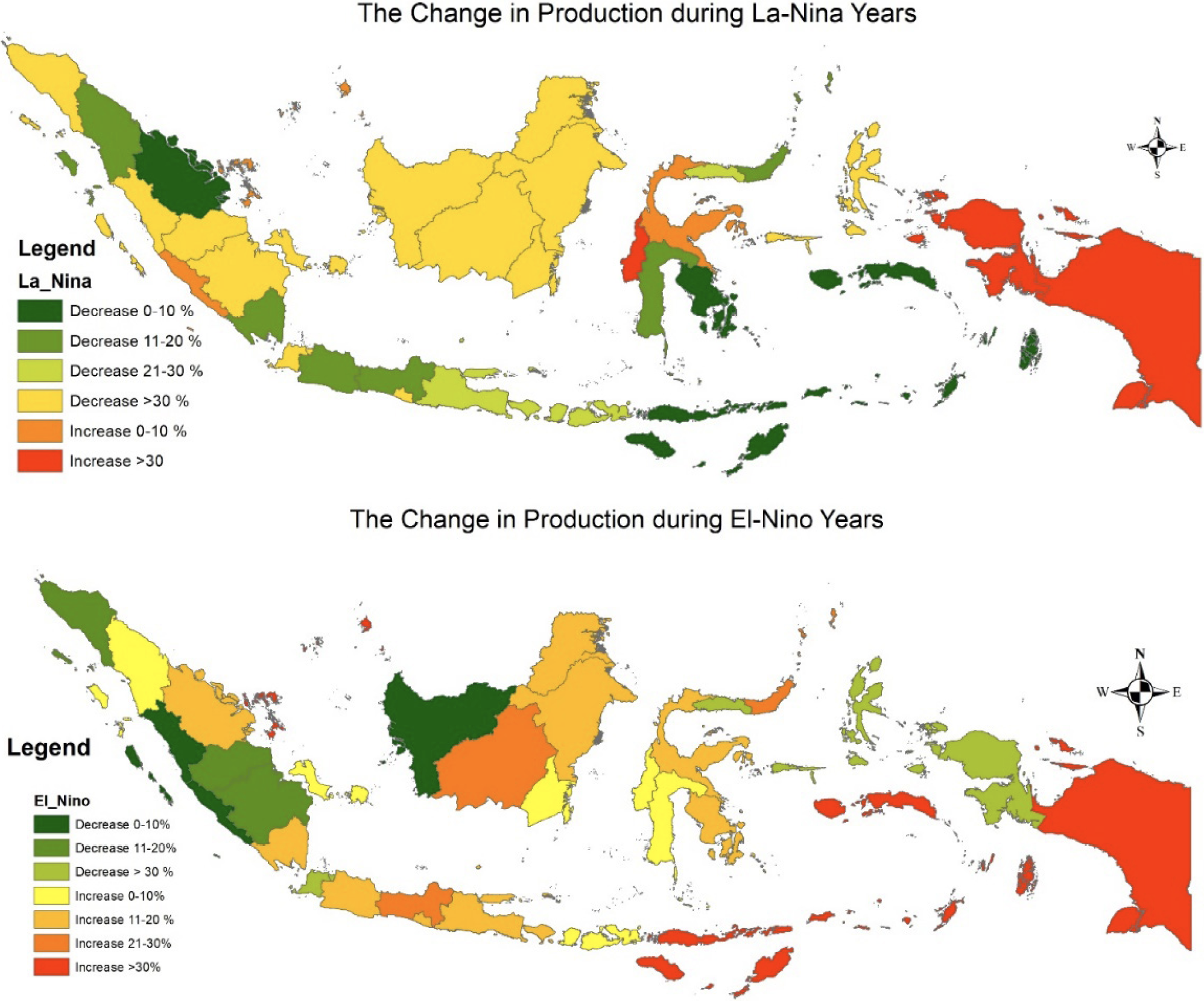
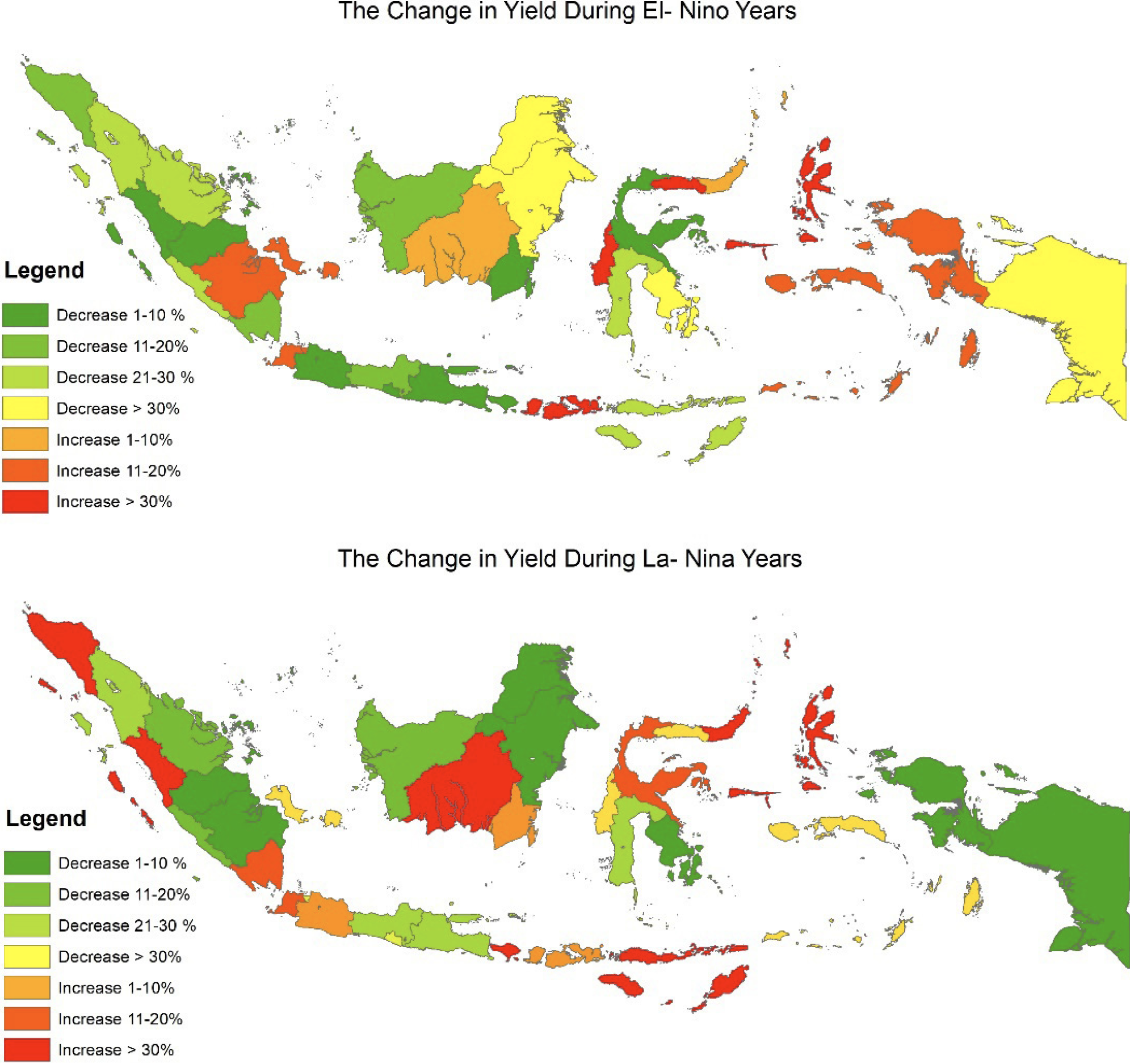
Figure 5 illustrates the spatial distribution of yield changes during El Niño and La Niña years. In general, areas experiencing yield declines during El Niño years include most parts of Sumatra, Java, and Kalimantan. In contrast, during La Niña years, yield reductions predominantly occurred in Central and Eastern Java, Eastern and Central Sumatra, Eastern and Western Kalimantan, Southern Sulawesi, and Papua.
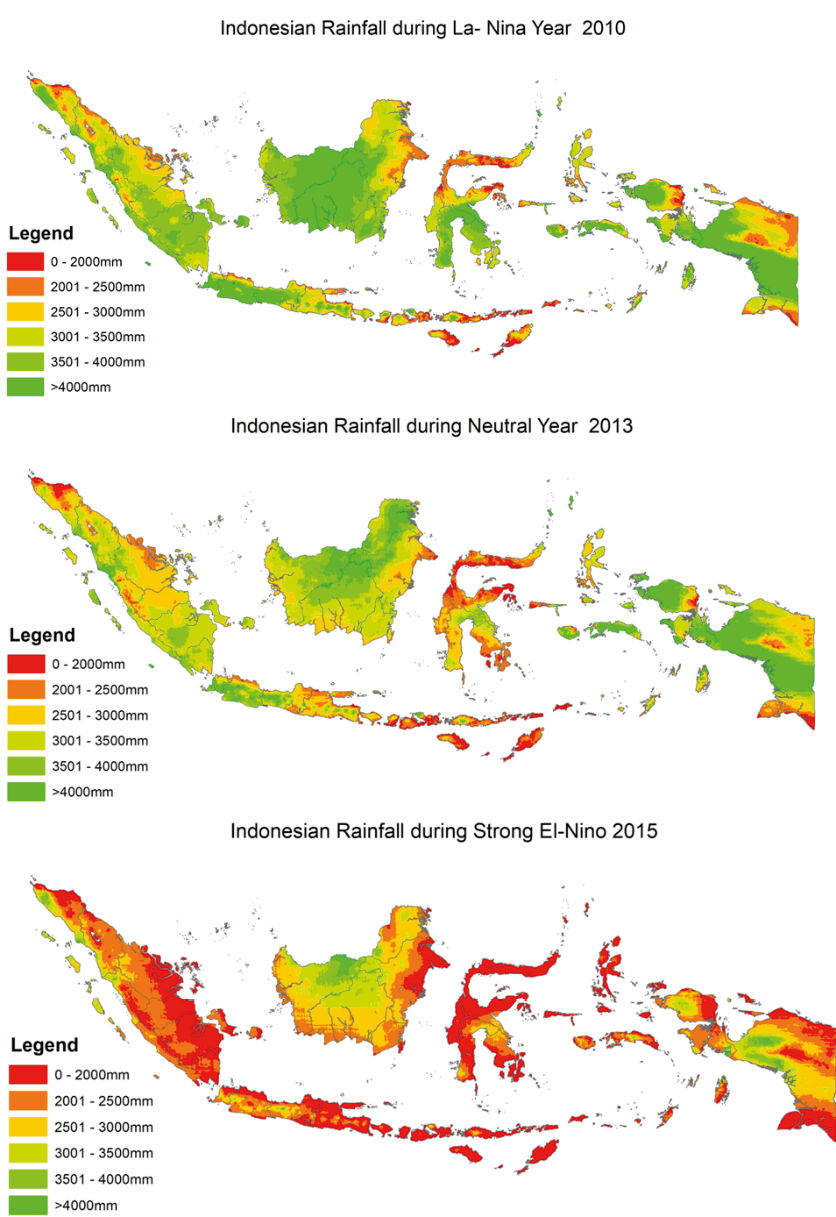
Differences in rainfall during El Niño, neutral, and La Niña years are presented in Figure 6. The selected years are 2015 for El Niño (very strong), 2013 for neutral, and 2010 for La Niña (moderate). In 2015, the very strong El Niño event led to a significant reduction in rainfall across Indonesia, with most regions receiving less than 2000 mm of annual rainfall. In contrast, during the moderate La Niña year of 2010, increased rainfall was observed, resulting in wetter conditions across much of the country.
ENSO phases significantly influence production: during El Niño, there is a general increase in the number of harvested plants in regions like Java, Bali, and Nusa Tenggara, leading to a national production rise of about 4.3%, although Sumatra sees a slight decline. In contrast, La Niña causes a decrease in harvested plants and yield in major producing regions, particularly Java, Sumatra, and Kalimantan, resulting in a 24.5% national production drop. Regional patterns vary: Maluku and Papua show increased productive trees during La Niña and higher productivity during El Niño, while Bali and Nusa Tenggara experience increased productivity in both El Niño and La Niña years. Spatial analysis confirms La Niña’s widespread negative impact and El Niño’s more localized yet potentially beneficial effects.
Mangosteen requires a dry period to induce flowering (Lu & Chacko, 2000; Ounlert et al., 2017; Salakpetch & Nagao, 2006) . Water stress can trigger flowering by altering the hormonal balance within the plant, such as changes in gibberellin, cytokinin, and abscisic acid (ABA) levels, as well as an increase in the carbon-to-nitrogen ratio in the shoots. Water stress suppresses vegetative growth, and an adequate dry period stimulates floral induction (Anisworth, 2006). Rainfall for optimal growth totals 1,500–2,500 mm per year, with 7–10 wet months (rainfall >100 mm/month) and 2–4 dry months (rainfall <50 mm/month) (Nuraini et al., 2022)
Insufficient dry periods caused by high rainfall intensity, such as during La Niña events disrupt the flowering induction process. This disruption is one of the main factors contributing to the decline in the number of harvested plants of mangosteen during La Niña years. This finding is consistent with field research conducted by (Nidyasari et al., 2018), which reported that mangosteen trees failed to flower and produce fruit due to excessive rainfall, reaching 301–400 mm/month. A decrease in rainfall and a delayed onset of the rainy season disrupts production. During El Niño years, the dry period is sufficiently long to induce flowering, which leads to a higher number of harvested plants compared to neutral years.
A different pattern is observed in Maluku and Papua, where the number of harvested plants is higher during La Niña years compared to El Niño years. This can be explained by the fact that Maluku has a rainfall pattern that is the opposite of the general rainfall pattern in most parts of Indonesia (Aldrian and Susanto, 2003). Meanwhile, in Sumatra, the number of harvested plants during El Niño years is lower than in neutral years, possibly because rainfall in this region is influenced not only by ENSO but also by the IOD (Nur’utami & Hidayat, 2016))
During both El Niño and La Niña years, a decline in yield occurred across all major mangosteen-producing regions, such as Sumatra and Java. The same pattern was also observed in Kalimantan, Maluku, and Papua. In El Niño years, although the number of harvested plants was higher compared to neutral years, the continuous decrease in rainfall disrupted flowering and fruit development. After flower formation, adequate irrigation is needed to ensure that the flowers develop into fruit. Since rainfall during El Niño years is lower than normal, Water scarcity due to drought can significantly impede the physiological processes involved in fruit growth and development, resulting in reduced fruit size and diminished yield. This is consistent with the findings of Jaroensutitas Asinee (2023) and Salakpetch et al. (2006), which showed that off-season mangosteen fruits, developing under warmer and drier conditions, had less developed pericarps, resulting in significantly lower fresh weight and smaller fruit size. Off-season trees also produced fewer flowers and fruits per branch, indicating limited resources for fruit development and leading to smaller fruits, fewer blossoms, and increased fruit drop.
In La Niña years, the decline in production was due not only to the lower number of harvested plants caused by the lack of dry stress but also to the high rainfall, which can lead to flower and fruit drop, thereby affecting mangosteen yields. Furthermore, mangosteen is a plant that does not tolerate waterlogging. The roots of the mangosteen plant lack root hairs, which are crucial for efficient absorption of water and nutrients. Additionally, the plant exhibits a low photosynthetic rate and a slow rate of cell division at the shoot meristem (Wiebel et al., 1992). These physiological limitations make mangosteen highly sensitive to environmental stress. Consequently, both drought and excess water can severely hinder its growth and reduce fruit production.
Mangosteen Yield in the Bali and Nusa Tenggara regions shows a different pattern compared to other areas, where yield during neutral years is lower than in El Niño and La Niña years. Bali and Nusa Tenggara have relatively low rainfall compared to other regions in Indonesia. The climate types in West Nusa Tenggara (NTB) and East Nusa Tenggara (NTT) include C3, D3, D4, and E4 (Oldeman et al., 1980; Susanti et al., 2021; Tasiyah et al., 2024). During La Niña years, increased rainfall may contribute to higher yield. Meanwhile, the rise in yield during El Niño years is likely since the decrease in rainfall does not occur during the flowering and fruit development stages. However, this hypothesis requires further investigation using more detailed data.
The changes in total mangosteen production shown in Figure 3 indicate that during La Niña years, there was a significant decline in production, especially in key mangosteen-producing regions such as Sumatra and Java. During El Niño years, production increased despite lower yield compared to neutral years, due to a higher number of harvested plants in those years. However, the increase during El Niño was lower than the decrease during La Niña. According to the Directorate of Horticultural (2025), in 2010 when Indonesia’s climate was disrupted by a moderate intensity La Niña, the production of vegetables and fruits was severely affected, leading to shortages that triggered price hikes. Fruit production declined by 35–75%, while vegetable production fell to only 20–25% of normal levels.
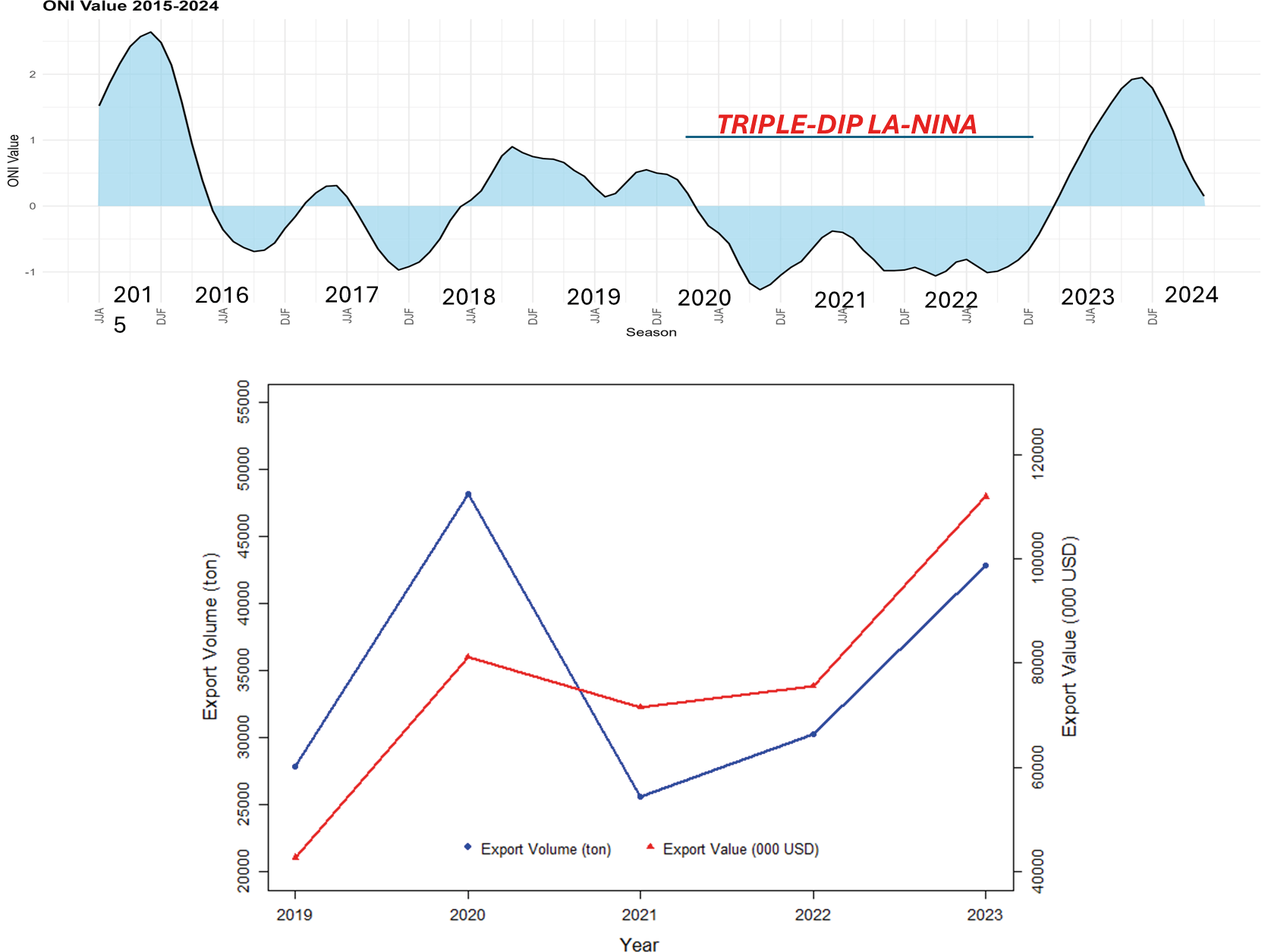
The impact of reduced mangosteen production in key producing areas disrupts the supply needed to meet market demand. This impact can be seen, for example, in the sharp decline in Indonesia’s mangosteen export volume in 2021 and 2022 because of the Triple Dip La Niña, a rare climatic phenomenon characterized by the continuation or recurrence of La Niña conditions over three successive years, which lasted from mid-2020 to early 2023 (Figure 7). The export volume in 2021 declined by nearly 50% compared to that in 2020. This clearly demonstrates that ENSO had a significant economic impact on the mangosteen trade system in Indonesia.
The results of this study suggest that the ENSO index at moderate to strong intensities can serve as an early warning tool for policymakers in developing preventive measures for mangosteen cultivation management. ENSO forecasts issued by various global climate research institutions can be used as essential references for cultivation planning. Several adaptive measures can be considered, including the provision of irrigation systems during El Niño years to mitigate drought risks, and the construction of adequate drainage systems during La Niña years to prevent excessive water accumulation that could damage crops. In addition, it is important to develop technologies that allow artificial drought stress induction during wetter years, enabling flower initiation to still occur. During high rainfall La Niña years, the application of hormones or enzymes that strengthen flowers and fruits is also necessary to prevent drop caused by extreme weather conditions. For instance, (Lerslerwong et al., 2013) can extend harvest period by chemical control.
ENSO has been shown to significantly affect rainfall patterns in Indonesia. El Niño events are associated with reduced rainfall, while La Niña events tend to increase rainfall across the region. ENSO influences the dynamics of mangosteen production In Indonesia.The number of harvested plant decreases during La Niña years and increases during El Niño years in most regions of Indonesia except Sumatera. In general, productivity during both El Niño and La Niña years is lower compared to neutral years except Bali- Nusa Tenggara and Makuku-Papua. Annual total production tends to increase during El Niño years and decrease during La Niña years, with the decline in production during La Niña being greater than that during El Niño.
Aizat, W. M., Jamil, I. N., Ahmad-Hashim, F. H., & Noor, N. M. (2019). Recent updates on metabolite composition and medicinal benefits of mangosteen plant. PeerJ, 7. https://doi.org/10.7717/peerj.6324
Aldrian, E., & Susanto, D. R. (2003). Identification of three dominant rainfall regions within Indonesia and their relationship to sea surface temperature. International Journal of Climatology, 23(12), 1435–1452.
Alhadid, at, & Budi Nugroho, A. (2024). The Study of Triple-Dip La Nina Phenomenon (2020-2023) and Its Impact on Atmospheric Dynamics and Rainfall in The Indonesian Region. Science and Education, 3, 707–716. https://cds.climate.copernicus.eu.
Anisworth, C. (2006). Flowering and its Manipulation (J. Roberts, D. Evans, Imaseki, & J. K. C. Rose, Eds.). Blackwell Publishing.
Ansori, A. N. M., Fadholly, A., Hayaza, S., Susilo, R. J. K., Inayatillah, B., Winarni, D., & Husen, S. A. (2020). A review on medicinal properties of mangosteen (Garcinia mangostana L.). Research Journal of Pharmacy and Technology, 13(2), 974–982. https://doi.org/10.5958/0974-360X.2020.00182.1
Ansori, A. N. M., Kharisma, V. D., Parikesit, A. A., Dian, F. A., Probojati, R. T., Rebezov, M., Scherbakov, P., Burkov, P., Zhdanova, G., Mikhalev, A., Antonius, Y., Pratama, M. R. F., Sumantri, N. I., Sucipto, T. H., & Zainul, R. (2022). Bioactive Compounds from Mangosteen (Garcinia mangostana L.) as an Antiviral Agent via Dual Inhibitor Mechanism against SARS-CoV-2: An In Silico Approach. Pharmacognosy Journal, 14(1), 85–90. https://doi.org/10.5530/pj.2022.14.12
Apiratikorn, S., Sdoodee, S., Lerslerwong, L., & Rongsawat, S. (2012). The impact of climatic variability on phenological change, yield and fruit quality of mangosteen in Phatthalung province, southern Thailand. Kasetsart Journal - Natural Science, 46(1), 1–9.
Apiratikorn, S., Sdoodee, S., & Limsakul, A. (2014). Climate-related changes in tropical-fruit flowering phases in Songkhla province, Southern Thailand. Research Journal of Applied Sciences, Engineering and Technology, 7(15), 3150–3158. https://doi.org/10.19026/rjaset.7.654
Arrigo, R. D., & Wilson, R. (2008). El nino and indian ocean influences on Indonesian drought :implication for forecasting rainfall and crop productivity. International Journal of Climatology, 28, 611–616. https://doi.org/10.1002/joc
Chen, Z., Li, L., Wang, B., Fan, J., Lu, T., & Lv, K. (2024). The impact of global warming on ENSO from the perspective of objective signals. Atmospheric Research, 299. https://doi.org/10.1016/j.atmosres.2023.107176
Cirino, P. H., Féres, J. G., Braga, M. J., & Reis, E. (2015). Assessing the impacts of ENSO-related weather effects on the Brazilian agriculture. Procedia Economics and Finance, 24(15), 146–155. https://doi.org/10.1016/S2212-5671(15)00635-8
Cobon, D. H., Ewai, M., Inape, K., & Bourke, R. M. (2016). Food shortages are associated with droughts, floods, frosts and ENSO in Papua New Guinea. AGSY, 145, 150–164. https://doi.org/10.1016/j.agsy.2016.02.012
Directorate General of Horticulture. 2025. Sekolah Lapang Iklim Hortikultura Antisipasi Dampak Perubahan Iklim. Tabloid Sinar Tani. https://tabloidsinartani.com/detail/indeks/komoditi/2691-sekolah-lapang-iklim-hortikultura---antisipasi-dampak-perubahan-iklim (May 2025)
Directorate General of Horticulture. (2021). Buku Lapang Budidaya Manggis (Field Guide to Mangosteen Cultivation). Directorate General of Horticulture.
El Ramija, K., Sudrajat, A., Irwandi, H., & Ariantono, J. Y. (2021). Influence of El Niño 2015/2016 on Climate Variability and Production of Main Crops in Langkat Regency. Agromet, 35(2), 98–107. https://doi.org/10.29244/j.agromet.35.2.98-107
Endah Ardhi Ningrum Abdullah, S., Klimatologi Kelas Jawa Tengah, S. I., & Siliwangi, J. (n.d.). Dampak dan Tingkat Resiko La Nina Terhadap Penambahan Curah Hujan di Jawa Tengah (The Impact and Risk Levels of La Nina on Increasing Rainfall IN Central Jawa). 15(1), 1–7. https://doi.org/10.46824/megasains.8e9xwd36
Harahap, W. N., Yuniasih, B., & Gunawan, S. (2023). Dampak La Nina 2021-2022 terhadap Peningkatan Curah Hujan. AGROISTA : Jurnal Agroteknologi, 7(1), 26–32. https://doi.org/10.55180/agi.v7i1.364
Hendrawan, I. G., Asai, K., Triwahyuni, A., & Lestari, D. V. (2019). The interanual rainfall variability in Indonesia corresponding to El Niño Southern Oscillation and Indian Ocean Dipole. Acta Oceanologica Sinica, 38(7), 57–66. https://doi.org/10.1007/s13131-019-1457-1
Hidayat, R., & Ando, K. (2018). Rainfall Variability Over Indonesia and Its Relation to ENSO/IOD: Estimated Using Jra-25/Jcdas. Agromet, 28(1), 1. https://doi.org/10.29244/j.agromet.28.1.1-8
Hidayat, R., Juniarti, M. D., & Ma’Rufah, U. (2018). Impact of la Niña and la Niña Modoki on Indonesia rainfall variability. IOP Conference Series: Earth and Environmental Science, 149(1). https://doi.org/10.1088/1755-1315/149/1/012046
Hidayati, R., & Chrisendo, D. N. (2010). Prediction Of Planting Date And Growing Period Using Sea Surface Temperature (Sst) Anomalies In Nino 3.4 For Indramayu District. J.Agromet, 24(2), 1–8. http://journal.ipb.ac.id/index.php/agromet
Iskandar, I., Lestrai, D. O., & Nur, M. (2019). Impact of El Niño and El Niño Modoki Events on Indonesian Rainfall. Makara Journal of Science, 23(4), 217–222. https://doi.org/10.7454/mss.v23i4.11517
Jaroensutasinee, K., Jaroensutasinee, M., & Boonsanong, P. (2023a). Climatic Factor Differences and Mangosteen Fruit Quality between On-and Off-Season Productions. Emerging Science Journal, 7(2), 578–588. https://doi.org/10.28991/ESJ-2023-07-02-020
Jaroensutasinee, K., Jaroensutasinee, M., & Boonsanong, P. (2023b). Climatic Factor Differences and Mangosteen Fruit Quality between On-and Off-Season Productions. Emerging Science Journal, 7(2), 578–588. https://doi.org/10.28991/ESJ-2023-07-02-020
Kalick, L. S., Khan, H. A., Maung, E., Baez, Y., Atkinson, A. N., Wallace, C. E., Day, F., Delgadillo, B. E., Mondal, A., Watanapokasin, R., Barbalho, S. M., & Bishayee, A. (2023). Mangosteen for malignancy prevention and intervention: Current evidence, molecular mechanisms, and future perspectives. Pharmacological Research, 188. https://doi.org/10.1016/j.phrs.2022.106630
Karuniasa, M., & Pambudi, P. A. (2022). The analysis of the El Niño phenomenon in the East Nusa Tenggara Province, Indonesia. Journal of Water and Land Development, 52, 180–185. https://doi.org/10.24425/jwld.2022.140388
Leng, G., Zhang, X., Huang, M., Asrar, G. R., & Leung, L. R. (2016). The role of climate covariability on crop yields in the conterminous United States. Nature, 6(September), 1–11. https://doi.org/10.1038/srep33160
Lerslerwong, L., Rugkong, A., Imsabai, W., & Ketsa, S. (2013). The harvest period of mangosteen fruit can be extended by chemical control of ripening-A proof of concept study. Scientia Horticulturae, 157, 13–18. https://doi.org/10.1016/j.scienta.2013.03.027
Lu, P., & Chacko, E. K. (2000). Effect of water stress on mango flowering in low latitude tropics of Northern Australia. Acta Horticulturae, 509, 283–289. https://doi.org/10.17660/actahortic.2000.509.31
Mansyah, E. (2009). Pengaruh curah hujan terhadap getah kuning pada buah manggis (Garcinia angostana L.) (The effect of rain fall on gamboge disorder of mangosteen fruit (Garcinia mangostana L.). In A. D. Susila, D. Winarso, & Poerwanto R (Eds.), Seminar Ilmiah Perhimpunan Hortikultura Indones1a. (pp. 594–600). https://www.researchgate.net/publication/288834736
Mansyah, E., Muas, I., Jawal A.S, M., & Affandi. (2013). The Research for Supporting Sustainable Mangosteen (Garcinia mangostana L.) Production. International Journal on Advanced Science, Engineering and Information Technology, 3(1), 16–22. https://doi.org/10.18517/ijaseit.3.1.269
Ministry of Agriculture. (2024). Statistik Pertanian 2024 (Agricultural Statistics 2024). Center for Agricultural Data and Information System Ministry of Agriculture.
Mulyana, E. (2002). Pengaruh dipole mode terhadap curah hujan di Indonesia. Jurnal Sains & Teknologi Modifikasi Cuaca, 3(1), 39–43.
Nauman, M. C., & Johnson, J. J. (2022). The purple mangosteen (Garcinia mangostana): Defining the anticancer potential of selected xanthones. Pharmacological Research, 175. https://doi.org/10.1016/j.phrs.2021.106032
Nidyasari, R. S., Akmal, H., & Sri Ariyanti, N. (2018). Karakterisasi Morfologi dan Anatomi Tanaman Manggis dan Kerabatnya (Garcinia spp.) di Taman Buah (Mekarsari Morphological and Anatomical Characterization of Mangosteen Plants and Its Relatives (Garcinia spp.) in Mekarsari Fruit Garden). Jurnal Sumber Daya Hayati, 4(1), 12–20. http://biologi.ipb.ac.id/jurnal/index.php/jsdhayati
Nugraheni, M., Zakaria, A., Wahono, E. P., Kusumastuti, D. I., & Herison, A. (2024a). Rainfall Patterns in Indonesian Provinces During El-Nino and La-Nina: FFT and Lomb Periodogram Analysis. MEDIA KOMUNIKASI TEKNIK SIPIL, 30(2), 157–165. https://doi.org/10.14710/mkts.v30i2.65646
Nugraheni, M., Zakaria, A., Wahono, E. P., Kusumastuti, D. I., & Herison, A. (2024b). Rainfall Patterns in Indonesian Provinces During El-Nino and La-Nina: FFT and Lomb Periodogram Analysis. MEDIA KOMUNIKASI TEKNIK SIPIL, 30(2), 157–165. https://doi.org/10.14710/mkts.v30i2.65646
Nuraini, F., Fajarsari, I. M., Rosita, D., & Cahyani, E. N. (2022). Profil Manggis Mendukung Ekspor. Kementerian Pertanian.
Nur’utami, M. N., & Hidayat, R. (2016). Influences of IOD and ENSO to Indonesian Rainfall Variability: Role of Atmosphere-ocean Interaction in the Indo-pacific Sector. Procedia Environmental Sciences, 33, 196–203. https://doi.org/10.1016/j.proenv.2016.03.070
Oldeman, L. R., Las, I., & Muladi. (1980). The Agroclimatic Maps of Kalimantan, Maluku, Irian Jaya and Bali, West and East Nusa Tenggara (Vol. 60). Central Research Institute for Agriculture.
Ounlert, P., Sdoodee, S., & Tongkhow, P. (2017). The mangosteen flowering date model in Nakhon Si Thammarat province, southern Thailand. 18(1), 176–184. https://doi.org/10.5513/JCEA01/18.1.1876
Ovalle-Magallanes, B., Eugenio-Pérez, D., & Pedraza-Chaverri, J. (2017). Medicinal properties of mangosteen (Garcinia mangostana L.): A comprehensive update. In Food and Chemical Toxicology (Vol. 109, pp. 102–122). Elsevier Ltd. https://doi.org/10.1016/j.fct.2017.08.021
Raju, C., Pazhanivelan, S., Perianadar, I. V., Kaliaperumal, R., Sathyamoorthy, N. K., & Sendhilvel, V. (2024). Climate Change as an Existential Threat to Tropical Fruit Crop Production; a Review. In Agriculture (Switzerland) (Vol. 14, Issue 11). Multidisciplinary Digital Publishing Institute (MDPI). https://doi.org/10.3390/agriculture14112018
Ramirez-rodrigues, M. A., Asseng, S., Fraisse, C., Stefanova, L., & Eisenkolbi, A. (2014). Climate risk management tailoring wheat management to ENSO phases for increased wheat production in Paraguay. Climate Risk Management, 3, 24–38. https://doi.org/10.1016/j.crm.2014.06.001
Ray, D. K., Gerber, J. S., Macdonald, G. K., & West, P. C. (2015). Climate variation explains a third of global crop yield variability. Nature Communications, 6, 1–9. https://doi.org/10.1038/ncomms6989
Salakpetch, S., & Nagao, M. A. (2006). Soil Moisture Stress and Irrigation Management Promote Mangosteen (Garcinia mangostana L.) Flowering.
Sarvina, Y., & Sari, K. (2018). Dampak ENSO Terhadap Produksi dan Puncak Panen Durian di Indonesia (ENSO Impacts on Production and Peak Harvest Season of Durian in Indonesia). Dampak ENSO Terhadap Produksi Dan Puncak Panen Durian Di Indonesia (ENSO Impacts on Production and Peak Harvest Season of Durian in Indonesia), 41(2), 149–158. https://doi.org/10.2017/jti.v41i2.7829
Sayruamyat, S., Praneetvatakul, S., Vijitsrikamol, K., Potchanasin, C., Thamthanakoon, N., & Pananurak, P. (2021). Orchardists’ Needs for the Development of Technology and Innovation Lecturer, Department of Agricultural and Resource Economics 2*. Journal of Business, Economics and Communications, 17(1), 136–151.
Sidauruk, M., Juni Risma Saragih, H., Tri Utomo, S., & Widodo, P. (2023). Rainfall Variability In East Kalimantan From Impact Of El Nino And La Nina To Effort Disaster Prevention To Support National Security. International Journal of Progressive Sciences and Technologies (IJPSAT, 38(2), 431–440. https://origin.cpc.ncep.noaa.gov
Supari, Tangang, F., Salimun, E., Aldrian, E., Sopaheluwakan, A., & Juneng, L. (2018). ENSO modulation of seasonal rainfall and extremes in Indonesia. Climate Dynamics, 51(7–8), 2559–2580. https://doi.org/10.1007/s00382-017-4028-8
Surmaini, E., Hadi, T. W., Subagyono, K., & Puspito, N. T. (2015). Early detection of drought impact on rice paddies in Indonesia by means of Niño 3.4 index. Theoretical and Applied Climatology, 121(3–4), 669–684. https://doi.org/10.1007/s00704-014-1258-0
Susanti, E., Surmaini, E., Pramudia, A., Heryani, N., Estiningtyas, W., Suciantini, S., & Apriyana, Y. (2021). Pemutakhiran Peta Sumberdaya Agroklimat Indonesia untuk Mendukung Perencanaan Pertanian. Jurnal Tanah Dan Iklim, 45(1), 47. https://doi.org/10.21082/jti.v45n1.2021.47-58
Tasiyah, L. A., Sutriono, R., & Silawibawa, I. P. (2024). Analisis Tipe iklim Berdasarkan Curah Hujan Pada Beberapa Kecamatan di Kabupaten Lombok Barat. Journal of Soil Quality and Management 1(1), 67–72. https://jsqm.unram.ac.id/index.php/jsqm/article/view/169
Tengsetasak, P., Tongkoom, K., Yomkerd, J., Susawaengsup, C., Khongdee, N., Chatsungnoen, T., Dangtungee, R., & Bhuyar, P. (2024). Sustainable Strategies for Fresh Mangosteen: Adapting to Climate Challenges. In Earth Systems and Environment. Springer Science and Business Media Deutschland GmbH. https://doi.org/10.1007/s41748-024-00512-y
Wiebel, J., Downton, W. J. S., & Chacko, E. K. (1992). Influence of applied plant growth regulators on bud dormancy and growth of mangosteen (Garcinia mangostana L.). In Scientia Horticulturae (Vol. 52).
Xie, X., Huang, P., Zhou, S., & Zhang, J. (2022). Changes in ENSO-driven Hadley circulation variability under global warming. Atmospheric Research, 274. https://doi.org/10.1016/j.atmosres.2022.106220