https://doi.org/10.36253/ijam-3827
Received: November 5, 2025; Accepted: March 31, 2026; Published: September 15, 2026
Direct and indirect effects of heat stress on cattle in East Africa
1 Food and Agriculture Organization (FAO), Rome, Italy
2 International Fund for Agricultural Development (IFAD), Rome, Italy
*Corresponding author. Email: jorge.alvarbeltran@fao.org
Abstract. Context. East Africa has a heterogeneous climate, ranging from arid and semi-arid zones to humid highlands. This climate leads to diverse agroecological conditions and livestock production systems, from extensive pastoral and agro-pastoral systems in drier regions to intensive zero-grazing dairy systems. Climate-driven factors are anticipated to impact animal welfare, as well as reproduction and production parameters. Understanding the latter is paramount in a region where dairy production represents a lifeline for pastoral systems. Objective. Here we use state-of-the-art climate projections (CORDEX-CORE) across two representative concentration pathways (RCP) 2.6 and 8.5 to assess the direct (animal welfare) and indirect (fodder supply) effects of climate change on indigenous and climate resilient-breeds (Boran) in Tanzania, Kenya, Uganda, and Rwanda. Methods. Our approach involves applying the Temperature-Humidity Index (THI) and Milk Production Decline (MDEC) equations to assess heat stress on animal welfare and milk production, alongside evaluating the indirect effects on fodder supply, particularly maize and Napier grass through the Python Agroecological Zoning (AEZ) eco-physiological model. Results. Moderate stress (81< THI ≤ 91) is likely to spread across the region under future climate, threatening milk production and reproductive performance. Boran daily milk yields losses may reach 0.45 kg/day (~14%) by 2070-2099 under RCP 8.5. Similarly, fodder shortages are anticipated in northern parts of Kenya and Uganda, threatening consistent animal fodder supply and affecting smallholder farmers dependent on rain-fed agricultural systems. Conclusion. The compounded effect of simultaneous weather hazards intensifies risks in vulnerable regions facing limited coping capacity. As demand for meat and dairy continues to rise in East Africa, immediate climate actions are essential to safeguard livestock productivity and to enhance food security in a region confronting the dire consequences of climate change. Significance. This comprehensive analysis is instrumental in guiding public and private investments aimed at fostering climate resilience and improving disaster risk management across livestock production systems in the region.
Keywords: THI, indigenous breeds, heat-tolerance, food security, climate resilience.
Contents
1.1. Cattle: a lifeline for smallholder farmers in East Africa
1.2. Behavioral and physiological effects of heat stress on cattle
2.1. Climatic and ecosystem characterization
2.2. Livestock production systems
2.4. Historical and future climate data
2.5. Direct effects of climate change
2.6. Indirect effects of climate change
3.1. Effects of climate change on animal welfare
3.1.1. Historical THI analysis
3.2. Effects of climate change on milk production
3.2.1. Historical milk yield analysis
3.2.2. Future milk yield analysis
3.3. Effects of climate change on fodder resources
4.4. Uncertainties of this study and future research perspectives
Declaration of interest statement
1. Introduction
1.1. Cattle: a lifeline for smallholder farmers in East Africa
About 19.6% of the 390 million cattle heads in Africa are found in the United Republic of Tanzania (9.7%), the Republic of Kenya (5.6%), Uganda (3.9%), and Rwanda (0.4%) (FAO, 2023a). While cattle production is crucial in the region, dairy farming is the lifeline for East African farmers, serving as a multifaceted cornerstone sustaining households and community livelihoods amid the challenges of climate change. In the diverse agricultural landscape of East Africa, where smallholder farming predominates, dairy farming not only provides income but also holds cultural significance, promotes social cohesion, and enhances resilience against economic shocks and environmental stresses. Dairy farming is, therefore, a primary source of income and wealth accumulation (Orodho, 2019; Rufino et al. 2013; Ngigi et al. 2010). Cattle, as the main source of dairy, provides a steady stream of milk that is processed and sold, contributing to household income generation and diversification. This additional income enables access to credit and financial services, empowering farmers to invest in agricultural inputs, education, and healthcare for their families. Beyond its economic importance, dairy farming is fundamental to food security and human nutrition due to its high-quality protein content, essential amino acids, vitamins, and minerals critical for health and growth, especially for vulnerable groups such as children and pregnant women (Beal, 2023; FAO, 2023b; Lokuruka, 2020).
Dairy production in East Africa is primarily smallholder and low-input systems. Three dairy production systems are typically identified: pastoralism, agro-pastoralism, and mixed crop-livestock (Hunt et al., 2019; Dawson et al. 2014). Production types vary based on the climatic conditions, the availability of fodder, access to land production resources, consumer demands, and market availability. Seasonal climatic variations, particularly rainfall and temperature, impact fodder and water availability, leading to detrimental effects on milk yields and reproductive performance of dairy animals (Ongadi et al. 2020). In a changing climate, rising temperatures, erratic rainfall patterns, and prolonged droughts, along with their complex interactions, are expected to further constrain water and fodder availability and quality (Trisos et al. 2022). Climate change may also influence the distribution and prevalence of livestock diseases and pests, which threaten fodder and dairy productivity, ultimately impacting food security and nutrition (Nalianya et al. 2020; Tadesse and Dereje, 2018).
1.2. Behavioral and physiological effects of heat stress on cattle
Climatic parameters such as air temperature, relative humidity, solar radiation, and rainfall patterns significantly impact livestock welfare, survival, disease, parasitism, and fodder availability and quality (Brychkova et al. 2022; Nardone et al. 2008). Among these climatic parameters, heat stress is the most critical factor affecting dairy production systems in the Horn of Africa (Rahimi et al. 2021). The normal temperature range, referred to as the thermoneutral zone (TNZ) (Ahmad et al. 2018), is the comfort zone at which dairy cows do not require additional energy to regulate their body temperature. TNZ is influenced by factors such as age, breed, feed intake, diet composition, prior temperature acclimatization, production levels, housing and stall conditions, tissue insulation (fat and skin), external insulation (coat), and animal behavior. Different dairy breeds exhibit varying abilities to maintain a constant internal body temperature, regardless of the external environmental conditions, due to various temperature-regulating physiological mechanisms (Gianone et al. 2023; Tao et al. 2020).
Heat stress is generally calculated using the Temperature Humidity Index (THI), with a value greater than 79 considered the onset of dairy cattle heat stress (see Table 1). However, the latter THI threshold can vary considerably depending on the breed. Heat stress arises when the animal’s body temperature exceeds their normal range due to prolonged exposure to excessive heat and humidity (Becker et al. 2020). This condition occurs when an animal’s ability to dissipate heat is compromised, leading to physiological and behavioral changes. Some physiological responses to heat stress in dairy cattle include sweating, elevated respiration rates, vasodilation with increased blood flow to the skin surface, higher rectal temperatures, reduced metabolic rates, decreased dry matter intake, diminished feed utilization efficiency, and altered water metabolism (Ganaie, 2013). These responses can adversely affect the productivity and health of dairy animals. Specifically, heat stress leads to decreased feed intake, lower milk yields, and changes in milk quality (Tao et al. 2020; Kumar et al. 2020; Smith et al. 2013). Heat stress exerts strong and well-documented constraints on livestock reproductive parameters, such as reduced fertility and conception rates (Dovolou et al. 2023; Ahmad et al. 2018), with critical implications for long-term sustainability of pastoral systems. These reproductive challenges arise from various physiological effects, including reduced blood flow to the uterus, altered hormone levels, and reduced quality of oocytes and embryos (Dovolou et al. 2023; Thatcher et al. 2010). Elevated thermal load also disrupts endocrine regulation and directly impairs ovarian and testicular function, leading to reduced conception and pregnancy rates, extended service and calving intervals, and increased early embryonic loss (Marai et al. 2007; Thornton et al. 2021). Female fertility is particularly vulnerable because the follicle-enclosed oocyte is highly sensitive to hyperthermia, while heat stress in males reduces spermatogenesis and semen quality, further constraining herd fertility. These reproductive impacts translate into cumulative demographic and economic consequences for pastoral herds, including lower replacement rates and reduced productivity over successive seasons.
| THI category | THI units | Animal’s responses |
|---|---|---|
| None | THI ≤ 75 | – Both productive and reproductive performance are optimum. |
| Mild | 75< THI ≤ 81 | – Livestock body can control heat stress by chemical and physical means. – Livestock seeks shade. – Rectal temperature and respiration rates increase. – Dilation of blood vessels. |
| Moderate | 81< THI ≤ 91 | – Body temperature increases and productive and reproductive are severely affected. – Respiration rates significantly increase. – Dry matter intake and ratio of forage to concentrate intake decreases. – Water intake significantly increases. |
| Severe/Danger | THI >91 | – Respiration and excessive saliva production increases. – Productive and reproductive performance significantly decrease. – Rumination and urination decrease. – Livestock may die under extreme stress conditions. |
Breed-specific differences strongly mediate reproductive resilience under heat stress. Tropically adapted Bos indicus cattle consistently exhibit greater reproductive tolerance than Bos taurus breeds, with experimental evidence showing higher embryo survival and developmental competence under elevated temperatures (Silva et al. 2013). Heat stress also impairs immune function, increasing disease susceptibility and compounding reproductive losses, particularly in pastoral systems with limited veterinary and nutritional buffering (Renaudeau et al. 2012). Together, these interactions highlight reproductive capacity and immune robustness as key traits underpinning heat tolerance and long-term adaptation in climate-stressed livestock systems. Heat stress is also linked to metabolic disorders through dysbiosis of rumen and hindgut microbiota (doi: 10.1128/spectrum.03312-23; doi: 10.3389/fmicb.2025.1724640). Several hormonal responses, triggering immune reactions are activated during heat stress (Cartwright et al. 2023; Bagath et al. 2019), leading to increased incidences of intramammary infections among heat stressed animals (Rakib et al. 2020).
1.3. Study rationale
In the Horn of Africa, recent failures in rainy seasons from 2020 to 2023, intensified by inter-annual rainfall variability associated with El Niño Southern Oscillation, have led to significant declines in crop yields and milk production. Insufficient water and fodder availability has resulted in the loss of over 9 million livestock heads (NASA, 2023). Such alarming statistics underscore the urgent need for the Food and Agriculture Organization (FAO) to broaden its understanding of heat stress on animal’s welfare in a region where livelihoods are increasingly compromised, and food security is under severe threat. While literature on this topic is emerging (Rahimi et al. 2021; Ekine-Dzivenu et al. 2020), this study aims to build on the existing foundational work by exploring the dual effects (direct impacts on animal welfare and productivity and indirect effects on animal food supply) of heat stress on livestock. Given the complex interactions between climate variables and the physiological responses of livestock, this research is both timely and necessary.
To achieve this objective, we apply advanced climate projections from the Coordinated Regional Downscaling Experiment (CORDEX) and the Coordinated Output for Regional Evaluations (CORE). Additionally, we adopt well established scientific analytical frameworks such as the THI and Agroecological Zoning (AEZ) eco-physiological model to assess the evolving situation in a holistic manner. By linking climate science with impacts and actions, our goal is to provide evidence-based insights for decision-makers, agricultural extension workers, and researchers. This research also aims to equip pastoral communities with the knowledge and strategies necessary to tackle the increasing challenges posed by climate change, thereby enhancing resilience and promoting sustainable livelihoods.
2. Materials and methods
2.1. Climatic and ecosystem characterization
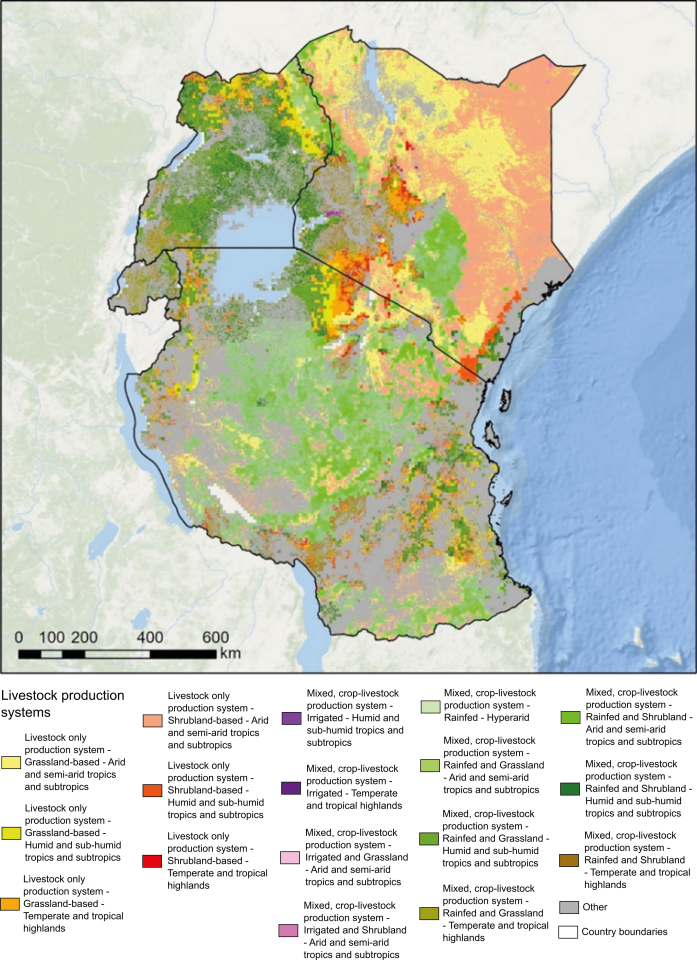
A tropical savannah climate covers the four countries, interrupted by a corridor of arid steppe and desert climates along the Indian Ocean coastline and across northwest Kenya and central Tanzania. Tropical rainforest conditions are found in the Lake Victoria Basin, while temperate climates occur in the high-altitude regions of the Great Rift Valley. Kenya is the driest among the four countries, with a total annual precipitation ranging from 400 to 600 mm near Lake Turkana and in areas bordering Somalia. In contrast, southern parts of Uganda and Rwanda receive an annual rainfall between 1,000 and 1,600 mm. These climatic conditions create a mosaic of environments, resulting in a diverse range of agroecological zones and livestock production systems across East Africa (Fig. 1).
2.2. Livestock production systems
2.2.1. Livestock density
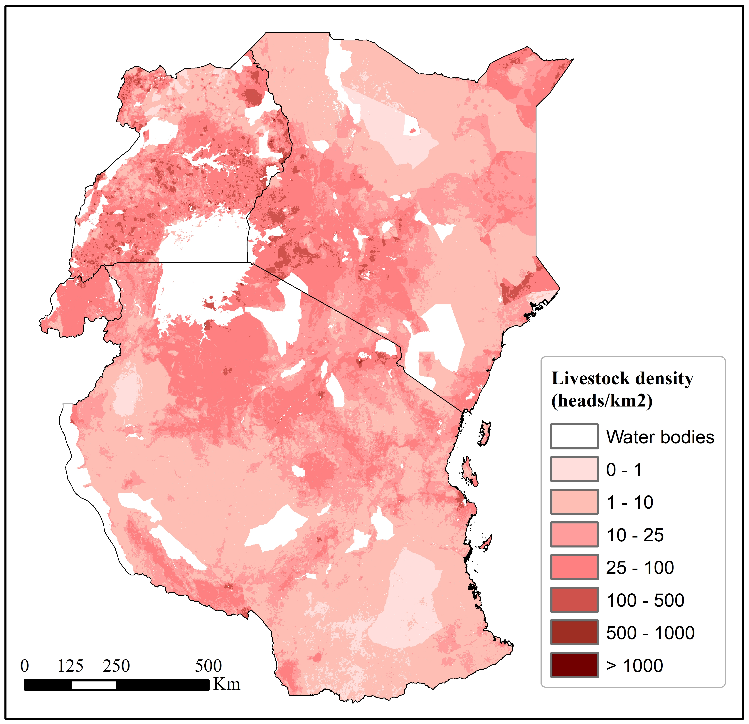
Before characterizing the livestock production systems in East Africa, it is essential to have an overview of livestock density in Kenya, Rwanda, Tanzania, and Uganda. Although disaggregated values specifically for cattle are not available, Fig. 2 illustrates the number of livestock units per km2. Regions approximately 150 km from Lake Victoria exhibit the highest livestock density, 25-100 heads per km², along with areas in northeastern Kenya. In contrast, southeastern Tanzania and the Lake Turkana region have densities of less than one animal per km².
2.2.2. Kenya
The livestock production landscape in Kenya is categorized into three main systems (intensive, semi-intensive, and extensive) based on herd size, management practices, and inputs (FAO, 2018a). About 39% of the country’s milk is produced by intensive systems, known as zero-grazing, while 43% is produced by semi-intensive, and 18% by extensive systems (FAO, 2022). In the Kenyan highlands, for example, over three-quarters of the smallholder dairy farms already fall under semi-intensive or intensive systems (Paul et al. 2022). Extensive farming systems relying on pasture are typically adopted by farms with larger herds, whereas agro-pastoral systems are key to livelihoods in arid regions.
2.2.3. Rwanda
Rwanda’s livestock production systems include intensive or zero-grazing, pastoral or open grazing, and semi-grazing (Habiyaremye et al. 2021). Notably, 94% of dairy animals are raised on zero-grazing farms and produce 93% of national milk (FAO, 2022). The zero-grazing systems consist of feeding cut-and-carry fodder, mostly Napier grass and crop residues to animals kept in sheds (Eugene, 2018). Semi-grazing systems involve feeding cattle a mix of grass and fodder, combining elements of both zero and open grazing, with only 4% of Rwandan dairy cows categorized as semi-grazing. Only 2% of national dairy herd is kept under open grazing, contributing to 3% of the national milk production.
2.2.4. Tanzania
Tanzania’s traditional pastoralist system focuses on the production of meat and milk while managing large cattle herds grazing on natural pastures. These herds may be family-owned or part of commercial operations, with large-scale production concentrated in the northern and western regions, while smallholders dominate the southern highlands (FAO and NZAGGRC, 2019a). Traditional pastoral systems produce 91% of national milk, whereas intensive dairy systems produce 9% of national milk and keep 2% of the dairy herd (FAO, 2022).
2.2.5. Uganda
Uganda’s dairy industry is primarily led by traditional systems (extensive, agro-pastoral, and pastoral), accounting for 86% of the country’s milk production (FAO and NZAGGRC, 2019b). Extensive systems keep around 18% of the herd and produce 24% of national milk (FAO, 2022). Agro-pastoral systems are mainly managed using family labor and few purchased inputs, keeping around 54% of the herd and producing 53% of the national dairy milk. Lastly, pastoral and semi-nomadic pastoralists keep about 27% of the herd and produce 9% of national milk.
2.3. Livestock breeds
In East Africa, livestock breeds can be categorized into three genetic groups: indigenous breeds (e.g., Boran, Kenyan Sahiwal, Maasai Zebu, Bahima, Chagga, Iringa Red, Kigezi, Mpwapwa, Ruzizi, Watusi, and Winam), exotic breeds (e.g., Holstein-Friesian, Jersey, Guernsey, Ayrshire, Brown Swiss, and Milking Shorthorn), and crossbreeds between indigenous and exotic breeds (Kambal et al. 2023; Rege, 1999). Indigenous breeds generally yield lower milk quantities and are kept for dual purposes, such as meat and milk production (Akinsola et al. 2023). Indigenous breeds are highly adapted to harsh environmental conditions and tolerant to endemic diseases. Indigenous cattle groups in Kenya, Tanzania, and Uganda include large and small East African Zebu, Zenga, and Sanga, whereas Rwanda mostly has the Sanga breed (Mwai et al. 2015).
In this work, we assessed the effects of heat stress on Boran’s welfare and production. Boran cattle (Bos indicus) possess a combination of morphological, structural, and physiological traits that confer high tolerance to heat stress in East African pastoral systems (Haile, 2011) and are more productive than other indigenous breeds (Cossins et al. 1998). They can survive and reproduce under high ambient temperatures while utilizing low-quality fodder resources and enduring water shortages and long watering intervals (Bayssa et al. 2021). Boran cows in, for example, Ethiopia can produce 843 kg of milk over a 36-week lactation period (about 3.3 kg/day) under the pastoralist system in the Borana rangelands. Morphologically, they typically have a light grey to fawn coat that reflects solar radiation, along with a short hair coat and thin, highly pigmented, and motile skin that enhances convective and evaporative heat loss while protecting underlying tissues from ultraviolet radiation. Structurally, long legs elevate the body above hot ground surfaces, reducing conductive heat gain and enabling long-distance trekking, while large dewlaps and wide ears increase surface area for metabolic heat dissipation. Physiologically, Boran cattle exhibit low maintenance energy requirements, efficient fat mobilization, and adaptive water-conservation mechanisms, allowing sustained productivity and reproductive performance under high temperatures, feed scarcity, and limited water availability (Bayssa et al. 2021).
2.4. Historical and future climate data
The W5E5 dataset for the 1980-2009 period, which is an observational gridded dataset with global coverage at a 0.5º spatial resolution, was adopted in this study due to its strong performance ratings for temperature and precipitation variables (Cucchi et al. 2020). The W5E5 dataset is derived from the ERA5 dataset and adjusted using global observational datasets such as CRU TS4.03 and GPCCv2018 (Harris et al. 2020; Schneider et al. 2018). It provides daily information for twelve climatic variables and is the reference dataset by the Inter-Sectoral Impact Model Intercomparison Project (ISIMIP) for impact assessment studies such as this one.
For future climate projections, this study embraces CORDEX-CORE, which aims to establish a common climate modeling framework globally (Giorgi et al. 2021a). The CORDEX-CORE initiative provides consistent regional climate projections across most inhabited land regions using nine CORDEX domains at a 0.22º spatial resolution (~25 km). The reason for selecting three specific GCMs in this work is that, on the one hand, these GCMs (Global Climate Models) have a high (HadGEM2-ES), medium (MPI-ESM-MR), and low (NorESM1-M) equilibrium climate sensitivity within the Coupled Model Intercomparison Project-5 (CMIP5) ensemble; and, on the other hand, they perform reasonably well over most of the CORDEX-CORE domains (Elguindi et al. 2014; McSweeney et al. 2025). Future simulations were run for two climate change scenarios: Representative Concentration Pathway (RCP) 2.6 and 8.5, which correspond to approximately 490 and 1370 ppm CO2 equivalent by 2100, respectively (Van Vuuren et al. 2011; Clarke et al. 2007; Riahi et al. 2011). The selection of RCPs 2.6 and 8.5 covers the Intergovernmental Panel on Climate Change (IPCC) range of greenhouse gas concentration pathways for the 21st century. Therefore, projected changes under the intermediate scenario (RCP 4.5), aiming to stabilize global temperature increases at 2 to 3 °C, are considered to fall within the simulation range of RCPs 2.6 and 8.5. Outputs from the GCMs are dynamically downscaled using the Regional Climate Model (RCM) REMO2015 at a 0.22º spatial resolution (Giorgi et al. 2021b). REMO2015 is selected because it has completed the full set of CORDEX-CORE experiment simulations (Giorgi et al. 2022; Jacob et al. 2012). Although RCMs can effectively represent regional climates, they often suffer from systematic biases that may limit their usefulness in impact assessment studies. To address these biases and correct climate projections, we applied bias-correction with Empirical Quantile Mapping using the period running from 1976 to 2005 as the overlapping timeframe between the W5E5 reanalysis dataset and the CORDEX-CORE historical simulation runs, concluding in 2005.
2.5. Direct effects of climate change
The analytical framework used to assess the effects of heat stress on dairy animals was based on the THI formula (Eq. 1) adopted in Sub-Saharan Africa by Ekine-Dzivenu et al. (2020), slightly differing from that of Hahn et al. (2009). However, a cross-validation of both formulas yielded nearly identical THI results (results not shown for brevity). After computing the THI units for each day using temperature and relative humidity data from CORDEX-CORE simulation runs, the THI units were categorized into four THI classes using the thresholds (Table 1) proposed by Rahimi (2020) for beef cattle in East Africa. Lastly, the THI daily data was aggregated into 30-year periods: 1980-2009 for the historical period and 2010-2039, 2040-2069, and 2070-2099 for future periods.
THI=(1.8 x Tmax + 32) - [(0.55 - 0.0055 x RH) x
(1.8 x Tmax - 26.8)(1)
where Tmax is the maximum daily temperature in ºC and RH the daily relative humidity in %.
The increase in air temperature and relative humidity can result in a significant milk production decline (MDEC). From a quantitative perspective, Bernabucci et al. (2010) reported a daily milk loss of 0.27 kg for each THI unit increase. In this study, changes in milk production were calculated using the formula (Eq. 2) proposed by Berry et al. (1964) and extensively applied in literature (see, for example, Hammami et al. 2013):
MDEC (kg/day) = -1.075 - (1.736 x NL) + (0.02474 x NL x THI)(2)
where NL is the normal level of daily milk production (kg/day) for Boran (3.3 kg/day) under TNZ.
In Eq. 2, the baseline net lactation yield (NL = 3.3 kg/day) for Boran cattle represents an average daily milk yield under extensive pastoral conditions, derived from published estimates for indigenous cattle in East African arid and semi-arid systems. This value reflects a long-term mean across the lactation period, rather than peak yield, and implicitly integrates seasonal variability in feed and water availability characteristic of pastoral production systems. The baseline is, therefore, intended as a reference production level under non-intensive management, suitable for use in comparative and climate-sensitivity analyses rather than as a stage-specific or high-input performance estimate.
2.6. Indirect effects of climate change
Climate change may affect the availability and quality of fodder indirectly. It can result in feed shortages and decline in livestock productivity. To gain a better understanding of fodder changes, we estimated the impacts of climate change on potential yields using the AEZ method developed by the FAO and the International Institute for Applied Systems Analysis (IIASA) for land evaluation (FAO and IIASA, 2000). AEZ integrates crop simulation models with land management decision analysis to capture changes in agroclimatic resources over time (Fischer et al. 2021). To simplify the application of AEZ, a Python package (referred to as PyAEZ) is used to encapsulate the complex calculations involved in AEZ.
PyAEZ includes six main modules: (i) climate regime, (ii) crop simulations, (iii) climate constraints, (iv) soil constraints, (v) terrain constraints, and (vi) economic suitability analysis. All the climate data generated during the historical (W5E5) and future (CORDEX-CORE) simulation runs were used as data input in module 1. PyAEZ calculates biomass based on an eco-physiological model (Deshapriya et al. 2020). Constraint-free crop biomass accumulates throughout the growing season, driven mainly by incoming solar radiation, temperature, and crop-specific characteristics (e.g., crop cycle length, maximum photosynthesis rate, leaf area index at full development, harvest index, and crop sensitivity to heat). To maximize yields, PyAEZ automatically determines the optimal start of the growing season. Here, simulations are conducted under rain-fed conditions and yield projections are bias-corrected based on historical simulations and by using the differences between simulated yields in the first projected year and those of the last historical year (2010). The results are then averaged by administrative boundaries, as PyAEZ produces outputs at the same spatial resolution as the climate models. Yield results from different climate models are ensembled for various periods (2031-2060 and 2061-2090) and analyzed for two RCPs (2.6 and 8.5).
To assess the indirect impacts of climate change on livestock production, we selected maize (Zea mays) and Napier grass (formerly Pennisetum purpureum, now Cenchrus purpureus). Maize is commonly used as a basal feed and a source of fiber, carbohydrates, and protein in the form of silage, stover (residues), and grain (Nyokabi et al. 2022; Maleko, 2018). Maize starch provides a combination of rumen-fermentable energy, fueling the microbial population, and rumen bypass starch, which is then converted into glucose that the animal absorbs and utilizes. On the other hand, Napier grass is a fast-growing perennial grass native to Sub-Saharan Africa and serves as a multipurpose fodder crop, primarily used for feeding cattle in cut-and-carry production systems (Islam et al. 2024). Napier grass is used by East African smallholder farmers for cattle fattening and obtaining higher milk yields (Islam et al. 2023). Given that most smallholder farmers own small and fragmented land parcels, Napier grass represents an ideal alternative to other feed options due to their high yield, low input requirements, and minimal acreage needed for cultivation.
3. Results
3.1. Effects of climate change on animal welfare
3.1.1. Historical THI analysis
Annual-averaged THI historical (1980-2009) results show moderate stress (81 < THI ≤ 91) conditions across Uganda, Kenya, and the eastern region of Tanzania (Fig. 3a). In these areas, moderate THI has already affected milk production (see Table 1) and reproductive parameters. Conversely, in high-altitude areas of south-west Kenya, Tanzania, and Rwanda the level of THI stress was either mild (75 < THI ≤ 81) or none (THI ≤ 75). In areas experiencing mild stress, heightened animal respiration rates have been noted, though the impact of heat on milk yields was minimal. Historical THI trends also reveal statistically significant differences (p < 0.05) across the arid and semi-arid zones of Kenya, including Uganda’s Karamoja drylands and the coastal and southern regions of Tanzania (Fig. 3b). In these areas, THI units have risen at a rate of 0.02 to 0.04 units per year, totaling an increase of 0.70 to 1.40 since 1980. In contrast, THI units in central Tanzania and northeast Kenya have remained unchanged or slightly decreased since 1980.
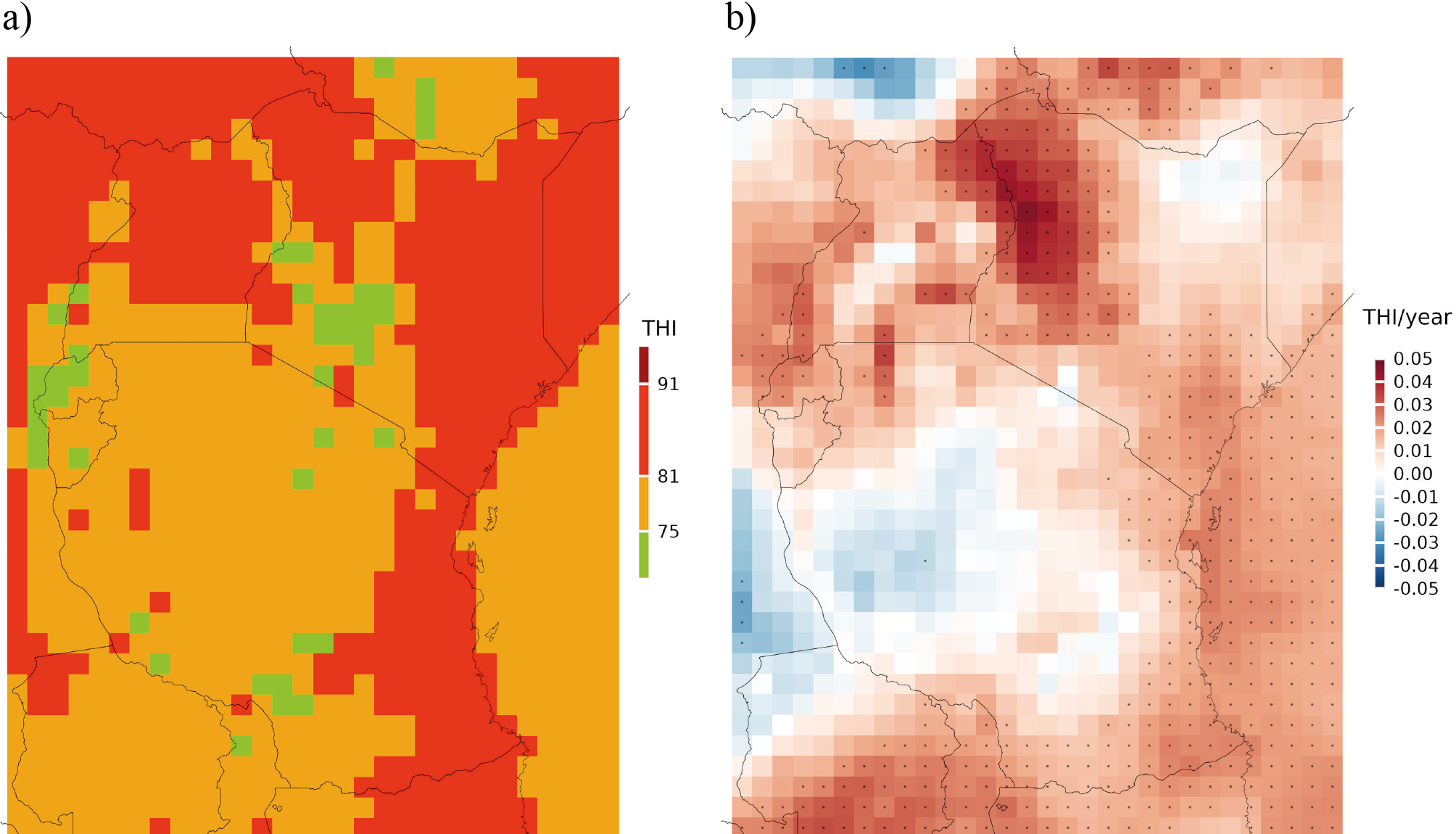
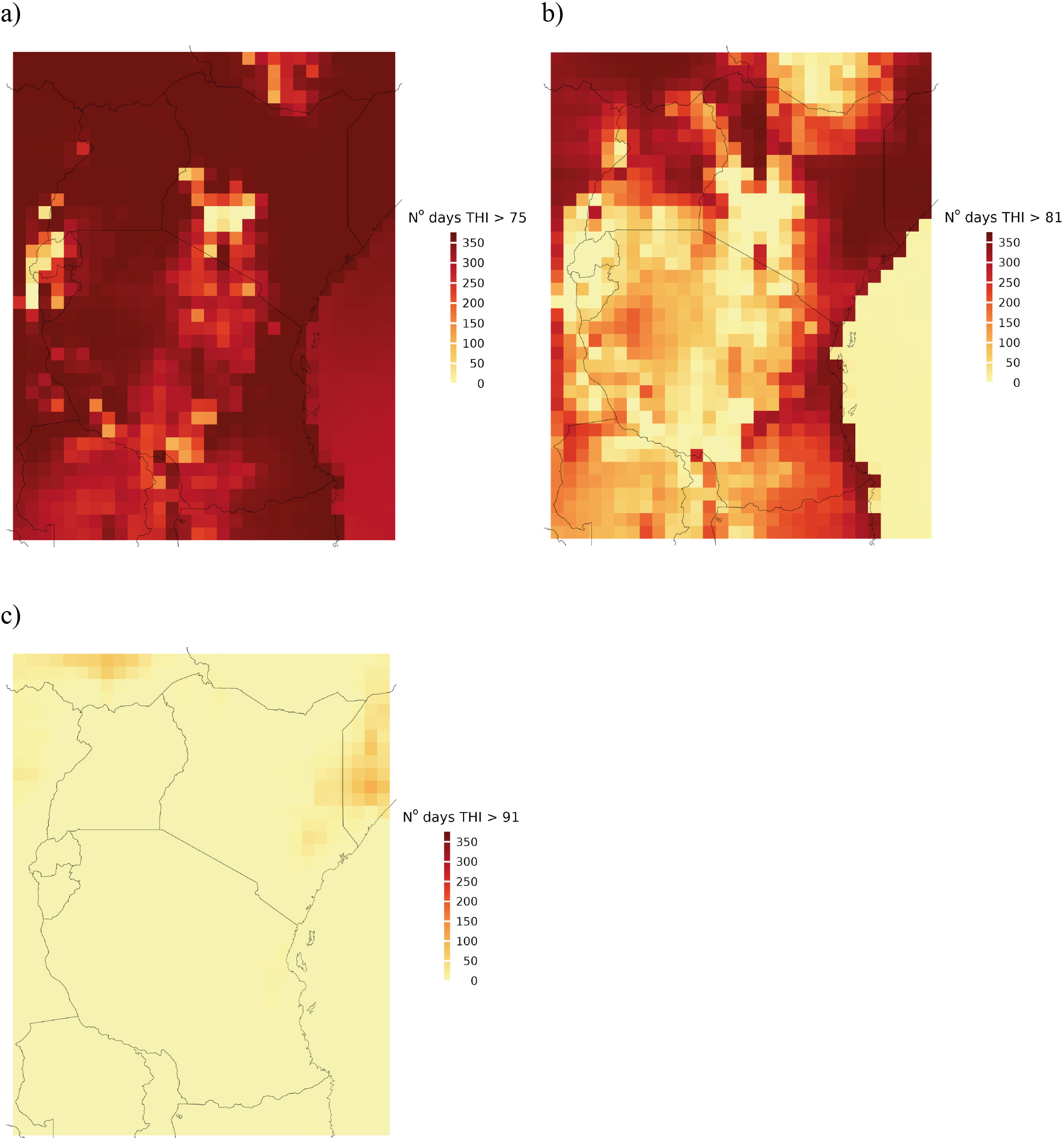
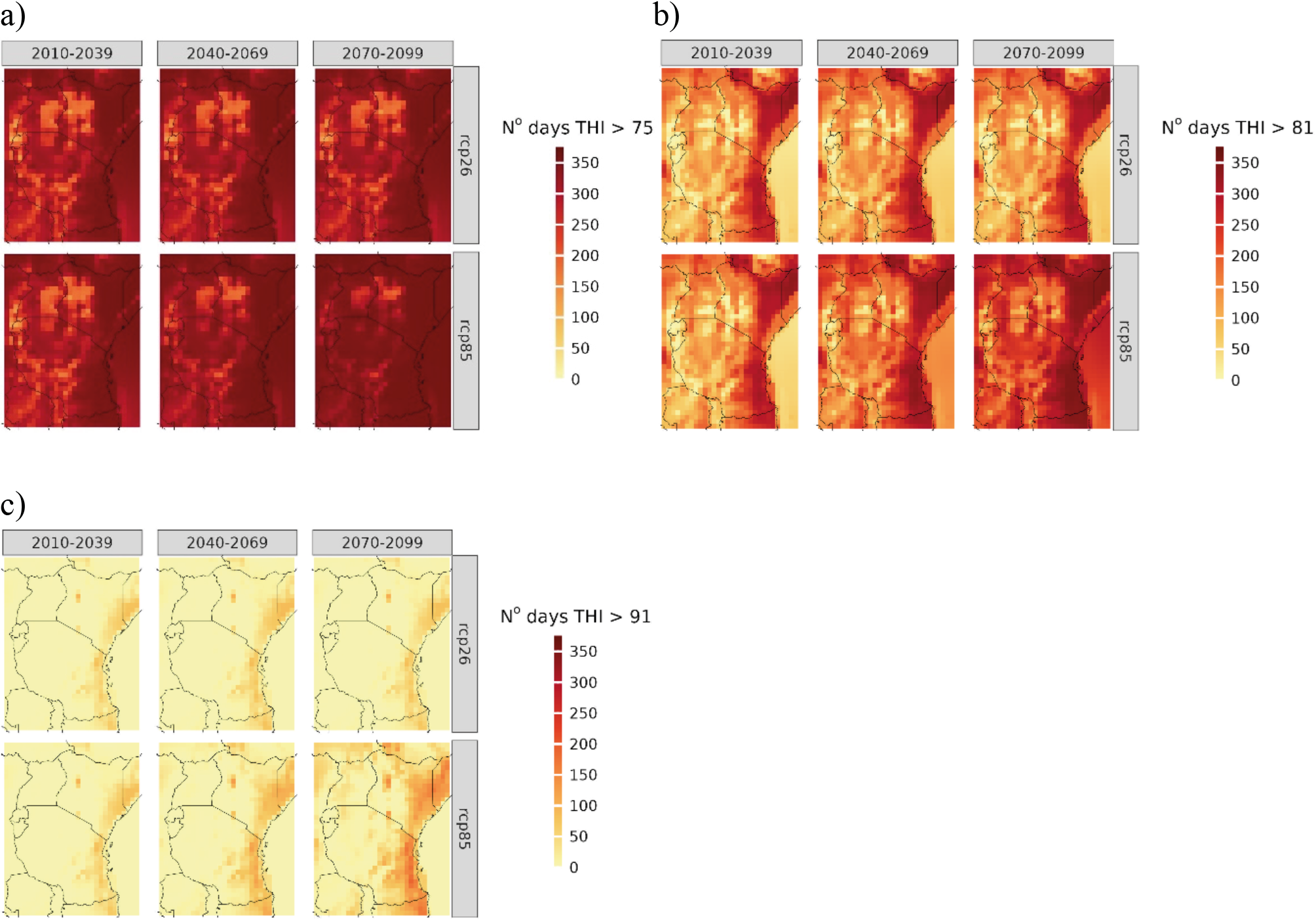
Fig. 4 displays the annual count of days with above mild (THI > 75, Fig. 4a), moderate (THI > 81, Fig. 4b), and severe/danger (THI > 91, Fig. 4c) heat stress conditions during the historical period from 1980 to 2009. Year-round (>300 days/year) mild stress conditions were observed in most regions, with exceptions in the mountainous south-western parts of Kenya, Rwanda, and south-western Tanzania (Fig. 4a). Additionally, the highest (300 days/year) annual count of days with above moderate stress conditions were reported in central parts of Uganda, areas around Lake Turkana and eastern parts of Kenya, as well as the coastal areas of Tanzania (Fig. 4b). Lastly, severe/danger (~50 days/year) conditions were only observed in small pockets of eastern Kenya (Fig. 4c). However, short-duration extreme (THI > 91) conditions fatal to animals may have occurred but are not detectable in annual averages.
3.1.2. Future THI analysis
Climate change is expected to increase Boran’s exposure to heat stress (Fig. 5a). Under RCP 2.6, areas under moderate (81< THI ≤ 91) stress rise slightly until mid-century and then remain constant. In contrast, under RCP 8.5, moderate stress expands across all territories, particularly by mid- to late-century. Only a few areas will experience mild (75 < THI ≤ 81) stress whereas areas under no stress (THI < 75) vanish completely under both RCPs. Fig. 5b illustrates the incremental change in THI units for both RCPs throughout the century relative to 1976-2005. THI units are projected to increase by 1 to 2 units under RCP 2.6, and by 3 to 4 and 5 to 6 units by the mid and end of the century, respectively, under RCP 8.5. In the southern regions of Uganda and along the Tanzanian coastline, the THI increase could reach 6 to 7 units by 2070-2099 under RCP 8.5.
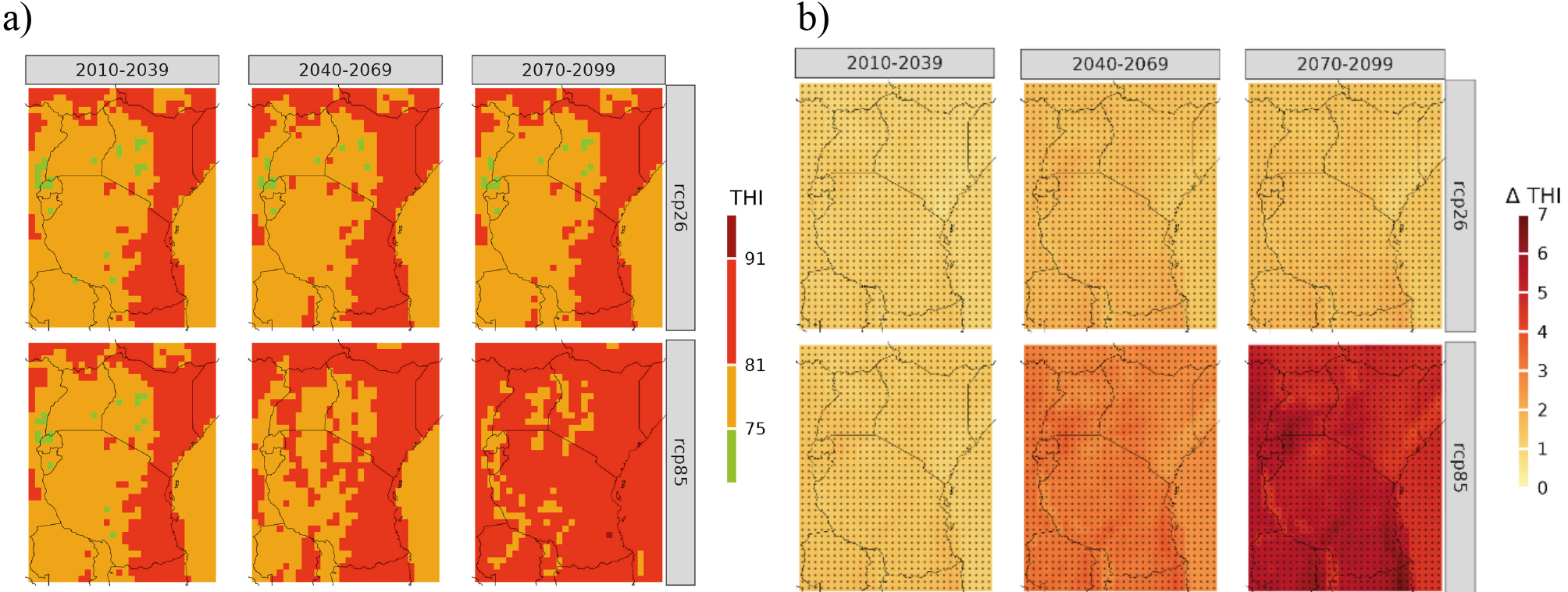
Fig. 6 depicts the change in the annual average number of days when specific THI conditions are met across the century for different RCPs relative to 1976-2005. Fig. 6a shows a year-round and widespread increase in mild (75 < THI ≤ 81) stress conditions across all countries, throughout the century and under both RCPs. Moderate (81 < THI ≤ 91) stress, characterized by substantial milk yield losses and reduced reproductive rates, further increase (250-350 days/years) in coastline areas by 2070-2099 under RCP 8.5 (Fig. 6b). Under the worst-case scenario, recurrent fatal conditions (THI > 91) for animals may increasingly occur (0-50 days/year under RCP 2.6 and 100-150 days/year under RCP 8.5), particularly along the Tanzanian and Kenyan coastlines (Fig. 6c).
3.2. Effects of climate change on milk production
3.2.1. Historical milk yield analysis
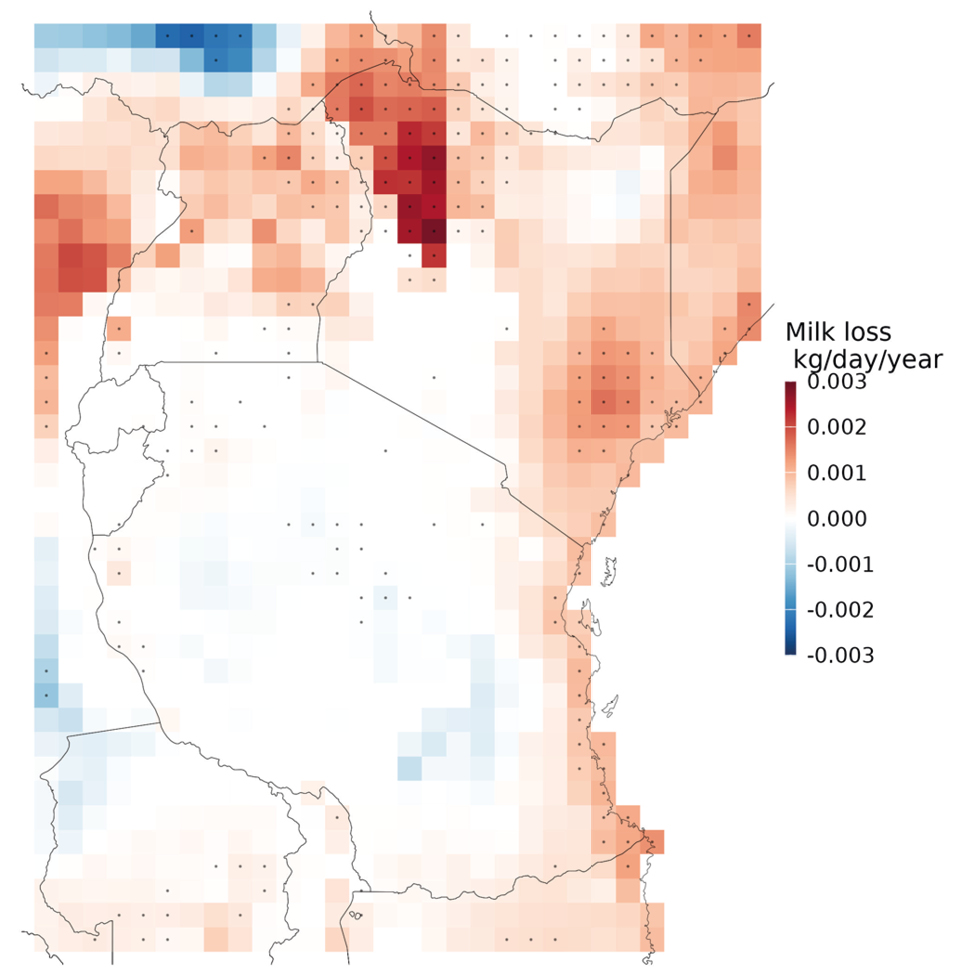
Fig. 7 illustrates the annual average milk losses (kg/day) for the Boran breed from 1980 to 2009. Since 1980, areas along Lake Turkana have experienced a statistically significant (p < 0.05) decrease in milk yield losses of 0.002 kg/day per year. This decline corresponds to a total daily milk reduction of 0.6 kg/day from a baseline of 3.3 kg/day under TNZ. Coastal regions of Tanzania and Kenya have also reported a statistically significant decline in milk yields, although these reductions are less pronounced (0.001 kg/day per year) than those observed along Lake Turkana. In contrast, in central and southeastern areas of Tanzania milk yields have remained stable since 1980.
3.2.2. Future milk yield analysis
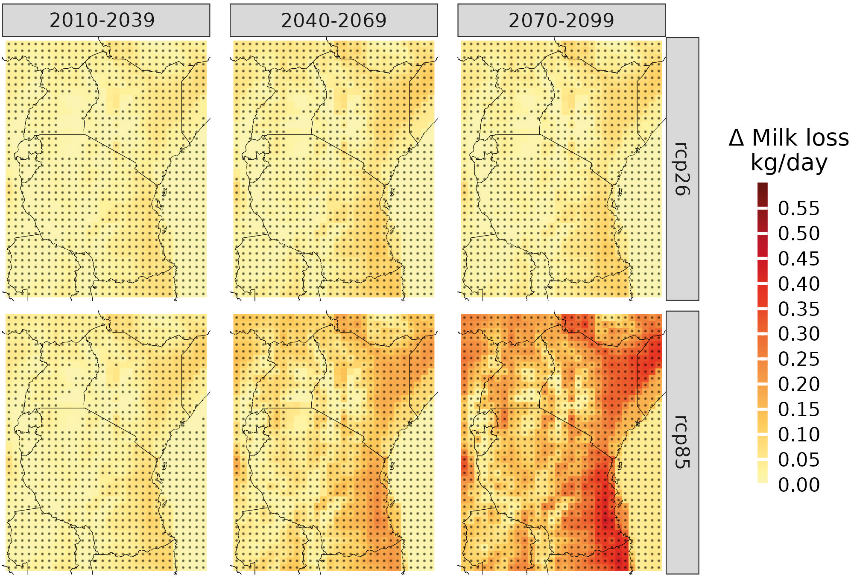
Future milk yield projections indicate strong GCM consensus regarding the impact of climate change. Under RCP 2.6, estimates suggest a slight loss of about 0.15 kg/day by 2070-2099 relative to 1976-2005 (Fig. 8). However, milk yield losses are intensified under RCP 8.5. For instance, along the Tanzanian coastline and northeastern parts of Kenya, milk yields are expected to decline by 0.30-0.45 kg/day by 2070-2099. Other areas in Uganda will see additional milk declines of about 0.15-0.25 kg/day by 2070-2099. Overall, Rwanda is the country that will experience the least declines in milk yields.
3.3. Effects of climate change on fodder resources
Fig. 9a illustrates the areas in East Africa with the highest potential to sustain maize yields under rain-fed conditions during the baseline period and across future timeframes (2031-2060 and 2061-2090). The highest yield potential during the baseline period is observed across the entirety of Rwanda, western Tanzania, the western and central regions of Uganda, and northwestern Kenya. Conversely, the eastern and southern parts of Tanzania and Kenya exhibit the lowest yield potential for maize in the baseline period. In the mid-term (2031-2060) and long-term (2061-2090), northern Kenya and Uganda are expected to experience the most significant changes in maize yields, with yield losses estimated at 5 to 10% under RCP 2.6 and 15 to 25% under RCP 8.5 by 2061-2090. On the other hand, in central, western, and eastern regions of Uganda, the entirety of Rwanda, and most of Tanzania (except for northern areas) maize yields are unaffected under both RCPs. Maize yield variations are primarily driven by changes in precipitation and temperature patterns, particularly pronounced under RCP 8.5 (results not shown for brevity).
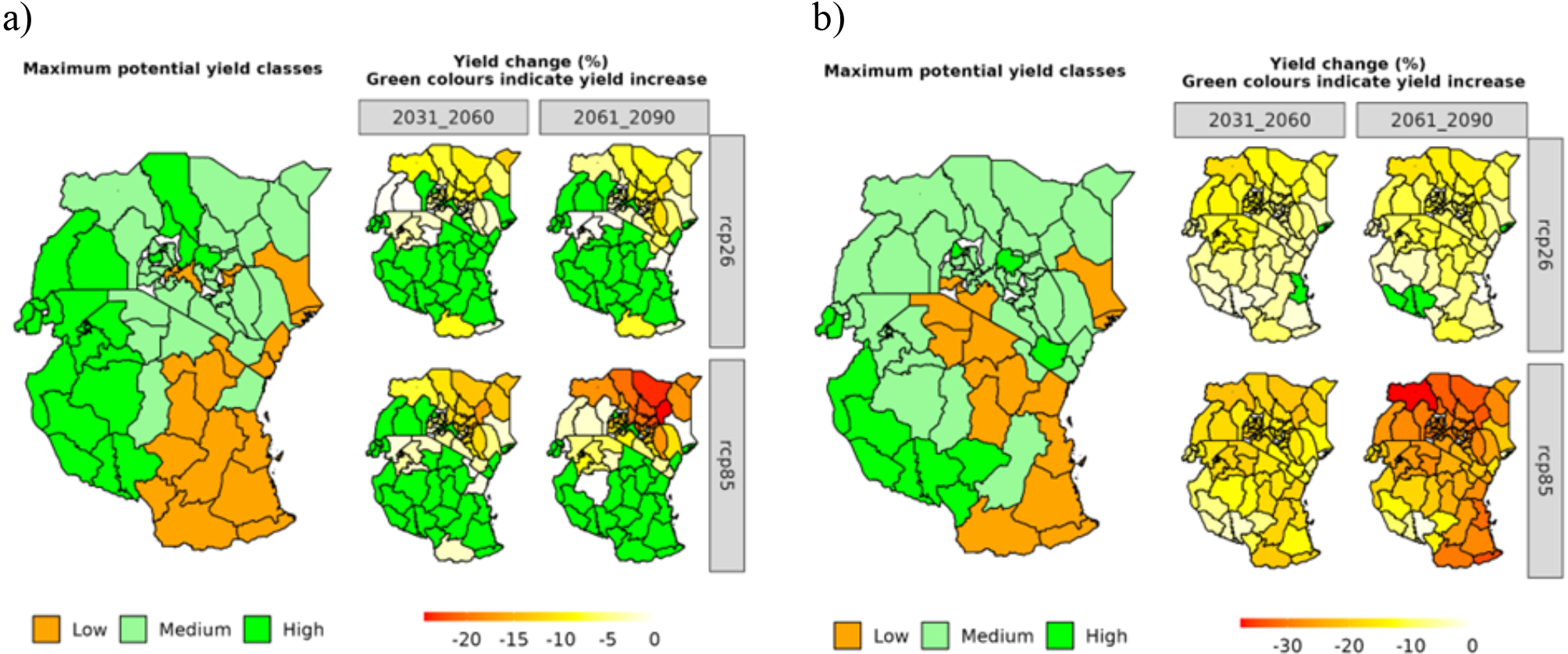
Fig. 9b shows medium potential yield class for Napier grass in most parts of Uganda and Kenya in the baseline period, while high potential in Rwanda and southwestern Tanzania. Conversely, the eastern and northern parts of Tanzania are classified as low potential. Most areas are anticipated to experience yield declines ranging 0 to 10% in the mid-term (2031-2060) and further into the future (2061-2090) under RCP 2.6; except for southwestern Tanzania, which is expected to face minor yield losses. Under RCP 8.5, the most significant declines in Napier grass yields are anticipated in northern Uganda (30-35%), northern Kenya (30%), and southeastern Tanzania (20-30%).
Overall, livestock production systems in northern Kenya, which are predominantly extensive and heavily reliant on cultivated maize, may be at a higher risk compared to Rwanda, where maize yields are anticipated to remain unchanged. In northwestern Kenya and northern Uganda, animal feed shortages are likely to worsen due to a decline in Napier grass, primarily impacting the cut-and-carry fodder systems. Although southwestern Tanzania is not a livestock predominant area, the analysis shows rising yields for both maize and Napier grass, presenting a potential opportunity for enhancing livestock production systems across these areas.
4. Discussion
4.1. Direct impacts on cattle
Heat stress is generally considered the most detrimental climate factor affecting cattle welfare and productivity (Carvajal et al. 2021; Rahimi et al. 2021; Thornton et al. 2021; Kadzere et al. 2002). Cattle exhibit various physiological responses to heat stress, including sweating, increased respiration rates, vasodilation that enhances blood flow to the skin’s surface, elevated rectal temperature, reduced metabolic rate, decreased dry matter intake, lower feed utilization efficiency, and changes in water metabolism. Heat stress also negatively impacts reproduction, leading to diminished fertility and lower conception rates (Dovolou et al. 2023; Ahmad et al. 2018; Ganaie, 2013). Boran is recognized as one of the hardiest indigenous breeds for milk and meat production (Bayssa et al. 2021), whereas high-producing dairy cattle breeds are more susceptible to heat stress. Boran’s ability to survive, produce, and reproduce under high ambient temperatures and water scarcity is attributed to a combination of morphological, physiological, biochemical, metabolic, cellular, and molecular adaptations (Bayssa et al. 2021). Some behavioral responses to climate stress observed in arid and semi-arid zones of East African rangelands is the reduction in feed intake and decreasing water excretion (Valente et al. 2015)
Our analysis indicates that Boran cattle is already experiencing some level (mild or moderate) of heat stress during the baseline period, except for high-altitude areas in the Great Rift Valley and the Buberuka Highlands in Rwanda, where heat stress is minimal (Fig. 3). These findings align with those of Rahimi et al. (2021), who reported a higher frequency of moderate THI stress across the four studied countries, excluding high-altitude regions in Kenya and Tanzania. Future climate scenarios suggest a widespread increase in moderate stress conditions, particularly by the end of the century and under RCP 8.5. The Tanzanian coastline is expected to experience severe/danger levels that could be fatal to animals (Figs. 5a, 6c), though these areas are not livestock predominant (Fig. 1). In contrast, northeastern and eastern Kenya, which are characterized by extensive livestock systems that rely on shrubland, are projected to see an increase in the annual average number of days with severe/danger (Fig. 6c) heat stress, particularly under RCP 8.5.
THI values are projected to rise by 1 to 2 units under RCP 2.6 and by 5 to 6 units under RCP 8.5. Bernabucci et al. (2010) noted a milk loss of 0.27 kg per day for each THI unit increase, highlighting the potential magnitude of milk losses in the region. According to Bernabucci et al. (2010) this is expected to result in an estimated milk production decline ranging from 0.54 to 1.62 kg/day. The latter per-unit THI loss rate was derived from high-producing Holstein cows and, as anticipated, exceeds our estimates (0.15-0.45 kg/day by 2070-2099) for the low-producing Boran breed, which shows lower absolute losses but potentially similar relative impacts on production capacity. The former represents a reduction of 4.5% to 14% for RCPs 2.6 and 8.5, respectively. Other regional studies (Rahimi et al. 2020) using three GCMs (GFDL-ESM2M, HadGEM2-ES, and MPI-ESM-MR) show milk production losses of 9%, 17%, and 35% under RCP 4.5 for the period 2071-2100 in West Africa.
4.2. Impacts on fodder supply
Feed shortage is a major constraint in dairy production systems in East Africa, leading to high milk production fluctuations due to pastoralists’ dependence on precipitation for fodder production. Even during the wet season, there is not adequate fodder to be preserved and stored for use during the dry season (Ongadi et al. 2020). Climate-driven fluctuations in maize and Napier grass yields threaten consistent fodder supply, particularly for smallholders reliant on rain-fed systems. Additionally, reduced fodder quality (e.g. lower protein content in Napier grass) may decrease milk yields, especially for high-producing exotic breeds (Brychkova et al. 2022). Our findings on maize and Napier grass reveal even direr consequences for the dairy sector in East Africa, especially for extensive livestock production systems in the north of Uganda and Kenya. In these areas, smallholder dairy farms mostly rely on rain-fed production systems, though rainfall is erratic and sometimes inadequate.
The decline in maize yields is primarily driven by heat stress conditions reducing pollen viability, which subsequently affects kernel development (Lizaso et al. 2018). Additionally, water water deficit during the flowering and grain-filling stages can lead to significant yield penalties, particularly among non-drought-tolerant varieties (Sah et al. 2020). Stuch et al. (2021) estimate a decrease in maize yields of approximately 32% in East Africa between 1971-2000 and 2041-2070, with some exceptions in high-altitude areas where yields might increase as current cold related stress will diminish under future warmer conditions. Other regional studies, such as those conducted in Ethiopia, report declines in maize yields ranging from 24% to 43% in regions experiencing high rainfall variability and the greatest temperature increases (Abera et al. 2018). There are few studies addressing the impacts of climate change on forage grass species in East Africa; however, existing literature indicates that perennial C4 grasses may to benefit from rising ambient CO2 levels (Brychkova et al. 2022). A study conducted in Ethiopia suggests that fodder demands of the dairy system could be met by the production of forage grasses under both current and future climate conditions. However, if land availability decreases and herd composition shifts towards higher-productivity exotic breeds, such as Holstein-Friesian, the forage resources may not be sufficient to meet cattle demand, even with improved agronomic management. Our findings contrast with those of Brychkova et al. (2022), likely because the PyAEZ model does not account for changes in atmospheric CO2. PyAEZ predicts Napier grass yield losses of up to 10% under RCP 2.6 and between 20% and 30% under RCP 8.5 in northern Uganda and Kenya.
Overall, our study findings indicate a significant decrease in both maize and Napier grass yields along the Lake Turkana region in Kenya and in the Karamoja Drylands in Uganda. As cultivated fodder availability declines, livestock dependence on natural rangelands is likely to increase, intensifying grazing pressure in already fragile dryland ecosystems. In extensive livestock systems, this increased pressure often exceeds the regenerative capacity of native pastures, leading to reductions in perennial grass cover, increased bare soil exposure, and declining soil organic matter; key indicators of land degradation (Brychkova et al. 2022). These processes create a reinforcing feedback loop in which degraded rangelands further reduce forage availability, prompting wider herd movements and greater spatial concentration of grazing. Resulting feed shortages have already contributed to internal and cross-border competition over grazing and water resources among pastoral communities (Anno and Ameripus, 2022), a dynamic that is likely to intensify under projected climate change through increased rainfall variability and more frequent drought conditions.
4.3. Adaptation strategies
Effective adaptation to increasing heat stress in East African pastoral systems requires integrated strategies that operate at animal, herd, and rangeland levels and are aligned with local socio-ecological realities. Recent evidence from extensive livestock systems in East Africa indicates that relatively low-cost management interventions such as improved access to water, provision of shade (natural or artificial), and heat-aware grazing schedules can substantially reduce thermal load and productivity losses, making them economically feasible for pastoralists and smallholders with limited capital (Bashiru and Oseni, 2025). At the landscape scale, sustainable rangeland management practices, including controlled grazing, seasonal mobility, and restoration of degraded pastures, have shown to enhance forage availability, reduce land degradation, and strengthen ecosystem resilience under increasing climate variability (Njuguna, 2024).
Breed-based and system-level strategies are particularly important for long-term sustainability. The conservation and strategic use of heat-tolerant indigenous breeds, especially Bos indicus cattle, represent a cost-effective and climate-robust adaptation pathway compared with reliance on high-producing but heat-susceptible exotic breeds (Bashiru and Oseni, 2025). Complementary measures such as forage diversification, emergency feed reserves, and early warning systems that integrate climate and heat-stress indicators can further support anticipatory decision-making by policymakers and field operators (Njuguna, 2024). Indigenous adaptation practices, including seasonal herd mobility and local water-management strategies, remain central to sustaining livestock productivity in arid and semi-arid lands and should be strengthened rather than replaced by external interventions (Mungâ et al. 2019).
4.4. Uncertainties of this study and future research perspectives
Imprecise yield estimations are further exacerbated when simulating the impact of future climate on crop yields, particularly due to the use of inappropriate climate downscaling methods and a limited number of GCMs and RCMs. This study addresses these challenges by employing dynamic downscaling methods with RCMs, utilizing state-of-the-art reanalysis datasets (W5E5) for impact assessments, and selecting three GCMs with varying (high, medium, and moderate) equilibrium climate sensitivities. Furthermore, the causes of inaccurate yield gap estimations using top-down approaches, such as PyAEZ, have been thoroughly examined in literature (Alvar-Beltrán et al. 2023; Mourtzinis et al. 2017). Critical issues associated with these methods include reliance on secondary (unmeasured) gridded data, the coarse resolution of global soil maps, and insufficient ground data, which can result in inaccurate parameterization of cropping systems. These factors contribute to a misleading perception of data quality and availability in spatial grids. Additionally, since PyAEZ does not account for CO2 fertilization, it may have led to an overestimation of yield losses.
THI is valuable because it provides a simple, actionable proxy for heat risk, but it is inherently an approximation – accurate assessment requires accounting for species, microclimate, physiology, and management. While the thermal categories for cattle are broadly recognized in literature, uncertainties emerge when evaluating the effects of heat stress on specific breeds, particularly heat-tolerant breeds like the Boran. Additionally, existing MDEC formulas lack correction factors tailored to individual cattle breeds, resulting in flexibility constraints that restrict their applicability.
Future research perspectives should focus on addressing the limitations of top-down approaches like PyAEZ through the incorporation of CO2 fertilization effects on fodder resources. This will help improve future crop yield estimations. There is also a need for focused studies on the implications of heat stress on various cattle breeds, especially heat-tolerant breeds, to develop breed-specific correction factors for existing MDEC frameworks. This will allow for a quantitative assessment of the impact of THI stress on various cattle breeds, helping to identify those that are better suited for future climate conditions. Other heat-related factors such as accumulation of heat-load (balance of heat gained and lost by an animal during the day and night) could be further explored.
5. Conclusion
This research comprehensively evaluates the direct (animal welfare and production) and indirect (fodder availability) impacts of heat stress on the Boran breed, revealing the intricate repercussions faced by pastoral systems in East Africa. The escalating challenges to animal welfare and milk production, particularly in vulnerable pastoral regions, underscore a pressing need for intervention, except for certain areas in Rwanda and the high-altitude areas of Kenya and Tanzania. As critical issues such as livelihood loss, food insecurity, and conflicts over dwindling natural resources intensify in already food-insecure areas of northern Kenya and Uganda, our study illuminates current vulnerabilities and suggests adaptive solutions. Some of the actionable adaptation solutions (see also section 4.3) to modulate increasing heat stress conditions include: (i) livestock housing and climate-proofed processing plants; (ii) tree shelters in fields; (iii) animal bed and mattress cooling in barns; (iv) ventilation and evaporative cooling methods using fans and water misters/springs in barns; (v) timely and actionable agrometeorological services, including nearby suitable grazing areas and water points; (vi) heat index maps and transhumance corridors; (vii) risk transfer financial mechanisms; (viii) breeding heat-tolerant animal species; (ix) use of drought-tolerant crops and forages; and (x) dietary modifications, among many others.
Given the pivotal role of livestock research in supporting the livelihoods of dairy producers, agro-pastoralists, and farmers in mixed crop-livestock systems across East Africa, our work lays the foundation for future studies aimed at enhancing risk awareness. This study’s strengths and limitations serve as both a benchmark and an invitation for further exploration into the impacts of climate change on other indigenous and improved exotic breeds across the region. Overall, the analysis provided here informs targeted investments in climate resilience and disaster risk management and empowers development agencies, research institutions, and national stakeholders to identify high-risk areas while evaluating the cost-effectiveness of implementing climate actions versus their anticipated benefits.
Declaration of interest statement
The authors declare that they have no known competing financial interests or personal relationships that could have appeared to influence the results reported in this research paper. The views expressed in this research paper are those of the author (s) and do not necessarily reflect the views of policies of FAO/IFAD.
Acknowledgements
The data collection and analysis was initiated during the design of a Programme led by the International Fund for Agricultural Development (IFAD) entitled “Dairy Interventions for Mitigation and Adaptation (DaIMA)” in Kenya, Rwanda, Uganda, and Tanzania submitted to the Green Climate Fund (GCF) and approved in July 2025 (https://www.greenclimate.fund/project/fp269). The authors recognize IFAD, FAO, GCF and the Global Dairy Platform (GDP) for committing funding for the overall Programme design process. The authors also recognize the invaluable support of Frans Goossens and Astrid Agostini (FAO) during the conceptualization of this work.
References
Abera, K., Crespo, O., Seid, J. and Mequanent, F., 2018. Simulating the impact of climate change on maize production in Ethiopia, East Africa. Environmental Systems Research, 7(1), 1-12.
Ahmad, M., Bhatti, J.A., Abdullah, M., Javed, K., Ali, M., Rashid, G., Uddin, R., Badini, A.H. and Jehan, M., 2018. Effect of ambient management interventions on the production and physiological performance of lactating Sahiwal cattle during hot dry summer. Tropical Animal Health and Production, 50, 1249-1254.
Akinsola, O.M., Musa, A.A., Muansangi, L., Singh, S.P., Mukherjee, S. and Mukherjee, A., 2024. Genomic insights into adaptation and inbreeding among Sub-Saharan African cattle from pastoral and agropastoral systems. Frontiers in Genetics, 15, 1430291.
Alvar-Beltrán, J., Soldan, R., Vanuytrecht, E., Heureux, A., Shrestha, N., Manzanas, R., Pant, K.P. and Franceschini, G., 2023. An FAO model comparison: Python Agroecological Zoning (PyAEZ) and AquaCrop to assess climate change impacts on crop yields in Nepal. Environmental Development, 47, 100882.
Anno, E.F. and Ameripus, M.E., 2022. Effects of internal and cross-border resource-based conflicts on livestock market performance in pastoral areas of Karamoja, Uganda and Turkana, Kenya. Am J Environ Resour Econ, 7, 87-96.
Bagath, M., Krishnan, G., Devaraj, C., Rashamol, V.P., Pragna, P., Lees, A.M. and Sejian, V., 2019. The impact of heat stress on the immune system in dairy cattle: A review. Research in veterinary science, 126, 94-102.
Bashiru, H.A. and Oseni, S.O., 2025. Simplified climate change adaptation strategies for livestock development in low-and middle-income countries. Frontiers in Sustainable Food Systems, 9, 1566194.
Bayssa, M., Yigrem, S., Betsha, S. and Tolera, A., 2021. Production, reproduction and some adaptation characteristics of Boran cattle breed under changing climate: A systematic review and meta-analysis. PloS one, 16(5), e0244836.
Beal, T., Gardner, C.D., Herrero, M., Iannotti, L.L., Merbold, L., Nordhagen, S. and Mottet, A., 2023. Friend or foe? The role of animal-source foods in healthy and environmentally sustainable diets. The Journal of nutrition, 153(2), 409-425.
Becker, C.A., Collier, R.J. and Stone, A.E., 2020. Invited review: Physiological and behavioral effects of heat stress in dairy cows. Journal of dairy science, 103(8), 6751-6770.
Bernabucci, U., Lacetera, N., Baumgard, L.H., Rhoads, R.P., Ronchi, B. and Nardone, A., 2010. Metabolic and hormonal acclimation to heat stress in domesticated ruminants. Animal, 4(7), 1167-1183.
Berry, I.L., Shanklin, M.D. and Johnson, H.D., 1964. Dairy shelter design based on milk production decline as affected by temperature and humidity. Transactions of the ASAE, 7(3), 329-0331.
Brychkova, G., Kekae, K., McKeown, P.C., Hanson, J., Jones, C.S., Thornton, P. and Spillane, C., 2022. Climate change and land-use change impacts on future availability of forage grass species for Ethiopian dairy systems. Scientific Reports, 12(1), 20512.
Cartwright, S.L., Schmied, J., Karrow, N. and Mallard, B.A., 2023. Impact of heat stress on dairy cattle and selection strategies for thermotolerance: A review. Frontiers in veterinary science, 10, 1198697.
Carvajal, M.A., Alaniz, A.J., Gutiérrez-Gómez, C., Vergara, P.M., Sejian, V. and Bozinovic, F., 2021. Increasing importance of heat stress for cattle farming under future global climate scenarios. Science of The Total Environment, 801, 149661.
Clarke, L.E., 2007. Scenarios of Greenhouse Gas Emissions and Atmospheric Concentrations: Report (Vol. 2). US Climate Change Science Program.
Cossins, N.J. and Upton, M., 1988. The impact of climatic variation on the Borana pastoral system. Agricultural Systems, 27(2), 117-135.
Cucchi, M., Weedon, G.P., Amici, A., Bellouin, N., Lange, S., Müller Schmied, H., Hersbach, H. and Buontempo, C., 2020. WFDE5: bias-adjusted ERA5 reanalysis data for impact studies. Earth System Science Data, 12(3), 2097-2120.
Dawson, I.K., Carsan, S., Franzel, S., Kindt, R., van Breugel, P., Graudal, L., Lillesø, J.P.B., Orwa, C. and Jamnadass, R., 2014. Agroforestry, livestock, fodder production and climate change adaptation and mitigation in East Africa: issues and options. World Agroforestry Center, Nairobi. Kenya.
Deshapriya, L., Thol, T., Gunasekara, K., Shrestha, R., Franceschini, G., Nachtergaele, F., Petri, M., and Damen, B., 2020. Python Package for Agro-ecological zoning (PyAEZ). GitHub repository. Available at: link
Dovolou, E., Giannoulis, T., Nanas, I. and Amiridis, G.S., 2023. Heat Stress: A Serious Disruptor of the Reproductive Physiology of Dairy Cows. Animals, 13(11), 1846.
Elguindi, N., Giorgi, F. and Turuncoglu, U., 2014. Assessment of CMIP5 global model simulations over the subset of CORDEX domains used in the Phase I CREMA. Climatic Change, 125(1), 7-21.
Ekine-Dzivenu, C.C., Mrode, R., Oyieng, E., Komwihangilo, D., Lyatuu, E., Msuta, G., Ojango, J.M. and Okeyo, A.M., 2020. Evaluating the impact of heat stress as measured by temperature-humidity index (THI) on test-day milk yield of small holder dairy cattle in a sub-Sahara African climate. Livestock science, 242, 104314.
Eugene, M., Ojok, L., Acai, J.O., Tukei, M. and Eugene, G.N., 2018. Prospects of Dairy Intensification and Commercialization in Eastern Province of Rwanda. Int J Anim Sci, 2(3), 1024.
FAO., 2023a. FAOSTAT. Crops and livestock products. Available online at: https://www.fao.org/faostat/en/#data/QCL
FAO., 2023b. Contribution of terrestrial animal source food to healthy diets for improved nutrition and health outcomes – An evidence and policy overview on the state of knowledge and gaps. Available online at: https://openknowledge.fao.org/server/api/core/bitstreams/0c1bfa99-18d4-42e4-b94f-27160126f826/content
FAO., 2022. Global Livestock Environmental Assessment Model (GLEAM) v.3 dashboard. Available online at: link
FAO and NZAGGRC., 2019a. Options for low emission development in the Tanzania dairy sector - reducing enteric methane for food security and livelihoods. Rome, Italy. Available online at: https://openknowledge.fao.org/server/api/core/bitstreams/8a3892bc-3daa-433e-9520-7ab86480dffd/content
FAO and NZAGGRC., 2019b. Options for low emission development in the Uganda dairy sector - reducing enteric methane for food security and livelihoods. Rome, Italy. Available online at: https://openknowledge.fao.org/server/api/core/bitstreams/fe65d8e4-9dca-4184-be89-f94f275512bb/content
FAO., 2018a. Africa Sustainable Livestock (ASL) 2050 Livestock and Environment Spotlight Kenya. Cattle and Poultry sectors. Nairobi, Kenya. Available online at: https://openknowledge.fao.org/server/api/core/bitstreams/c08cbc46-8987-4580-97cb-cb6cce290601/content
FAO and IIASA., 2000. Global Agro-Ecological Zones (GAEZ v1.0). CD-ROM Land and Water Media Series. Rome, Italy, Food and Agriculture Organization of the United Nations.
Fischer, G., Nachtergaele, F.O., van Velthuizen, H., Chiozza, F., Francheschini, G., Henry, M., Muchoney, D. and Tramberend, S., 2021. Global Agro-ecological Zones (GAEZ v4)-Model Documentation
Ganaie, A.H., Ghasura, R.S., Mir, N.A., Bumla, N.A., Sankar, G. and Wani, S.A., 2013. Biochemical and physiological changes during thermal stress in bovines: A review. Iranian Journal of Applied Animal Science, 3(3), 423-430.
Giannone, C., Bovo, M., Ceccarelli, M., Torreggiani, D. and Tassinari, P., 2023. Review of the heat stress-induced responses in dairy cattle. Animals, 13(22), 3451.
Gilbert, M., Nicolas, G., Cinardi, G., Van Boeckel, T.P., Vanwambeke, S.O., Wint, G.R. and Robinson, T.P., 2018. Global distribution data for cattle, buffaloes, horses, sheep, goats, pigs, chickens and ducks in 2010. Scientific data, 5(1), 1-11.
Giorgi, F., Coppola, E., Jacob, D., Teichmann, C., Abba Omar, S., Ashfaq, M., Ban, N., Bülow, K., Bukovsky, M., Buntemeyer, L. and Cavazos, T., 2022. The CORDEX-CORE EXP-I initiative: description and highlight results from the initial analysis. Bulletin of the American Meteorological Society, 103(2), E293-E310.
Giorgi, F., Coppola, E., Jacob, D., Teichmann, C., Abba Omar, S., Ashfaq, M., Ban, N., Bülow, K., Bukovsky, M., Buntemeyer, L. and Cavazos, T., 2021a. The CORDEX-CORE EXP-I initiative: description and highlight results from the initial analysis. Bulletin of the American Meteorological Society, 1-52.
Giorgi, F., Coppola, E., Teichmann, C. and Jacob, D., 2021b. Editorial for the CORDEX-CORE experiment I special issue. Climate Dynamics, 57(5-6), 1265-1268.
Habiyaremye, N., Ouma, E.A., Mtimet, N. and Obare, G.A., 2021. A review of the evolution of dairy policies and regulations in Rwanda and its implications on inputs and services delivery. Frontiers in Veterinary Science, 8, 611298.
Hahn, G.L., Gaughan, J.B., Mader, T.L. and Eigenberg, R.A., 2009. Thermal indices and their applications for livestock environments. In Livestock energetics and thermal environment management (pp. 113-130). American Society of Agricultural and Biological Engineers.
Haile, A., 2011. Breeding strategy to improve Ethiopian Boran cattle for meat and milk production (Vol. 26). ILRI (aka ILCA and ILRAD).
Hammami, H., Bormann, J., M’hamdi, N., Montaldo, H.H. and Gengler, N., 2013. Evaluation of heat stress effects on production traits and somatic cell score of Holsteins in a temperate environment. Journal of dairy science, 96(3), 1844-1855.
Harris, I., Osborn, T.J., Jones, P. and Lister, D., 2020. Version 4 of the CRU TS monthly high-resolution gridded multivariate climate dataset. Scientific data, 7(1), 109.
Hunt, S., Eshete, G., Tadesse, M. and Eshetu, Z., 2019. Review of agricultural production systems in eastern Africa in relation to food and nutrition security and climate change.
Islam, M.R., Garcia, S.C., Islam, M.A., Bashar, M.K., Roy, A., Roy, B.K., Sarker, N.R. and Clark, C.E.F., 2024. Ruminant production from napier grass (Pennisetum purpureum Schum): A review. Animals, 14(3), 467.
Islam, M.R., Garcia, S.C., Sarker, N.R., Islam, M.A. and Clark, C.E., 2023. Napier grass (Pennisetum purpureum Schum) management strategies for dairy and meat production in the tropics and subtropics: yield and nutritive value. Frontiers in Plant Science, 14, 1269976.
Jacob, D., Elizalde, A., Haensler, A., Hagemann, S., Kumar, P., Podzun, R., Rechid, D., Remedio, A.R., Saeed, F., Sieck, K. and Teichmann, C., 2012. Assessing the transferability of the regional climate model REMO to different coordinated regional climate downscaling experiment (CORDEX) regions. Atmosphere, 3(1), 181-199.
Kadzere, C.T., Murphy, M.R., Silanikove, N. and Maltz, E., 2002. Heat stress in lactating dairy cows: a review. Livestock production science, 77(1), 59-91.
Kambal, S., Tijjani, A., Ibrahim, S.A., Ahmed, M.K.A., Mwacharo, J.M. and Hanotte, O., 2023. Candidate signatures of positive selection for environmental adaptation in indigenous African cattle: A review. Animal genetics, 54(6), 689-708.
Kumar, G., Devi, P., Sharma, N. and Somagond, Y.M., 2020. Impact of thermal stress on milk production, composition and fatty acid profile in dairy cows: A review. J. Entomol. Zool. Stud, 8(5), 1278-1283.
Lizaso, J.I., Ruiz-Ramos, M., Rodríguez, L., Gabaldon-Leal, C., Oliveira, J.A., Lorite, I.J., Sánchez, D., García, E. and Rodríguez, A., 2018. Impact of high temperatures in maize: Phenology and yield components. Field Crops Research, 216, 129-140.
Lokuruka, M.N., 2020. Food and nutrition security in East Africa (Kenya, Uganda and Tanzania): status, challenges and prospects. Food security in Africa.
Maleko, D., Msalya, G., Mwilawa, A., Pasape, L. and Mtei, K., 2018. Smallholder dairy cattle feeding technologies and practices in Tanzania: failures, successes, challenges and prospects for sustainability. International Journal of Agricultural Sustainability, 16(2), 201-213.
Marai, I.F.M., El-Darawany, A.A., Fadiel, A. and Abdel-Hafez, M.A.M., 2007. Physiological traits as affected by heat stress in sheep- a review. Small ruminant research, 71(1-3), 1-12.
McSweeney, C.F., Jones, R.G., Lee, R.W. and Rowell, D.P., 2015. Selecting CMIP5 GCMs for downscaling over multiple regions. Climate Dynamics, 44(11), 3237-3260.
Mourtzinis, S., Edreira, J.I.R., Conley, S.P. and Grassini, P., 2017. From grid to field: Assessing quality of gridded weather data for agricultural applications. European Journal of Agronomy, 82, 163-172.
Mungâ, H.G., Mbonile, M.J. and Maganga, F.P., 2019. Innovative pathways for enhancing climate change and variability resilience among agro-pastoral communities in semi-arid areas of Kiteto and Kilindi Districts, Tanzania. African Journal of Environmental Science and Technology, 13(5), 201-219.
Mwai, O., Hanotte, O., Kwon, Y.J. and Cho, S., 2015. African indigenous cattle: unique genetic resources in a rapidly changing world. Asian-Australasian journal of animal sciences, 28(7), 911.
Nalianya, G.W., Wakhungu, J.W. and Nyandiko, N.O., 2020. Impacts of Climate Change and Variability on Smallholder Dairy Cattle Production in Bungoma, Kenya.
Nardone, A., Ronchi, B., Lacetera, N. and Bernabucci, U., 2006. Climatic effects on productive traits in livestock. Veterinary Research Communications, 30, 75.
NASA., 2023. NASA Earth Observatory. Deep Concern About Food Security in Eastern Africa. Available online at: link
Ngigi, M., Ahmed, M.A., Ehui, S. and Assefa, Y., 2010. Smallholder dairying in Eastern Africa. Successes in African Agriculture: Lessons for the Future, Johns Hopkins University Press, Baltimore MD, 209-61.
Njuguna, L., Biesbroek, R., Crane, T. and Tamás, P., 2024. Tracking climate change adaptation in Eastern Africa: integrating governmental and livestock keeper perspectives. Climate Policy, 24(4), 473-489.
Nyokabi, N.S., Luning, P.A., Phelan, J.E., Creemers, J., Lukuyu, B., Bebe, B.O. and Oosting, S.J., 2022. Intra-annual variation in feed and milk composition in smallholder dairy farms in Kenya. NJAS: Impact in Agricultural and Life Sciences, 94(1), 137-155.
Ongadi, M., Mpolya, E., Gachuiri, C., Muyekho, F. and Lukuyu, A., 2020. Effects of season variation on water, feed, milk yield and reproductive performance of dairy cows in smallholder farms in eastern Africa.
Orodho, A.B., 2019. Intensive forage production for smallholder dairying in East Africa. In Grasslands (pp. 433-459). CRC Press.
Paul, B.K., Birnholz, C.A., Nzogela, B., Notenbaert, A.M.O., Herrero, M., Bwire, J., Groot, J.C. and Tittonell, P.A., 2021. Livestock feeding systems and feed gaps in East African smallholder farms.
Rahimi, J., Mutua, J.Y., Notenbaert, A.M., Marshall, K. and Butterbach-Bahl, K., 2021. Heat stress will detrimentally impact future livestock production in East Africa. Nature Food, 2(2), 88-96.
Rahimi, J., Mutua, J.Y., Notenbaert, A.M., Dieng, D. and Butterbach-Bahl, K., 2020. Will dairy cattle production in West Africa be challenged by heat stress in the future?. Climatic Change, 161(4), 665-685.
Rakib, M.R.H., Zhou, M., Xu, S., Liu, Y., Khan, M.A., Han, B. and Gao, J., 2020. Effect of heat stress on udder health of dairy cows. Journal of Dairy Research, 87(3), 315-321.
Renaudeau, D., Collin, A., Yahav, S., De Basilio, V., Gourdine, J.L. and Collier, R.J., 2012. Adaptation to hot climate and strategies to alleviate heat stress in livestock production. animal, 6(5), 707-728.
Riahi, K., Rao, S., Krey, V., Cho, C., Chirkov, V., Fischer, G., Kindermann, G., Nakicenovic, N. and Rafaj, P., 2011. RCP 8.5—A scenario of comparatively high greenhouse gas emissions. Climatic change, 109, 33-57.
Robinson, T.P., Thornton, P.K., Franceschini, G., Kruska, R.L., Chiozza, F., Notenbaert, A., Cecchi, G., Herrero, M., Epprecht, M., Fritz, S. and You, L., 2011. Global livestock production systems. FAO and ILRI.
Rufino, M.C., Thornton, P.K., Mutie, I., Jones, P.G., Van Wijk, M.T. and Herrero, M., 2013. Transitions in agro-pastoralist systems of East Africa: impacts on food security and poverty. Agriculture, ecosystems & environment, 179, 215-230.
Sah, R.P., Chakraborty, M., Prasad, K., Pandit, M., Tudu, V.K., Chakravarty, M.K., Narayan, S.C., Rana, M. and Moharana, D., 2020. Impact of water deficit stress in maize: Phenology and yield components. Scientific reports, 10(1), 2944.
Schneider, U., Becker, A., Finger, P., Meyer-Christoffer, A. and Ziese, M., 2018. GPCC full data monthly product version 2018 at 0.25: monthly land-surface precipitation from rain-gauges built on GTS-based and historical data. Global Precipitation Climatology Centre.
Silva, C.F., Sartorelli, E.S., Castilho, A.C.S., Satrapa, R.A., Puelker, R.Z., Razza, E.M., Ticianelli, J.S., Eduardo, H.P., Loureiro, B. and Barros, C.M., 2013. Effects of heat stress on development, quality and survival of Bos indicus and Bos taurus embryos produced in vitro. Theriogenology, 79(2), 351-357.
Smith, D.L., Smith, T., Rude, B.J. and Ward, S.H., 2013. Comparison of the effects of heat stress on milk and component yields and somatic cell score in Holstein and Jersey cows. Journal of dairy science, 96(5), 3028-3033.
Stuch, B., Alcamo, J. and Schaldach, R., 2021. Projected climate change impacts on mean and year-to-year variability of yield of key smallholder crops in Sub-Saharan Africa. Climate and Development, 13(3), 268-282.
Tadesse, G. and Dereje, M., 2018. Impact of climate change on smallholder dairy production and coping mechanism in Sub-Saharan Africa-review. Climate Change, 4(15), 299-313.
Tao, S., Rivas, R.M.O., Marins, T.N., Chen, Y.C., Gao, J. and Bernard, J.K., 2020. Impact of heat stress on lactational performance of dairy cows. Theriogenology, 150, 437-444.
Thatcher, W.W., Flamenbaum, I., Block, J., and Bilby, T.R., 2010. Interrelationships of heat stress and reproduction in lactating dairy cows. In High plains dairy conference (pp. 45-60).
Thornton, P., Nelson, G., Mayberry, D. and Herrero, M., 2021. Increases in extreme heat stress in domesticated livestock species during the twenty‐first century. Global Change Biology, 27(22), 5762-5772.
Trisos, C.H., I.O. Adelekan, E. Totin, A. Ayanlade, J. Efitre, A. Gemeda, K. Kalaba, C. Lennard, C. Masao, Y. Mgaya, G. Ngaruiya, D. Olago, N.P. Simpson, and S. Zakieldeen, 2022: Africa. In: Climate Change 2022: Impacts, Adaptation and Vulnerability. Contribution of Working Group II to the Sixth Assessment Report of the Intergovernmental Panel on Climate Change [H.-O. Pörtner, D.C. Roberts, M. Tignor, E.S. Poloczanska, K. Mintenbeck, A. Alegría, M. Craig, S. Langsdorf, S. Löschke, V. Möller, A. Okem, B. Rama (eds.)]. Cambridge University Press, Cambridge, UK and New York, NY, USA, pp. 1285–1455. https:doi.org/10.1017/9781009325844.011
Valente, É.E.L., Chizzotti, M.L., de Oliveira, C.V.R., Galvão, M.C., Domingues, S.S., de Castro Rodrigues, A. and Ladeira, M.M., 2015. Intake, physiological parameters and behavior of Angus and Nellore bulls subjected to heat stress. Semina: Ciências Agrárias, 36(6 Suppl 2), 4565-4574.
Van Vuuren, D.P., Edmonds, J., Kainuma, M., Riahi, K., Thomson, A., Hibbard, K., Hurtt, G.C., Kram, T., Krey, V., Lamarque, J.F. and Masui, T., 2011. The representative concentration pathways: an overview. Climatic change, 109, 5-31.