Received: March 22, 2025; Accepted: November 11, 2025; Published: December 24, 2025
Delayed fertilization and short-term storage methods affects the viability of stripped eggs of African catfish Clarias gariepinus
1 WorldFish, Ibadan, Nigeria
2 Department of Fisheries and Aquaculture, College of Forestry and Fisheries, Joseph Sarwuan Tarka University (formerly Federal University of Agriculture Makurdi), Makurdi P.M.B. 2373 Makurdi, Nigeria
3 Institute of Tropical Aquaculture and Fisheries, Universiti Malaysia Terengganu, 21030 Kuala Nerus, Terengganu, Malaysia
4 Department of Fisheries and Aquaculture, Federal University Dutsin-Ma, PMB 5001, Dutsin-Ma, Katsina state, Nigeria
5 WorldFish, Penang, Malaysia
6 STU-UMT Joint Shellfish Research Laboratory, Shantou University, Shantou 515063, Guangdong, China
*Corresponding author. Email: okomodavictor@yahoo.com
Abstract. The fertilization of eggs may be delayed during induced fish breeding due to unforeseen circumstances. It is, therefore, necessary to know the optimal delay period and explore short-term storage options that can extend the viability of the eggs in such instances. In two studies, African catfish Clarias gariepinus eggs were obtained from broodstocks induced using ovaprim® hormone at 0.5ml/kg. A batch of the stripped eggs was then exposed in triplicate to atmospheric oxygen for 0, 1, 2, 3, 4, 8 and 12 hours post-stripping (HPS). In contrast, another batch was stored for 8 hours using sole and combined methods of “refrigeration”, “addition of extender” and “aeration”. The eggs were then fertilized using fresh sperm in all instances. In both experiments, egg characteristics, breeding parameters, and biometric parameters of hatched fry were recorded. Results showed a size reduction in the eggs as the time of exposure to atmospheric oxygen increased. Also, the fertilization and hatchability of eggs were similar to 4HPS; beyond this threshold, the value declined significantly to zero. However, the hatched fry’s biometric parameters showed no significant difference among treatments (P<0.05). The second study showed a poor breeding performance of eggs stored in all the different storage methods tested. Meanwhile, egg sizes and biometric parameters of the few hatched fry show no significant difference among the treatments (P<0.05). It was therefore concluded that the fertilization of stripped C. gariepinus eggs should not be later than 4HPS to optimize the breeding performance of the fish.
Keywords: African catfish, Egg storage, Breeding parameters, Saline water, Refrigeration.
Contents
Embryogenesis observation of eggs during incubation
Determination of performance and larvae characteristics
Viability of stripped African catfish eggs exposed at room temperature for varying period
Viability of Stripped African Catfish Eggs stored for a short duration using different methods
Introduction
Aquaculture has grown to the point of being acknowledged as the fastest-growing food-producing sector in the world (Megbowon et al., 2013; Tacon, 2020). This is because of its essential role in providing high-quality, cheap proteins to over 7 billion people worldwide (FAO 2020). The rapid growth of the sector in both inland and marine environments affects the livelihood and socioeconomic characteristics of many through the broad aquaculture value chain (Kalinina et al., 2020). Fish seed availability is an essential component of fish culture, as it largely determines the success of the aquaculture sector. Over the past few years, scientific advancement has introduced new technologies that have improved the artificial propagation of fish in captivity. Innovations such as sperm storage, hormone administration, novel spawning methods and rearing systems have shaped the development of aquaculture, thereby contributing to its rapid growth (Yue and Shen, 2021). Despite the breakthrough in artificial propagation, egg quality and oocyte viability loss after ovulation still limit the mass production of many species (Furuita et al., 2003; Rizzo et al., 2003).
In fish breeding, the viability of eggs is determined by the broodstock quality and the eggs’ handling after stripping (Okomoda et al., 2018). Under normal conditions, ovulated eggs are fertilized immediately with high-quality sperm to ensure good breeding performance and fry hatchability (Olufeagba and Okomoda 2016). However, conditions such as unavailability or death of quality male broodstock may lead to delayed fertilization of the stripped eggs. At this point, the options available for fish breeder are limited, one of which is to expose the stripped eggs to prevailing atmospheric conditions or attempt short-term storage to preserve the oocytes from losing their viability until alternative quality male broodstocks are gotten. The success and efficiency of different gamete storage methods in fish culture have been well-documented in several studies. Unfortunately, attention has been focused chiefly on sperm than ova preservation (Withler and Lim 1982; Nguenga et al., 2004; Idahor et al., 2018). One of the viable methods of short-term storage is refrigeration; however, the nature of power supply in most remote areas has made it imperative to look for alternative non-power-dependent storage methods (Dettlaff et al., 1993).
Of all the notable fish species of interest in West Africa, Clarias gariepinus has found a pride of place in terms of overall aquaculture production and value chain (Dauda et al., 2018). The fish, native to Africa, is widely cultivated in ponds, cages, and pens (Khedkar and Khedkar, 2003; Okomoda et al., 2018). C. gariepinus is well known to tolerate harsh environmental conditions, making it a choice species for culture in many environments (Adebayo et al., 2015; Omoniyi et al., 2018). Noteworthy is that many researchers have reported different possible methods and means of storing C. gariepinus milts (Adeyemo et al., 2007; Idahor et al., 2018; Tilahun and Yalew, 2024). However, there has been almost no report on the short-term storage of its eggs to date. Short-time storage of ova has been somewhat successful in other fish species such as Cyprinus carpio (Rothbard et al., 1996), Sarotherodon mossambicus (Harvey and Kelley 1984), Oncorhynchus keta (Jensen and Alderdice 1984), and Heterobranchus longifilis (Nguenga et al., 2004). Against this backdrop, this research was designed to examine the appropriate method of short-term ova storage of the African catfish fish C. gariepinus and determine the optimum time of its delayed fertilization.
Materials and methods
This study was conducted at the hatchery unit and laboratory of the Department of Fisheries and Aquaculture, Joseph Sarwuan Tarka University Makurdi (JOSTUM), Benue State, Nigeria (latitude 7° to 8° North and longitude 8° to 9° East). Fifty-four broodstocks of African Catfish C. gariepinus (39 females and 15 males of average 1500g) with similar breeding history were obtained from a reliable source in Makurdi and taken to the Fish Hatchery unit of JOSTUM. Using a 1000-litre tank, the broodfish were acclimatized and stabilized for seven days before they were used for the experiment. During the period, they were fed a commercial diet (Coppens 45%CP) to satiation, and the water quality was maintained at optimum. Generally, for the two studies conducted, the female broodstocks were weighted and injected with Ovaprim® using a 10 ml syringe intramuscularly at an angle of 30-45o below the dorsal fin using the manufacturer’s recommendation of 0.5 ml/kg of the broodstock. They were then kept in separate tanks throughout the latency period, depending on the nature of the experimental design before stripping was done. Fresh milt was also obtained at different time intervals based on the experimental needs by sacrificing the male brooder and surgically removing the visceral organs to get the testes sac. The testes were then cut into small pieces so the milt could ooze out and used to fertilize the eggs as appropriate for the different treatments in the two studies designed.
Experiment One: Viability of Clarias gariepinus eggs stripped and exposed to atmospheric oxygen for varying periods.
Four gravid females of the experimental fish were injected and conditioned in different bowls for a latency period of 10 hours. Thereafter, the eggs in them were stripped out by gently pressing the abdomen of the females with a thumb from the pectoral fin towards the genital papilla. The ovulated eggs were released quickly in a thick jet from the genital vent and were collected into clean, dried bowls. After stripping, the eggs were exposed to atmospheric oxygen conditions at the following time intervals: 0, 1, 2, 3, 4, 8, and 12 hours post stripping (HPS), denoted as 0HPS, 1HPS, 2HPS, 3HPS, 4HPS, 8HPS and 12HPS respectively. Each treatment was done in three replicates, and each set was fertilized with fresh milt obtained from the same male. This process was done by releasing drops of the milt on the designated eggs at the appropriate time post-striping. The egg and milt were mixed thoroughly in the plastic bowl, and freshwater was added to activate the sperm. Fertilized eggs in each treatment were accordingly spread in an already prepared hatching bowl (10 litres) with a hatching net (mesh size of 2 mm) already suspended. The eggs were incubated in this condition till hatching.
Experiment Two: Viability of Clarias gariepinus eggs stored for a short duration using different methods.
Upon determining the threshold delayed time post stripping that is lethal to the egg’s viability, the second study was done to improve the shelf-life of the eggs by storing them using different methods under the lethal duration earlier determined. These storage methods include using an extender (physiological saline) and aeration at room temperature or refrigeration. Like the previous experiment, four gravid females were injected and conditioned in different bowls for a latency period of 10 hours, followed by stripping. The gentle press on the abdomen of the females releases the eggs from the genital papilla. The ovulated eggs collected were then distributed in three replicates into seven treatment groups.
Trt 0 = Eggs stripped and fertilized immediately (+ve Control)
Trt 1 = Egg exposed to room temperature without an extender (-ve Control)
Trt 2 = Egg exposed to room temperature with the addition of extender
Trt 3 = Egg exposed to room temperature with the addition of an extender and aeration.
Trt 4 = Egg kept in the fridge without the extender.
Trt 5 = Egg kept in the fridge with the addition of extender.
Trt 6 = Egg kept in the fridge with the addition of extender and aeration.
The extender used was physiological saline (i.e., 5% saline solution), and aeration was achieved using mechanical air pumps fitted with air stones. Treatment zero, the positive control, was fertilized immediately after stripping. In contrast, treatment one to six were stored for 8 hours, after which the differently stored egg samples were artificially fertilized using freshly collected milt from similar males per replicate batch. This process was done by releasing drops of the milt on the designated stored eggs, and the egg/milt mixture was then mixed thoroughly in the plastic bowl. A freshwater was added thereafter to activate the sperm and initiate fertilization. The fertilized eggs in each treatment were then incubated in the prepared bowls (10 litres) with a hatching net (mesh size of 2 mm) suspended in them. The eggs were incubated in this condition till hatching.
Embryogenesis observation of eggs during incubation
During the incubation of the different treatments, the embryogenesis of the fertilized egg was monitored closely. In brief, 50 fertilized eggs were collected at regular intervals from each treatment and observed under a Nikon dissecting microscope fitted with a camera to take pictures. Observations of the eggs were initially done every 10 minutes until the morula stage. Thereafter, it was done hourly until hatching was observed following the previous methods adopted by Olufeagba et al. (2016) and Okomoda et al. (2018) for the same species. A new batch of eggs was collected at each observation, and pictorial evidence of the different developmental stages and observable abnormalities was captured in situ. Deviation from normal developmental embryogenesis patterns was noted as abnormal and recorded.
Determination of performance and larvae characteristics
Using the techniques of fertilization estimation developed by Okomoda et al. (2018), the percentage of eggs fertilized was estimated at the early stage of the egg division using the equation shown below:
% Fertilization = × 100
The hatching rate of each cross was evaluated by expressing the value of hatch fry as a percentage of the total number of eggs incubated.
%Hatchability = × 100
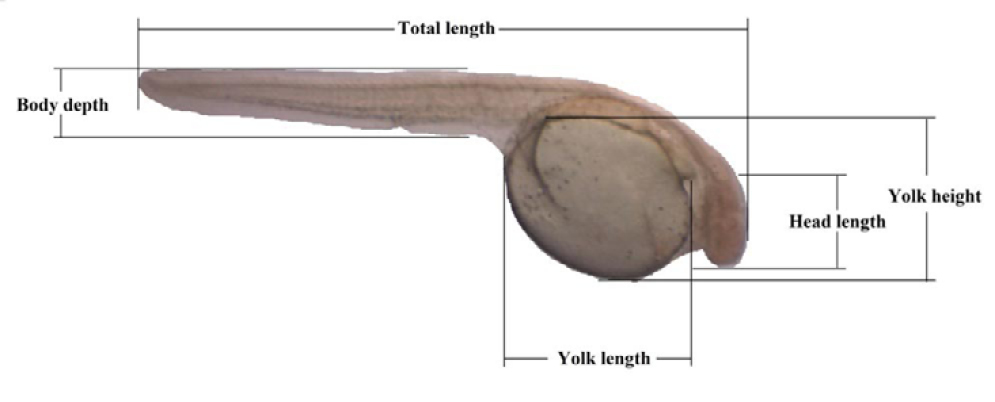
Biometric characteristics of the eggs and the newly hatched larvae (Figure 1) were also recorded using the scaled picture from the microscope. The morphological characteristics measured include the larvae’s total length, head length, yolk height, yolk length, body depth and yolk volume. The Yolk volume was also calculated according to the formula given by Blaxter and Hampel (1963):
V= (π/6) LH2
V is the yolk size volume, L is the yolk size length, and H is the yolk size height.
Water quality parameters such as pH, dissolved oxygen, total dissolved solids, electric conductivity, and temperature were monitored every three hours throughout the incubation period for the treatments and their replicates in the two experiments. This was done using Hanna’s digital multi-parameter water checker (Model HL 98126). The water quality was maintained at optimum: pH=7.00±0.22; Dissolved Oxygen = 5.00±0.11 mgL-1; TDS = 220±0.15 mgL-1; Cond. = 605±0.44 µS/cm; T°C = 29.0±0.05°C. Descriptive statistics of the breeding parameters, egg, and larvae characteristics were analyzed using the Minitab 14 computer software. Data were initially tested for normality and homogeneity of variance before Analysis of Variance (ANOVA) was done. Where significant differences occurred, means were separated using Fisher’s least significant difference at a significance level of p ≤ 0.05. However, when the assumptions of normality and homogeneity did not hold, data were analyzed using the Kruskal-Wallis non-parametric test.
Results
Viability of stripped African catfish eggs exposed at room temperature for varying period
The characteristics of stripped eggs exposed to prevailing atmospheric conditions at varying times are stated in Table 1. Results revealed that the minor axis before fertilization was not different between the control and treatment groups 1HPS, 2HPS and 3HPS. However, it significantly reduced at higher exposure times (i.e., 4HPS, 8HPS and 12HPS). Hence, the minor axis before fertilization was higher at the 2HPS (1.40µm) and lowest at the 12HPS (0.57µm). The major axis, the egg volume, and the egg area before fertilization were also not significantly different between the control and treatment groups 1HPS and 2HPS. Similarly, the values significantly reduced for the three variables as the exposure to atmospheric oxygen increased, with the least observed in the 12HPS. A similar trend was also observed after fertilization in the minor axis, major axis, egg volume, and egg area.
| Control | 1HPS | 2HPS | 3HPS | 4HPS | 8HPS | 12HPS | P-value | ||||||||||||
|---|---|---|---|---|---|---|---|---|---|---|---|---|---|---|---|---|---|---|---|
| Minor Axis before fertilization (µm) | 1.27±0.22ab | 1.23±0.20ab | 1.40±0.32a | 0.87±0.09abc | 0.60±0.12c | 0.77±0.09bc | 0.57±0.09c | 0.024 | |||||||||||
| Major Axis before fertilization (µm) | 1.53±0.15a | 1.57±0.20a | 1.53±0.33a | 0.97±0.15b | 0.73±0.09b | 0.87±0.09b | 0.67±0.03b | 0.004 | |||||||||||
| Egg Volume before fertilization (µm3) | 1.44±0.64ab | 1.42±0.60ab | 2.03±1.00a | 0.41±0.13b | 0.16±0.74b | 0.29±0.08b | 0.12±0.04b | 0.002 | |||||||||||
| Egg Area before fertilization (µm2) | 6.27±1.67ab | 6.32±1.78ab | 7.40±2.81a | 2.71±0.64bc | 1.44±0.44c | 2.14±0.44bc | 1.20±0.23c | 0.031 | |||||||||||
| Minor Axis After fertilization (µm) | 1.63±0.19a | 1.50±0.23a | 1.57±0.27a | 1.13±0.19ab | 0.83±0.12b | 1.10±0.27ab | 0.80±0.10b | 0.049 | |||||||||||
| Major Axis After fertilization (µm) | 1.93±0.09a | 1.77±0.15ab | 1.93±0.12a | 1.40±0.15bc | 1.07±0.12c | 1.40±0.25bc | 0.97±0.03c | 0.001 | |||||||||||
| Egg Volume After Fertilization (µm3) | 2.83±0.79a | 2.28±0.82ab | 2.73±1.08a | 1.03±0.15ab | 0.43±0.15b | 1.11±0.50ab | 0.34±0.08b | 0.001 | |||||||||||
| Egg Area After Fertilization (µm2) | 10.02±1.61a | 8.53±1.95ab | 9.68±2.19ab | 5.08±1.25bc | 2.88±0.69c | 5.21±1.79bc | 2.45±0.38c | 0.013 | |||||||||||
| The mean in the same column with different superscripts differ significantly (p<0.05). Note HPS = Hours Post Stripping. | |||||||||||||||||||
In most cases, the highest value was observed in the control, while the lowest was at 12HPS. The fertilization and hatchability percentage of the stripped eggs shown in Table 2 reveal a significant decrease in value with delayed fertilization time. The severity was observed in the 8HPS (13.87% and 0.78%, respectively) and 12HPS (0.4% and 0.00%, respectively) for the fertilization and hatchability rates. However, The abnormal egg development percentage was higher at 8HPS (92.74%) and lowest in the control (0.56%).
| Control | 1HPS | 2HPS | 3HPS | 4HPS | 8HPS | 12HPS | P-value | ||||||||||||
|---|---|---|---|---|---|---|---|---|---|---|---|---|---|---|---|---|---|---|---|
| %Fertilization | 95.36±2.41a | 78.00±2.48b | 70.62±0.20c | 61.87±2.77d | 62.44±2.29d | 13.87±2.40e | 0.4±0.23f | 0.001 | |||||||||||
| % Abnormal egg development | 0.56±0.36b | 1.70±0.50b | 1.78±0.64b | 3.28±0.18b | 7.05±3.13b | 92.74±4.30a | 66.70±33.3a | 0.001 | |||||||||||
| % Hatchability | 87.01±5.62a | 71.75±0.96b | 61.90±3.28bc | 52.34±4.58cd | 44.71±8.37d | 0.78±0.24e | 0.00±0.00e | 0.001 | |||||||||||
| The mean in the same column with different superscripts differ significantly (p<0.05). Note HPS = Hours Post Stripping. | |||||||||||||||||||
Table 3 shows the characteristics of hatched larvae from the delayed fertilized eggs. Results revealed no significant difference between the control and the treatment groups in terms of the Total length, Head length, Yolk Height, Yolk length, Body depth, Yolk area and Yolk volume.
| Control | 1HPS | 2HPS | 3HPS | 4HPS | 8HPS | P-value | |||||||||||||
|---|---|---|---|---|---|---|---|---|---|---|---|---|---|---|---|---|---|---|---|
| Total Length (mm) | 3.07±0.29 | 3.03±0.09 | 2.98±0.03 | 2.97±0.03 | 2.90±0.21 | 2.07±0.15 | 0.686 | ||||||||||||
| Head Length (mm) | 0.59±0.10 | 0.55±0.00 | 0.57±0.07 | 0.57±0.07 | 0.57±0.03 | 0.63±0.03 | 0.310 | ||||||||||||
| Yolk Height (mm) | 1.53±0.09 | 1.53±0.33 | 1.53±0.33 | 1.53±0.33 | 1.53±0.33 | 1.53±0.33 | 1.000 | ||||||||||||
| Yolk Length (mm) | 1.73±0.12 | 1.97±0.03 | 2.00±0.10 | 2.00±0.08 | 1.93±0.03 | 1.87±0.09 | 0.082 | ||||||||||||
| Body Depth (mm) | 0.60±0.06 | 0.63±0.07 | 0.57±0.07 | 0.57±0.07 | 0.67±0.03 | 0.60±0.06 | 0.818 | ||||||||||||
| Yolk Area (mm2) | 8.40±1.02 | 9.47±0.32 | 9.63±0.21 | 9.63±0.21 | 9.31±0.18 | 8.97±2.54 | 0.450 | ||||||||||||
| Yolk Volume (mm3) | 2.18±0.39 | 2.43±0.13 | 2.48±0.11 | 2.48±0.11 | 2.38±0.09 | 2.29±0.04 | 0.842 | ||||||||||||
| The mean in the same column with different superscripts differ significantly (p<0.05). Note HPS = Hours Post Stripping. | |||||||||||||||||||
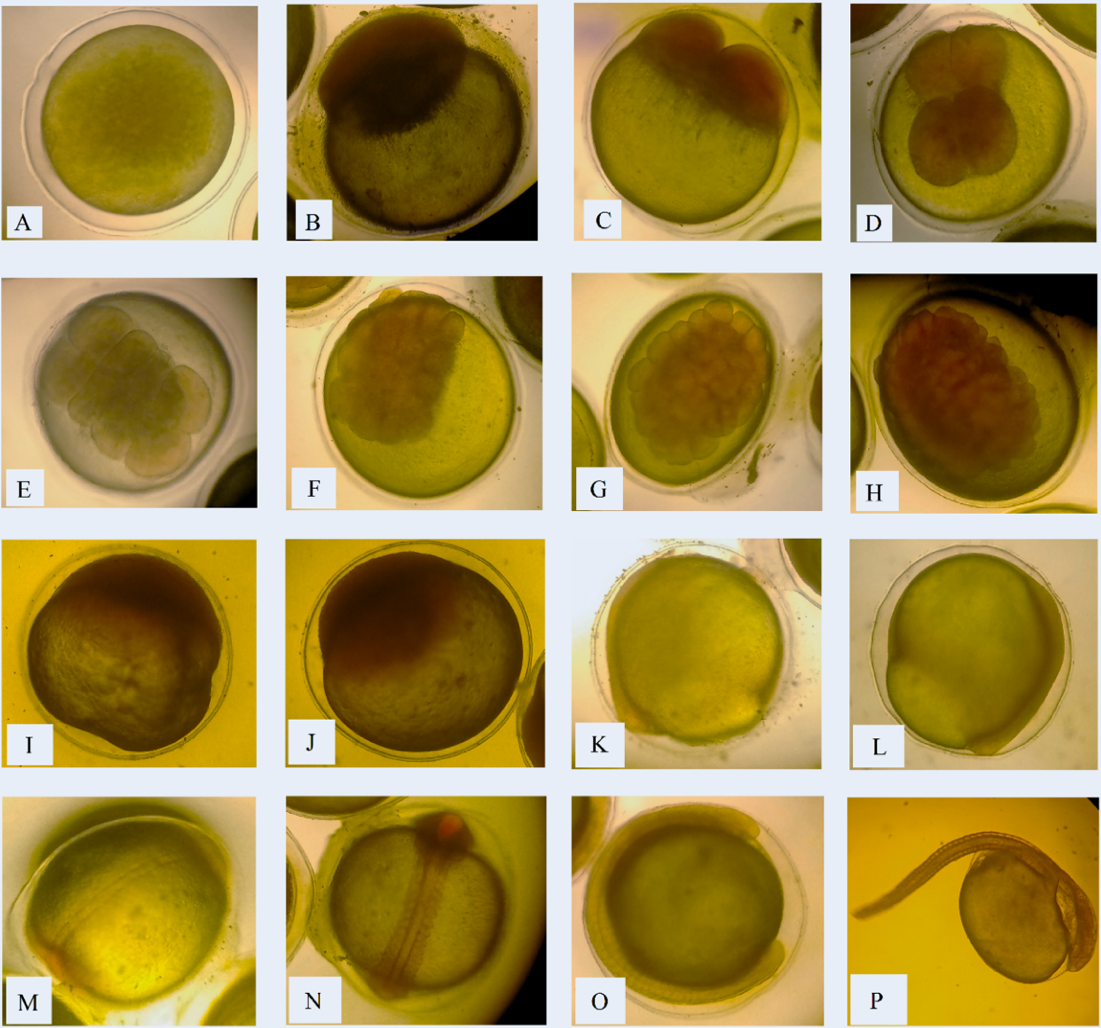
The pictorial evidence of the normal embryogenetic development of the delayed fertilized eggs of African Catfish (C. gariepinus) is shown in Figure 2. The different embryogenetic stages were completed within 24hrs 19minutes and includes the following: Fertilized egg (0min); One-cell stage (32mins); Two-cell stage (57mins); Four-cell stage (1hr 2mins); Eight-cell stage (1hr 43mins); Sixteen-cell stage (1hr 51mins); Thirty-two cell stage (2hrs 3mins); Sixty-four cell stage (3hrs 19mins); Morula (4hrs 47mins); Blastula (6hrs 2mins); Gastrula (10hrs 14mins); 95% Epiboly (12hrs 7mins); Somite begins (16hrs 18mins); Advance somite (18hrs 39mins); Prime (22hrs 58mins); Hatchling (24hrs 19mins).
Viability of Stripped African Catfish Eggs stored for a short duration using different methods
The characteristics of C. gariepinus eggs stored for 8 hours using different methods are shown in Table 4. The result revealed no significant difference in the major (1.60 to 1.95µm and 1.55 to 1.95µm) and minor axis (1.10 to 1.60µm and 1.43 to 1.60µm) of the eggs before and after fertilization, respectively for the treatment and control groups. While there was no significant difference in the Egg volume (1.01 to 3.30µm3) and area (5.53 to 10.93µm2) before fertilization, it significantly increased after fertilization with the lowest observed in the negative control TRT1 (1.97µm3 and 6.67µm2) and the highest in TRT2 (3.55µm3 and 11.37µm2) respectively.
| Control | TRT 1 | TRT 2 | TRT 3 | TRT 4 | TRT 5 | TRT 6 | P-value | ||||||||||||
|---|---|---|---|---|---|---|---|---|---|---|---|---|---|---|---|---|---|---|---|
| Minor Axis before fertilization (µm) | 1.10±0.11 | 1.38±0.16 | 1.60±0.14 | 1.50±0.15 | 1.58±0.08 | 1.78±0.13 | 1.60±0.07 | 0.097 | |||||||||||
| Major Axis before fertilization (µm) | 1.60±0.30 | 1.63±0.09 | 1.85±0.12 | 1.78±0.13 | 1.85±0.05 | 1.95±0.05 | 1.88±0.05 | 0.259 | |||||||||||
| Egg Volume before fertilization (µm3) | 1.01±0.19 | 1.74±0.52 | 2.61±0.51 | 2.21±0.52 | 2.43±0.27 | 3.30±0.51 | 2.53±0.24 | 0.112 | |||||||||||
| Egg Area before fertilization (µm2) | 5.53±1.03 | 7.15±1.26 | 9.44±1.29 | 8.49±1.29 | 9.16±0.57 | 10.93±1.04 | 9.42±0.48 | 0.096 | |||||||||||
| Minor Axis After fertilization (µm) | 1.60±0.20 | 1.33±0.14 | 1.85±0.09 | 1.65±0.16 | 1.63±0.11 | 1.57±0.09 | 1.43±0.05 | 0.088 | |||||||||||
| Major Axis After fertilization (µm) | 1.75±0.15 | 1.55±0.17 | 1.95±0.05 | 1.88±0.05 | 1.95±0.05 | 1.83±0.05 | 1.73±0.10 | 0.069 | |||||||||||
| Egg Volume After fertilization (µm3) | 2.43±0.79ab | 1.97±0.44c | 3.55±0.42a | 2.77±0.52ab | 2.74±0.36ab | 2.69±0.28ab | 1.84±0.15c | 0.043 | |||||||||||
| Egg Area After Fertilization (µm2) | 8.88±1.86abc | 6.67±1.34c | 11.37±0.83a | 9.77±1.10ab | 9.96±0.77ab | 9.03±0.57abc | 7.71±0.46bc | 0.042 | |||||||||||
| The mean in the same column with different superscripts differ significantly (p<0.05). | |||||||||||||||||||
The breeding performance of the eggs is also shown in Table 5. The result reveals a significant reduction in the fertilization rate of the eggs stored using the different methods (8.23 to 15.23%) compared with the positive control group (83.69%). Abnormality percentages of the treatment groups of the different storage methods were also above 90% and above, resulting in zero hatched fry in most treatments (except TRT1 with 0.78% hatchability).
| Control | TRT 1 | TRT 2 | TRT 3 | TRT 4 | TRT 5 | TRT 6 | P-value | ||||||||||||
|---|---|---|---|---|---|---|---|---|---|---|---|---|---|---|---|---|---|---|---|
| %Fertilization | 83.69±2.98a | 15.23±3.42b | 8.85±1.43b | 8.23±0.79b | 8.52±1.49b | 13.35±3.64b | 11.10±0.24b | 0.001 | |||||||||||
| % Abnormal egg development | 0.76±0.38c | 89.43±4.32b | 100.00±0.00a | 100.00±0.00a | 100.00±0.00a | 100.00±0.00a | 100.00±0.00a | 0.001 | |||||||||||
| %Hatchability | 72.44±3.44a | 0.78±0.41b | 0.00±0.00b | 0.00±0.00b | 0.00±0.00b | 0.00±0.00b | 0.00±0.00b | 0.001 | |||||||||||
| The mean in the same column with different superscripts differ significantly (p<0.05). Keys: Control = Eggs stripped and fertilized immediately (+ve Control) TRT 1 = Egg exposed to room temperature without an extender (-ve Control) TRT 2 = Egg exposed to room temperature with the addition of extender TRT 3 = Egg exposed to room temperature with the addition of extender and aeration. TRT 4 = Egg kept in the fridge without the extender. TRT 5 = Egg kept in the fridge with the addition of extender. TRT 6 = Egg kept in the fridge with the addition of extender and aeration. | |||||||||||||||||||
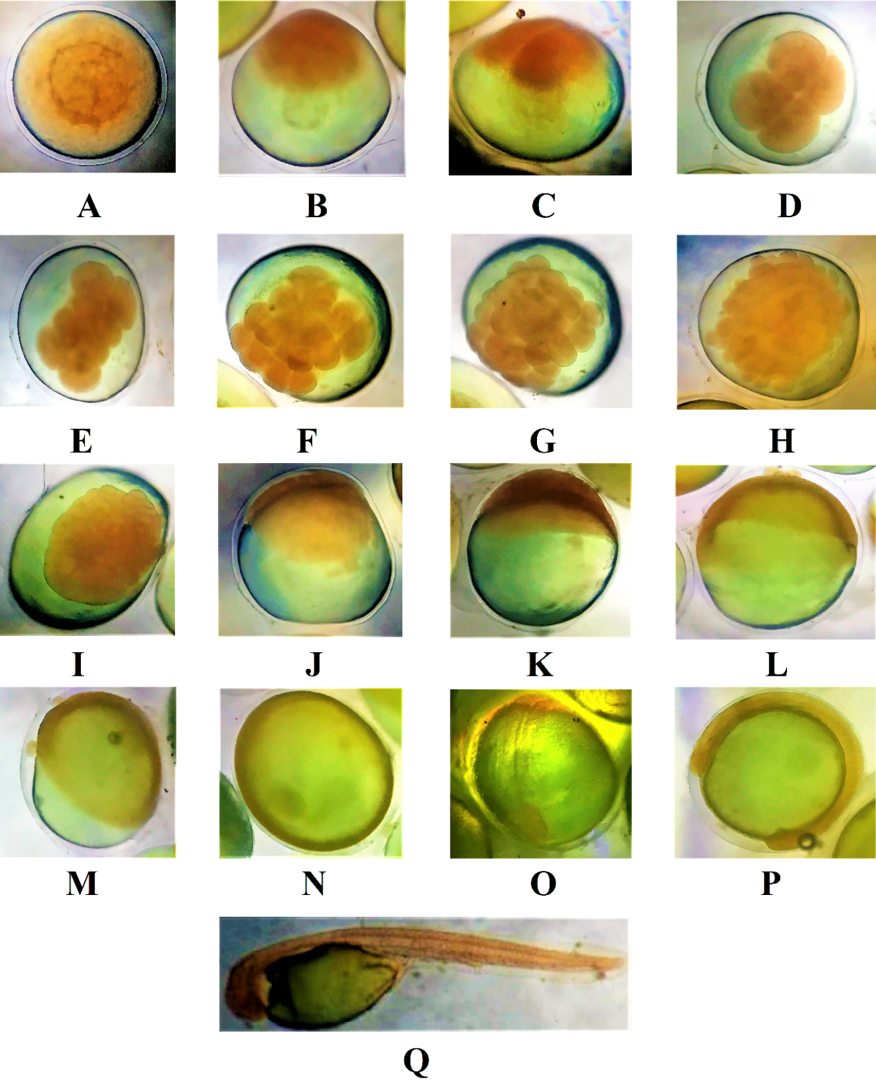
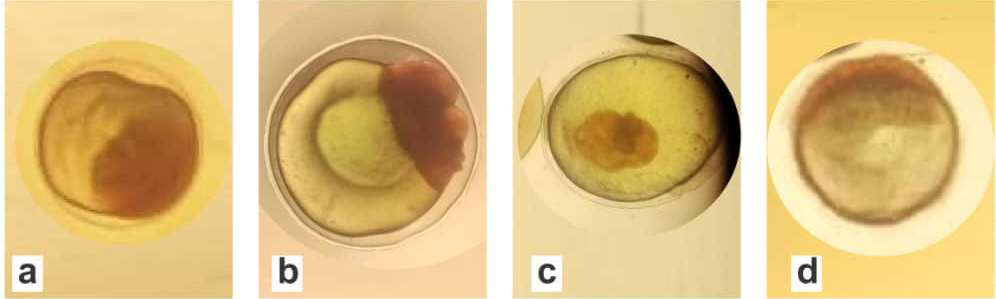
Figure 3 also shows the embryogenetic development of the eggs of C. gariepinus stored using different methods before fertilization with fresh sperm. The various stages of development were completed within 24 hours, with the hatch larva emerging normally. The abnormality observed during the embryogenesis ranges from partial aggregation/and uneven division of the cell cytoplasm to abnormal epiboly development (Figure 4).
Discussion
Differences in the sizes of the eggs have been previously linked to broodstock quality and broodstock size (Bromage and Roberts, 1995; Ataguba et al., 2013). The egg size range of C. gariepinus, as reported by Hassan et al. (2018), is larger than those reported for this study and could, therefore, be linked to the different broodstocks used. It is also noteworthy that because of the prolonged exposure of the egg to the atmosphere oxygen, the egg sizes were observed to shrink before fertilization with sperm. This may be because of dehydration under prolonged delayed fertilization and exposure to atmospheric oxygen. The top layer of the egg mass was observed to dry up, making the eggs of treatments 1HPS to 12HPS appear smaller. For the second experiment, however, there was no significant difference in the egg size when stored using the different methods. Although no concrete scientific explanation could be made for this observation, it is interesting to note that exposure of the freshwater fish eggs to 5% saline treatment for 8 hours did not cause significant size reduction anticipated from dehydration possible due to the hypertonic environment in which the eggs were placed. Like the finding of Olufeagba et al. (2016), an increase in the size of the eggs was observed after fertilization with sperm in both experiments. This observation of egg size increase after fertilization may be due to the entry of sperm into the micropyle of the fertilized egg or the hydration of the non-fertilized eggs (Okomoda et al., 2018).
Once eggs are stripped, they are expected to be fertilized immediately so the embryogenic development of the egg can begin. The findings of this first study show that delayed fertilization affected the viability of eggs, and detrimental effects were observed at a time threshold beyond 4 hours. According to Samarin et al. (2015), the significant loss in viability due to the delay of fertilization could result from egg ageing. The finding of this first study is, therefore, in consonant with the report by many previous authors, which suggests that egg viability is inversely proportional to post-ovulation time (Bobe and Labbe, 2010; Suquet et al., 2000 and Urbanyi et al., 1999). In an attempt to improve the viability of the eggs further, different methods which involved the sole and combined administration of refrigeration, aeration and extender (i.e., physiological saline) were tested in the second study. Unfortunately, all attempts to preserve the eggs’ viability using these different storage approaches failed as the fertilization and hatchability rates were not improved, as observed in the second study. Contrary to this finding, the study by Samarin et al. (2017) reported that unfertilized eggs of Eurasian perch stored at low temperatures remained viable for 48 hours while that of salmonid eggs were viability for about 9 days as reported by Niksirat et al. (2007). Different species of fish may respond differently to different storage methods based on their biology.
Rothbard et al. (1996) also reported the storage of common carp, Cyprinus carpio eggs for short durations at low temperatures (6-9ºC), variable/high temperatures (12-31ºC) and at moderate-stable temperatures (20-24.5ºC). Their finding shows that C. carpio eggs stored at moderate and stable temperatures for a maximal duration of 6 hours yielded hatch-out larvae percentages higher than 50%. Similarly, the current results showed that the eggs of C. gariepinus preserved at room temperature responded better than those preserved with refrigeration. According to Nguenga et al. (2004), two strains of catfish eggs stored separately had better viability in warmer than colder temperatures. Linhart et al. (2001) evaluated the ova of tench Tinca tinca in various extenders at 21°C under aerobic conditions. Their findings show that the ova stored in the Dettlaff extender for one hour achieved 24-30% hatching compared to 58% recorded in the control. This is like the finding of our study with the physiological saline used. However, the severity of our finding compared to the report of Linhart et al. (2001) could be linked to the duration of exposure to the physiological saline storage aside from the differences in the species used.
The attempt of short-term storage with an extender may have also resulted in the closure of the micropyle of the eggs due to the nature of the liquid medium, hence triggering abnormal cell division without the presence of appropriate sperm, as noticed during the embryogenetic observation. This is probably the primary cause of the poor hatching recorded for the treatments with an extender. Like the current study, mass rupture of the cell structure of the eggs and uneven cell division were evident during the embryogenesis of the incubated eggs reported by (Rahman et al., 2020) and Okomoda et al. (2018), respectively. The exact reason for such extensive disruption of cell metabolism, especially in treatments with extender, may result from the influx or presence of salt deposited in the cell. Normal embryogenic development was similar to those previously reported in the studies of Olaniyi and Omitogun (2014) and Okomoda et al. (2018) for the same species.
Ataguba et al. (2013) had earlier reported that the effect of egg size transcends beyond the developmental ability of the embryo to the characteristics of hatched fry. However, despite the significant differences in the egg size before and after fertilization of the different eggs delayed for fertilization, the attributes of normally hatched larvae in all the treatments of the first study were still similar. The larvae characteristics of the hatched fry in the second experiment were not taken since hatchability was close to zero in all the treatment groups except the positive control. Therefore, this study’s findings suggest a four-hour window beyond which the viability of stripped eggs will be affected if not fertilized with appropriate sperm. Future studies can further research other short-term storage options not evaluated in this study, as all the current attempts failed to improve the viability of the ova under laboratory conditions.
Acknowledgements
The authors are profoundly grateful to the staff and students of the Department of Fisheries and Aquaculture, Joseph Sarwuan Tarka University (formerly the Federal University of Agriculture Makurdi), who lend a helping hand during the tedious research process of this study. We would also like to thank the anonymous reviewers whose views and opinions have helped to modify this manuscript to its current level of acceptability for publication.
Authors contribution
VTO SOO conceptualized and designed the study, FT and VTO experimented with assistance from several students and staffs, hence collecting the needed data for analysis which was done by VTO. Meanwhile, VTO wrote the draft of the manuscript. SGS, DAB, RY, IK validated the data, revised the manuscript, and approved it submission to be publication.
References
Adebayo, O.T., Lawal, O.A., and Adeoye, O.A. (2015) Aspects of the Biology and Ecology of African Catfish (Clarotes laticeps) in the Lower Ogun River, Nigeria. Journal of Aquatic Sciences 30(1), 35-43.
Adeyemo, O. K., Adeyemo, O. A., Oyeyemi, M. O., and Gbede, S. A. (2007). Effect of semen extenders on the motility and viability of stored African catfish (Clarias gariepinus) spermatozoa. Journal of Applied Science and Environmental Management 11(1): 13-16.
Ataguba G.A., Okomoda V.T., and Onwuka M.C., (2013) Relationship Between Broodstock Weight Combination and Spawning Success in African catfish (Clarias gariepinus). Croat Journal of Fisheries 71:176–181.
Blaxter, J. H., and Hempel, G. (1963). The Influence of Egg Size on Herring Larvae (Clupea harengus). ICES Journal of Marine Science 28(2): 211-240.
Bobe J. and Labbe C., (2010) Egg and Sperm Quantity in Fish. General and Comparative Endocrinology 165: 535-548
Bromage N. R., and Roberts R. J., (1995) Broodstock Management and Egg and Larval Quality. Blackwell Science Company 2121 S (State Avenue, Ames, Iowa 500148300, USA): Iowa State University Press; p. 6-24: 76-93
Dauda AB, Natrah I, Karim M, Kamarudin MS, and Bichi AH, (2018) African Catfish Aquaculture in Malaysia and Nigeria: Status, Trend and Prospects. Fisheries and Aquaculture Journal 9: 237.
Dettlaff T.A., Ginsburg A.S., and O.I. Schmalhausen. (1993) Sturgeon Fishes. Developmental Biology and Aquaculture. Springer-Verlag, Berlin. 300 pp.
FAO, (2020). The State of World Fisheries and Aquaculture 2020. Sustainability in Action. Rome: FAO. https://doi.org/10.4060/ca9229en
Furuita, H., Ohta, H., Unuma, T., Tanaka, H., Kagawa, H., Suzuki, N., and Yamamoto, T. (2003) Biochemical Composition of Eggs in Relation to Egg Quality in the Japanese Eel, Anguilla japonica. Fish Physiology and Biochemistry 29: 37-46.
Harvey, B., and Kelley, R. N. (1984). Short-term Storage of Sarotherodon mossambicus Ova. Aquaculture 37(4): 391-395.
Hassan, A., Okomoda, V. T., and Nurhayati, M. N. (2018) Embryonic Development of Diploid and Triploid Eggs of Clarias gariepinus (Burchell, 1822). Caryologia 71(4): 372-379.
Idahor, K. O., Okunsebor, S. A., Sokunbi, O. A., Osaiyuwu, O. H., Osayande, U. D., Hamza, J., and Isah, N. (2018) Effect of Storage Temperature on African Catfish (Clarias gariepinus Burchell 1822) Milt Quality. International Journal of Innovation Studies in Aquatic Biology and Fisheries 4(1): 7-12.
Jensen, J. O. T., and Alderdice, D. F., (1984). Effect of Temperature on Short-term Storage of Eggs and Sperm of Chum Salmon (Oncorhynchus keta). Aquaculture 37(3): 251-265.
Kalinina, L., Zelenskaya, I., Trufanova, S., and Kalinin, N. (2020) Prospects of Development of Aquaculture in Russia and its Regions. In E3S Web of Conferences Volume 81, p. 01008. EDP Sciences.
Khedkar G.D. and Khedkar C.D. (2003) Encyclopedia of Food Science and Nutrition, Second Edition
Linhart O, Gela D, Rodina M, and Rodriguez GM (2001) Short-term Storage of Ova of Common Carp and Tench in Extenders. Journal Fish Biology 59(3): 616-623.
Megbowon, I., Fashina-Bombata, HA., Akinwale MA., Hammed, AM., Okunade OA., and Mojekwu TO. (2013) Breeding Performance of Clarias gariepinus Obtained from Nigerian Waters. IOSR Journal of Agriculture and Veterinary Science 6(3): 6-9.
Nguenga, D., Teugels, GG., Legendre, M., and Ollevier, F. (2004) Effects of Storage and Incubation Temperature on the Viability of Eggs, Embryos and Larvae in Two Strains of an African Catfish, Heterobranchus longifilis (Siluriformes, Clariidae). Aquaculture Research 35(14): 1358-1369.
Niksirat H, Sarvi K, Mojazi Amiri B, and Hatef A., (2007) Effects of Storage Duration and Storage Media on Initial and Post-eyeing Mortality of Stored Ova of Rainbow Trout Oncorhynchus mykiss. Aquaculture 262(2-4): 528-531.
Okomoda V.T, Koh ICC, Shahreza M.S. (2017) First Report on the Successful Hybridization of Pangasianodon hypophthalmus (Sauvage, 1878) and Clarias gariepinus (Burchell, 1822). Zygote 25(4): 443-452.
Okomoda V.T., Koh ICC, Shahreza M.S., (2018) A Simple Technique for Accurate Estimation of Fertilization Rate with Specific Application to Clarias gariepinus (Burchell, 1822). Journal of Aquaculture Resources 49: 1116e21.
Olaniyi, W. A., and Omitogun, O. G. (2014) Stages in the Early and Larval Development of the African Catfish Clarias gariepinus (Teleostei, Clariidae). Zygote 22(3): 314-330.
Olufeagba S. O. and Okomoda V. T. (2016). Cannibalism and performance evaluation of hybrids between Clarias batrachus and Clarias gariepinus. Croatian Journal of Fisheries 74(3): 124-129.
Olufeagba SO, Okomoda VT, Shaibu G. (2016) Embryogenesis and Early Growth of Pure Strains and Hybrids Between Clarias gariepinus (Burchell, 1822) and Heterobranchus longifilis Valenciennes, 1840. North American Journal of Aquaculture 78: 346-355.
Omoniyi, S.A., Adeyemi, O.A., and Okechi, J.K. (2018) Growth Performance and Survival Rate of African Catfish (Clarotes laticeps) Juveniles Reared in Concrete Tanks. Nigerian Journal of Fisheries 15(2): 233-238.
Rahman, S. M., Alsaquft, A. S., Alkhamis, Y. A., Rahman, M. M., Ahsan, M. N., Mathew, R. T., and Hossain, Q. Z. (2020) Short Term Storage of Asian Walking Catfish (Clarias batrachus linnaeus, 1758) Gametes. Advances in Animal and Veterinary Sciences 8(12): 1394-1401.
Rizzo, E., Godinho, H. P., and Sato, Y. (2003) Short-term Storage of Oocytes from the Neotropical Teleost Fish Prochilodus marggravii. Theriogenology 60(6): 1059-1070.
Rothbard, S., Rubinshtein, I., and Gelman, E. (1996) Storage of Common Carp, Cyprinus carpio Eggs for Short Durations. Aquaculture Research 27(3): 175-181.
Samarin AM, Żarski D, Palińska-Żarska K, Krejszeff S, Blecha M, Kucharczyk D, and Policar T (2017) Invitro Storage of Unfertilized Eggs of the Eurasian Perch and its Effect on Egg Viability Rates and the Occurrence of Larval Malformations. Journal of Animal Sciences Volume 11(1): 78-83.
Samarin AM, Policar T, Lahnsteiner F (2015) Fish Oocyte Ageing and its Effect on Egg Quality. Review on Fisheries Science and Aquaculture 23(3): 302-314.
Suquet M., Dreanno C., Fauvel C., Cosson J. and Billard R., (2000) Cryopreservation of Sperm in Marine Fish. Aquaculture Research 31: 231-243.
Tilahun, G., and Yalew, A. (2024). Cryopreservation and artificial insemination in African Catfish (Clarias gariepinus, Burchell 1822): A review. Journal of Agriculture and Environmental Sciences 9(1): 110-122.
Tacon, A. G. (2020). Trends in global aquaculture and aquafeed production: 2000–2017. Rev. Fish. Sci. Aquac. 28: 43-56. https://doi.org/10.1080/23308249.2019.1649 634
Urbanyi B., Horvath A., Varga Z. and Horvath L., (1999) Effect of Extenders on Sperm Cryopreservation of African Catfish, Clarias gariepinus (Burchell). Aquaculture Research 30: 145-151
Withler, F. C., and Lim, L. C. (1982) Preliminary Observations of Chilled and Deep-frozen Storage of Grouper (Epinephelus tauvina) Sperm. Aquaculture 27(4): 389-392.
Yue K., and Shen Y., (2021) An Overview of Descriptive Technologies for Aquaculture. Journal of Aquaculture and Fisheries 7: 111-112.