Received: April 11, 2025; Accepted: October 5, 2025; Published: December 24, 2025
Taxonomic evaluation of three Egyptian Solanum species based on morphology, DNA sequences, and chromosome analysis
1 Department of Botany and Microbiology, Faculty of Science, Cairo University, Egypt
2 Biological science department, Faculty of Science, Galala University, Suez, Egypt
3 Department of Botany and Microbiology, Faculty of Science, Cairo University, Giza, Egypt
4 National Gene Bank, Agriculture Research Center (ARC), Egypt
*Corresponding author. Email: amanysallam88@gmail.com
Abstract. We investigated the intra-specific relationships between three Solanum species in Egypt: Solanum nigrum, Solanum villosum, and Solanum sinaicum, in addition to the inter-specific relationships among the populations of the three studied species. These species’ taxonomic difficulty is primarily due to its inconsistent infra-specific treatments in various floras. The morphological studies revealed distinguishing characteristics for the three investigated Solanum species mainly fruit and flower characteristics. The morphological differences allowed S. villosum to be divided into two subspecies: subsp. villosum, and subsp. miniatum. The genetic variation between the three Solanum species was clarified using AFLP technique. The ribosomal DNA ITS1-5.8S-ITS2 region of the three studied species was sequenced using the universal primers ITS4 and ITS5. The DNA sequences of Solanum species were counted. The karyotypes of the species under examination were established using the chromosome number and genome size acquired from mitotic chromosomal preparations.
Keywords: AFLP, karyotype, Solanum, S. nigrum, S. sinaicum, S. villosum.
Contents
Chromosomes number and Karyotype formulae
Microscopic examination karyotyping, idiograming and signals imaging
PCR reactions and data analysis
Results morphological diversity
Key to studied species of the genus solanum in egypt
Morphological correlation between the three Solanum species
Chromosomes number and Karyotype Formula
Genetic correlation between the studied Solanum species
Introduction
Solanaceae is one of the largest and most essential families of flowering plants. This family serves as a significant source for medicine, food, and spice (Afroz et al. 2020). It is extensively dispersed in both tropical and temperate regions; it has 100 genera and over 2500 species thriving in a variety of environments and ecologies and exhibits different morphologies (Nderitu et al. 2023). Solanaceae is represented in Egypt by eight genera including 30 species (Boulos 2002). Solanum L. is the family’s largest genus (El-Shaboury et al. 2020). There are several species of Solanum that are used in traditional medicine, and some of these species are employed as sources of drugs in pharmacology (Jainu and Devi 2005). Due to its morphological plasticity and infraspecific genetic variation, Solanum possesses a taxonomic challenge (Jennifer and James 1997), also because of the 6,931 names that have been published, many of which are connected to the cultivated and widely distributed species of the genus (Särkinen et al. 2018).
Solanum is represented in Egypt by 9 species (Boulos 2002). However, Täckholm (1974) recorded 10 species. Zohary (1966) recorded two subspecies of Solanum villosum: subsp. villosum and subsp. puniceum. Boulos (2002) recorded that Solanum villosum Mill. is represented in Egypt with two subspecies: subsp. villosum and subsp. miniatum. The name Solanum sinaicum is considered a synonym of Solanum villosum (Särkinen et al. 2018; powo.science.kew.org/) but the name is accepted by Khafagi et al. (2018) and (www.solanaceaesource.org).
Low taxonomic level phylogenetic relationships have been successfully solved using AFLP (Despres et al. 2003; Koopman 2005; Meudt and Clarke 2007). The use of AFLP offers numerous advantages. It generates data that is highly reproducible (Jones et al. 1997), and doesn’t require a priori sequence knowledge. Previous attempts using AFLP markers have proved effective in resolving taxonomic issues and illuminating relationships among species of Solanum (Kardolus et al. 1998; Mace et al. 1999a, 1999b; Coulibaly et al. 2002; Jacoby et al. 2003; Dehmer and Hammer 2004; Olet 2004).
The objectives of this study are to investigate the morphological and genetic diversity found in the populations of the three selected Solanum species: S. nigrum, S. villosum and S. sinaicum, to solve the taxonomic problem of these species in Egypt due to the confused infra-specific groupings.
Materials and methods
Morphological study
This study was based on the examination of specimens deposited at Cairo University Herbarium (CAI), in addition to the authentic type specimens preserved in virtual herbaria that are accessible online (the JSTOR Global Plants database). Acronyms follow Index Herbariorum (http://sweetgum.nybg.org/ih/). In addition to the examination of fresh representative specimens of each of the three species collected between 2022–2024. These specimens belonging to 5 different localities from different phytogeographical regions of Egypt. The coordinates of these localities: 30°49’56’’ & 29°34’49’’; 30°00’18’’ & 31°12’45’’; 30°00’49’’ & 31°12’04’’; 29°17’23’’& 30°51’11’’; and 28°33’38’’ & 33°58’20’’. All specimens were examined for morphological variations in all distribution localities. There were 44 different morphological features analyzed, including those for the stem, leaves, flower, and fruit. Scientific names for the species follow IPNI (http://www.ipni.org/). Vouchers Samples were placed in (CAI).
Data analysis
44 morphological characteristics were analyzed in order to establish a correlation between the samples of the three Solanum species. All samples had their characteristics measured and documented, and the software (R-4.3.1 for Windows) was used to analyze the data and create the heat map. A heatmap is a visual representation of numerical data where each value is represented as a square, with lighter squares representing smaller numerical values and darker squares representing larger values (Tiessen et al. 2017).
Cytogenetics study
Chromosomes number and Karyotype formulae
Chromosome preparations
Between 2022 and 2024, plant material was collected for cytogenetic analysis. A total of thirty specimens were sampled, comprising ten individuals from each of the three Solanum species. Seeds were extracted from the specimens and soaked in distilled water for 1 h prior to germination at room temperature. Root tips approximately 1 cm in length were excised and pretreated with 0.025% colchicine (C₂₂H₂₅NO₆) for 2 h at room temperature to arrest cells at metaphase, followed by rinsing with distilled water. The treated samples were subsequently fixed in a 3:1 (v/v) ethanol:glacial acetic acid solution.After thorough washing with distilled water, the root tips were hydrolyzed in 1 N HCl at 64 °C for 5 min. For slide preparation, the root tips were squashed in 45% acetic acid and stained with acetoorcein solution to visualize chromosomes. The procedure followed previously described protocols (Ibrahim et al., 2019; Elsayed et al., 2024).
Microscopic examination karyotyping, idiograming and signals imaging
Chromosomes examination was done via a vertical fluorescence microscope (Leica DM2500) equipped with a cooled monochrome digital camera (Leica DFC340FX). Twenty cells with clearly observed and well spread chromosomes were checked and photographed at 100X magnification under oil immersion. Chromosome counting and karyotype has performed via the automated Karyotype and FISH software processing (Leica CW4000) system. Ideograms were constructed from complete chromosomes which showed the greatest possible banding pattern in at least ten different metaphase plates. (Ibrahim et al. 2019; Abdo et al. 2023).
Molecular study
DNA extraction
For the chosen samples of Solanum nigrum, Solanum villosum and Solanum sinaicum, genomic DNA was isolated from one gram of juvenile leaves using the CTAB (Cetyl-trimethyl ammonium bromide) extraction buffer approach as described by Doyle and Doyle (1990) and modified by Allen et al. (2006).
PCR reactions and data analysis
PCR amplification was carried according to Williams et al. (1990) with some modification. The reaction volume of 25 μl containing 12.5 μl Dream Taq Green PCR Master Mix (2X), 1 μl Forward primer, 1 μl Reverse primer, 2 μl Template DNA and completed to 25 μl with water (nuclease-free) was placed in a thin-walled PCR tube on ice, then gently vortex the samples and spin down. PCR reaction was performed using the recommended thermal cycling conditions: One cycle of initial denaturation at 95°C for 5 minutes, 35 cycles of denaturation at 95°C for 45 seconds followed by annealing at 57°C for 45 seconds, extension at 72°C for 60 seconds, and one cycle of final extension at 72°C for 10 minutes.
The reaction products were separated by electrophoresis on a 1.6% agarose gel in a 1x TBE buffer, run in the same buffer at 100 V for an hour, and then visualized by staining with 0.5 g/ml of ethidium bromide and being photographed under UV light.
To elucidate the genetic variation and construct the phylogeny of the studied Solanum species, the ribosomal DNA ITS1-5.8S-ITS2 region of the three species was sequenced using ABI377 DNA sequencer (ABI, USA). DNA was amplified using the universal primers ITS4 (5´-TCCTCCGCTTATTGATATGC-3´) and ITS5 (5´-GGAAGTAAAAGTCGTAACAAGG-3´), these primers described by White et al. (1990). Then, BLAST program was employed to look for sequence similarity in DNA databases. Multiple sequence alignment and the determination of genetic distances among the analyzed species were performed using MEGA5 software. Neighbour joining dendrogram was created to highlight the genetic links between the three species. The retrieved sequences were registered on the ncbi under accession numbers PP701899, PP707086, PP707087, and PP707088. The reference sequences from other countries of Solanum nigrum and Solanum villosum used to construct the heat map are available online in the Gene bank
Results
morphological diversity
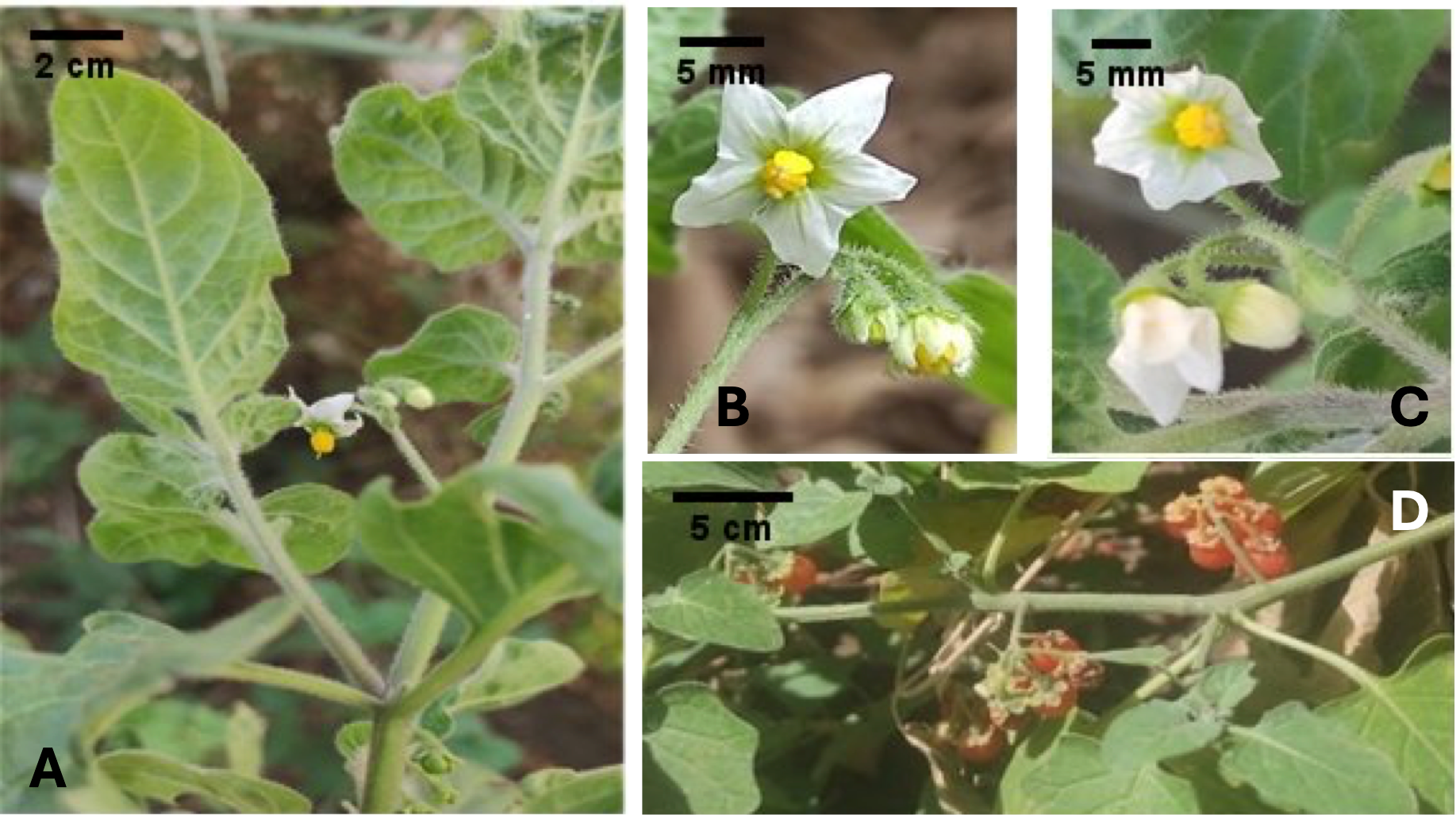
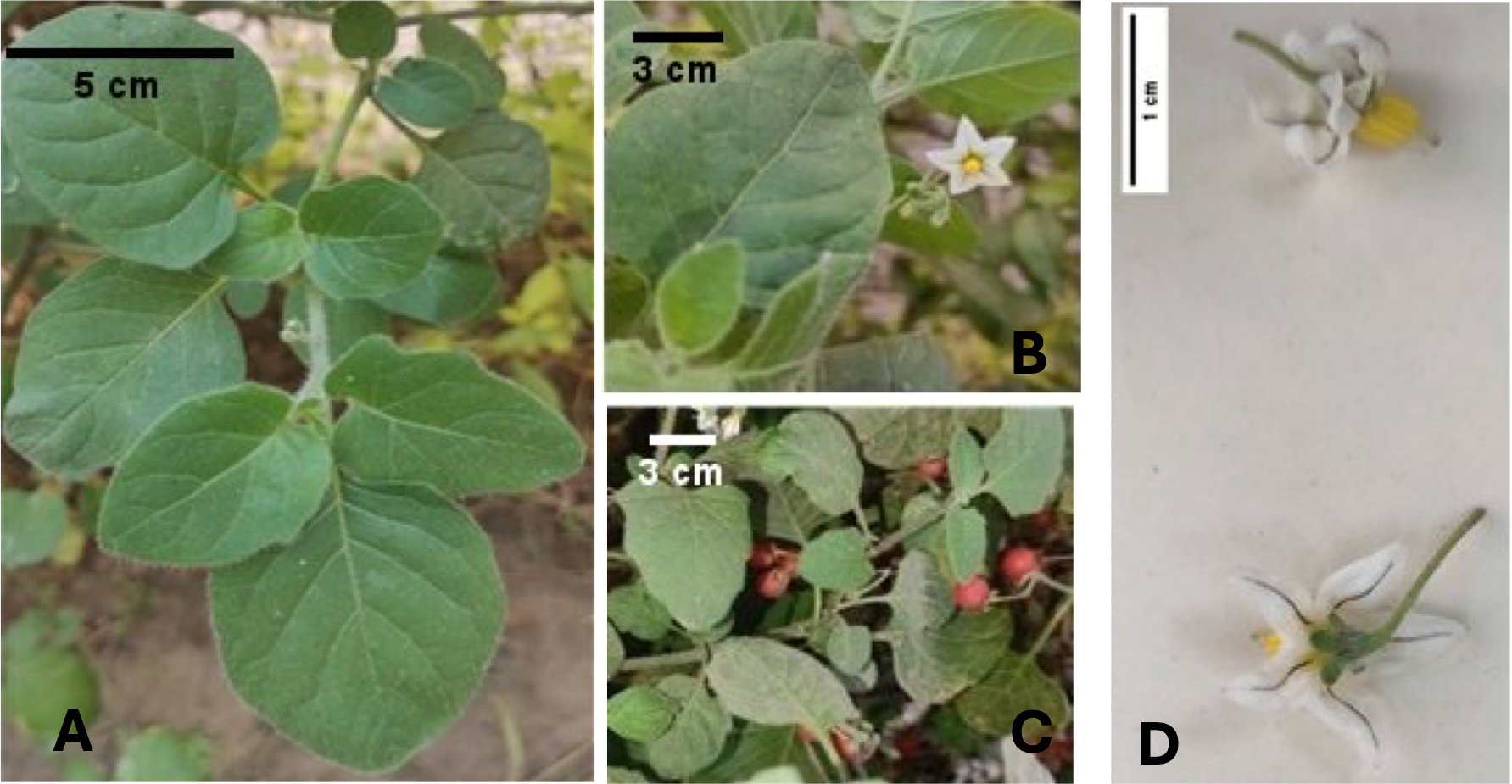
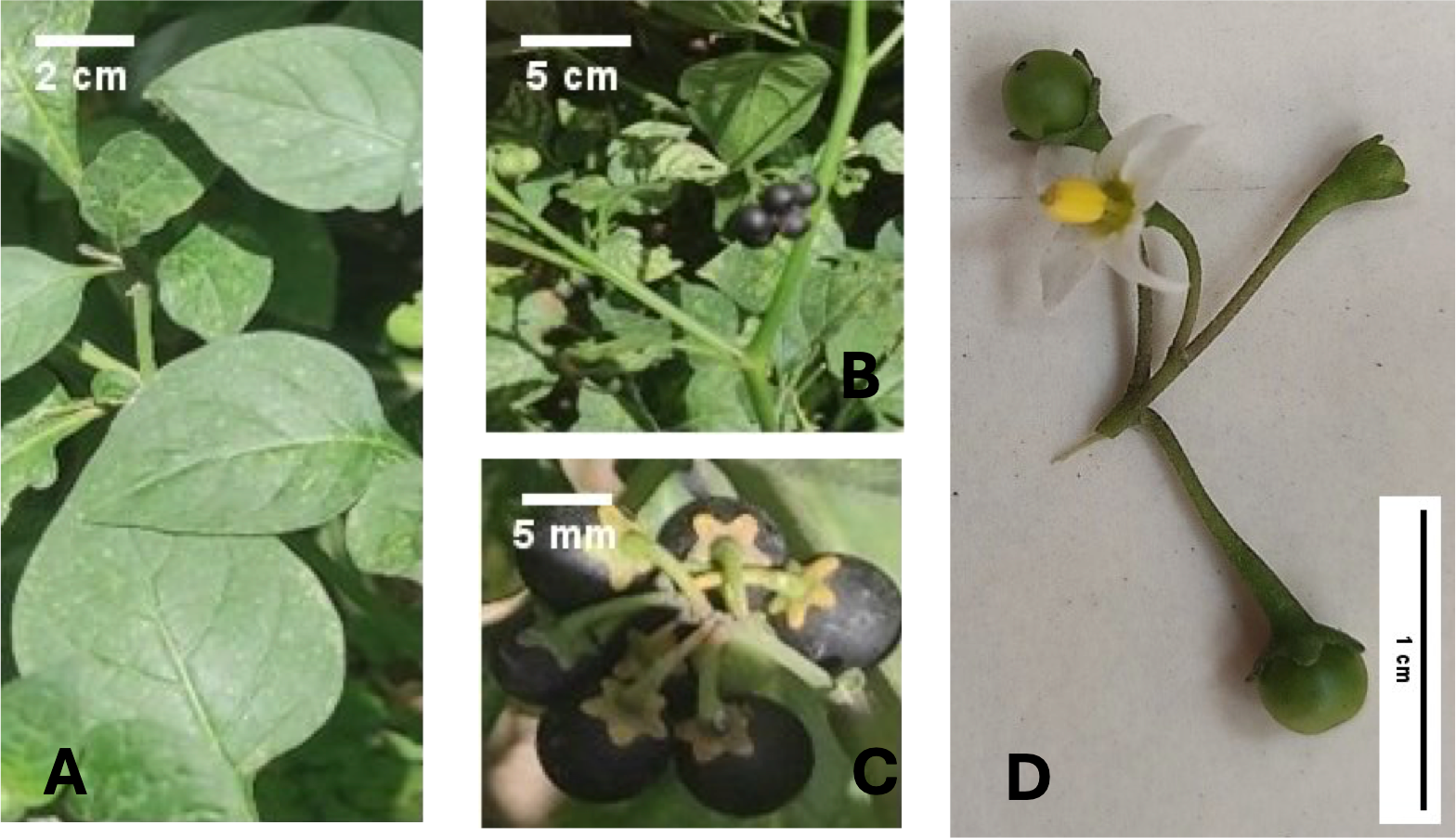
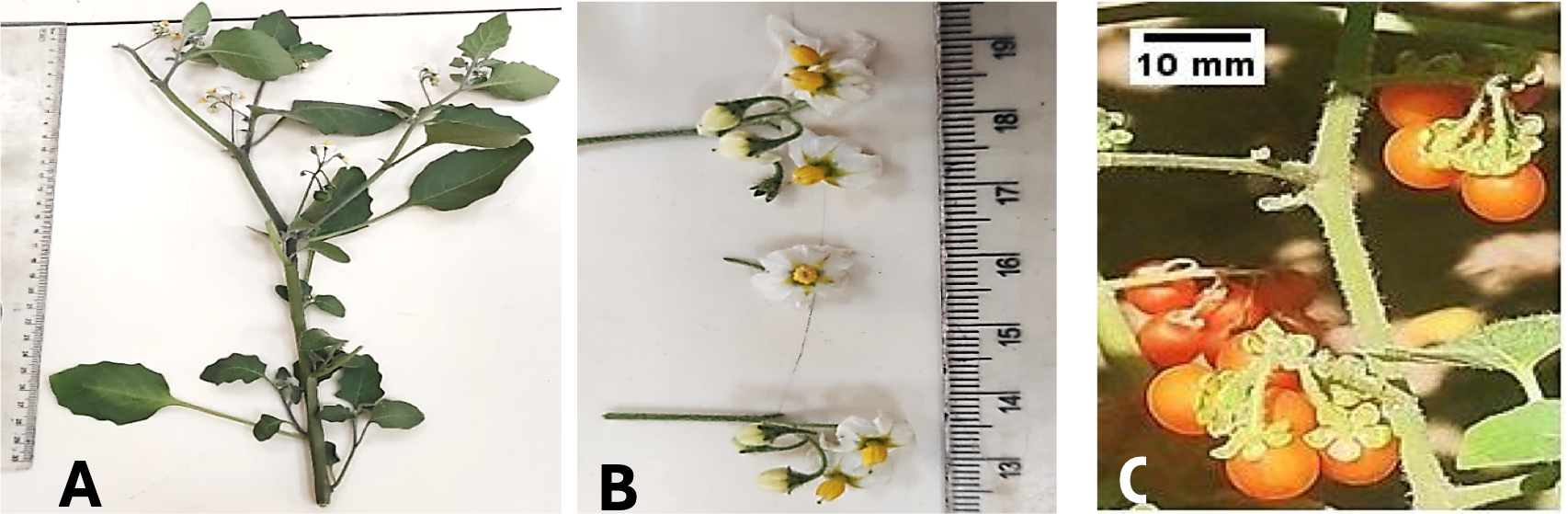
Old herbarium specimens and 150 newly collected specimens of the three studied Solanum species were the subject of morphological studies and taxonomy revision based on 44 morphological traits, including plant height, leaf features, as well as inflorescence and fruit characters. The flower, fruit and leaf characters were the most distinctive characters between the species, and according to the variation in morphological characters we considered the two different forms of Solanum villosum as two different subspecies Solanum villosum subsp. villosum and Solanum villosum subsp. miniatum (Table 1, Figs 1, 2, 3, 4).
| Character | S. villosum subsp. miniatum | S. villosum subsp. villosum | S. nigrum | S. sinaicum |
|---|---|---|---|---|
| Life cycle | Annual to perennial | Annual to perennial | Annual | perennial |
| Plant nature | Erect | Erect | Erect | Erect |
| Growth habit | herb to small shrub | herb to small shrub | herb | herb to small shrub |
| Plant surface | pubescent with multicellular glandualr hairs | pubescent | glabrous or with short hairs | sparsely pubescent |
| Stem length (cm) | up to 70 | up to 70 | up to 70 | up to 60 |
| Stem type | woody | woody | woody | woody |
| Stem shape | branched | branched | branched | branched |
| Stem outline | angular | angular | angular | angular |
| Stem color | green | green | green | green |
| Leaf structure | simple | simple | simple | simple |
| Leaf arrangement | alternate | alternate | alternate | alternate |
| Petiole length (cm) | up to 2 | up to 2 | up to 2 | up to 3 |
| Leaf shape | broadly to narrowly ovate to elliptic or deltoid | broadly to narrowly ovate to elliptic or deltoid | ovate or deltoid-rhomboid | oblong-rhombic to oblong-ovate |
| Leaf margin | entire or irregularly sinuate-dentate | entire or irregularly sinuate-dentate | entire or irregulary dentate | sinuate-dentate rarely entire |
| Leaf apex | acute to acuminate or obtuse | acute | acute | acute |
| Leaf base | cuneate to truncate or cordate | cuneate to truncate, cordate or hastate | cuneate to truncate | cuneate to truncate |
| Leaf color | green | green | green | green |
| Leaf length (cm) | 2 to 6 | 2 to 8.5 | 2 to 7 | 2 to 6 |
| Leaf width (cm) | 1.5 to 5 | 1.5 to 6.5 | 1.5 to 3.5 | 1 to 3 |
| stipules | absent | absent | absent | absent |
| number of lateral veins | 4-7 per leaf | 6-7 per leaf | 6 | 6 |
| Inflorescence type | unbranched cymes | unbranched cymes | unbranched cymes | unbranched cymes |
| number of flowers per inflorescence | 2-5 flowers | 3-6 flowers | 5- 10 flowers | 4-8 mostly 7 |
| peduncle length (cm) | 0.5-2.5 | 1-1.5 | 1-1.5 | 1.5-2.5 |
| pedicel length | 7-11 mm | 9-12 mm | 3-10 mm | 8-11 mm |
| calyx lobes | rounded | rounded | triangular with acute or rounded apex | linear-oblong with acute or rounded apex |
| length | 2.5 mm | 2 mm | 1.5-2.5 mm | 1-2 mm |
| width | 1 mm | 1 mm | 1 mm | 1-2 mm |
| corolla color | white with black midrib | white with yellow midrib | white with yellow midrib | white with yellow midrib |
| corolla lobes length | 8 mm | 6-7 mm | 4-5 mm | 7-10 mm |
| corolla lobes width | 4 mm | 3 mm | 2-2.5 mm | 3-5 mm |
| filament length | 2 mm | 1.5 mm | 1.5-2 mm | 2 mm |
| anther length | 2 .5 mm | 3 mm | 1.5-2.5 mm | 2-3 mm |
| anther width | 1 mm | 1.5 mm | 1 mm | 1-1.5 mm |
| ovary shape | globose | globose | globose to ellipsoid | globose |
| ovary diameter | 1 mm | 1 mm | 0.5-1 mm | 1 mm |
| style | 5 mm | 5 mm | 2-3.5 mm | 5 mm |
| fruit type | berry | berry | berry | berry |
| fruit shape | globose | globose | globose | globose |
| fruit diameter | 6-9 mm | 6-9 mm | 6-7 mm | 7-9 mm |
| fruit color | bright red | orange | black | orange |
| friuting calyx legth | 2-3 mm | 3-4 mm | 2-3 mm | 4 mm |
| fruiting calyx width | 1-2 mm | 1.5-2 mm | 2 mm | 2 mm |
| hairs | non glandular bicellular uniseriate with hooked or obtuse apical cell | non glandular bicellular uniseriate with hooked or obtuse apical cell | non glandular unicellular papillose, or non-glandular basal cell with long narrow apical cell, or non-glandular bicellular uniseriate with hooked or obtuse apical cell | glandular, bicellular uniseriate stalk, with unicellular head, and glandular multicellular uniseriate stalk, unicellular head |
Solanum nigrum L., Sp. Pl., ed. 1, 219 (1753).
Common name: Black nightshade
Annual erect herb; stem glabrous to pubescent, green, angular, woody, branched, up to 70 cm tall; leaves simple, alternate, petiolate, ovate or deltoid-rhomboid, entire or irregularly dentate, acute, base cuneate to truncate, 2-7 x 1.5-3.5 cm, petiole up to 2 cm, stipules absent; inflorescences unbranched cymes, number of flowers per inflorescence 5-10, peduncle length 1-1.5 cm; Flowers pentamerous, hermaphrodite; pedicel 3-10 mm; calyx lobes triangular with acute or rounded apex, green, (1.5-2.5 x 1 mm); corolla white with yellow midrib, oblong or ovate to lanceolate, 4-5 x 2-2.5 mm, acute; stamen filament 1.5-2 mm, anthers yellow, oblong, 1.5-2.5 x1 mm; ovary globose, 0.5-1 mm in diameter, style 2-3.5 mm long, stigma is small; fruit berry, globose, black, 6-7 mm in diameter, fruiting calyx lobes spreading to reflexed 2-3 x 2 mm; seeds ovoid, 1.5–2 mm in diameter; hairs non glandular unicellular papillose, or non-glandular basal cell with long narrow apical cell, or non-glandular bicellular uniseriate with hooked or obtuse apical cell.
Solanum villosum subsp. miniatum (Bernh. ex Willd.) J.M.Edmonds, Bot. J. Linn. Soc. 89: 166 (1984).
Common name: Woolly nightshade, Red-berried nightshade
Annual to perennial erect herb to small shrub; stem pubescent, green, angular, woody, branched, up to 70 cm tall; leaves simple, alternate, petiolate, broadly to narrowly ovate to elliptic or deltoid, entire or irregularly sinuate-dentate, acute to acuminate or obtuse, base cuneate to truncate or cordate, 2-6 x 1.5-5 cm, petiole up to 2 cm, stipules absent; inflorescences unbranched cymes, number of flowers per inflorescence 2-5, peduncle length 0.5-2.5 cm; flowers pentamerous, hermaphrodite; pedicel 7-11 mm; calyx lobes rounded, green, (2.5 x 1 mm); corolla white with black midrib, oblong or ovate to lanceolate, 8 x 4 mm, acute; stamen filament 2 mm, anthers yellow, oblong, 2.5 x1 mm; ovary globose, 1 mm in diameter, style 5 mm long, stigma is small; fruit berry, globose, bright red, 6-9 mm in diameter, fruiting calyx lobes spreading to reflexed 2-3 x 1-2 mm; seeds 1.5–2.5 mm long, pale yellow; hairs non glandular bicellular uniseriate with hooked or obtuse apical cell.
Solanum villosum subsp. villosum Miller, Gard. Dict. 8th edn, no. 2 (1768)
It differs from subsp. miniatum in having acute leaves, base cuneate to truncate, cordate or hastate, 2-8.5 × 1.5-6.5; number of flowers per inflorescence 3-6 flowers, peduncle length 1-1.5 cm; pedicel 9-12 mm; calyx lobes 2 x 1 mm; corolla white with yellow midrib, 6-7 x 3 mm; stamen filament 1.5 mm, anthers 3 x1.5 mm; fruit orange, 3-4 x 1.5-2 mm.
Solanum sinaicum Boiss., Diagn. Pl. Orient. 11: 135 (1849)
Common name: Sinai Nightshade
perennial erect herb to small shrub; stem sparsely pubescent, green, angular, woody, branched, up to 60 cm tall; leaves simple, alternate, petiolate, oblong-rhombic to oblong-ovate, sinuate-dentate rarely entire, acute, base cuneate to truncate, 2-6 x 1-3 cm, petiole up to 3 cm, stipules absent; inflorescences unbranched cymes, number of flowers per inflorescence 4-8 mostly 7, peduncle length 1.5-2.5 cm; flowers pentamerous, hermaphrodite; pedicel 8-11 mm; calyx lobes linear-oblong with acute or rounded apex, green, (1-2 x 1-2 mm); corolla white with yellow midrib, petals strongly recurved, 7-10 x 3-5 mm, acute; stamen filament 2 mm, anthers yellow, oblong, 2-3 x1-1.5 mm; ovary globose, 1 mm in diameter, style 5 mm long, stigma is small; fruit berry, globose, orange, 7-9 mm in diameter, fruiting calyx lobes spreading, 4 x 2 mm; seeds 1.5–2.5 mm long; hairs glandular, bicellular uniseriate stalk, with unicellular head, and glandular multicellular uniseriate stalk, unicellular head.
Key to studied species of the genus solanum in egypt
1Fruit berry black in color; calyx lobes triangular with acute or rounded apexS. nigrum
–Fruit berry bright red or orange in color; calyx lobes rounded or linear-oblong2
2Fruit berry bright red in color; calyx lobes rounded; corolla white with black midribS. villosum subsp. miniatum
–Fruit berry orange in color; calyx lobes rounded or linear-oblong with acute or rounded apex; corolla white with yellow midrib3
3Leaves 2-8.5 × 1.5-6.5 cm, broadly to narrowly ovate to elliptic or deltoid; calyx lobes rounded; filament length 1.5 mm longS. villosum subsp. villosum
–Leaves 2-6 × 1-3 cm, oblong-rhombic to oblong-ovate; calyx lobes linear-oblong with acute or rounded apex; filament length 2 mm longS. sinaicum
Morphological correlation between the three Solanum species
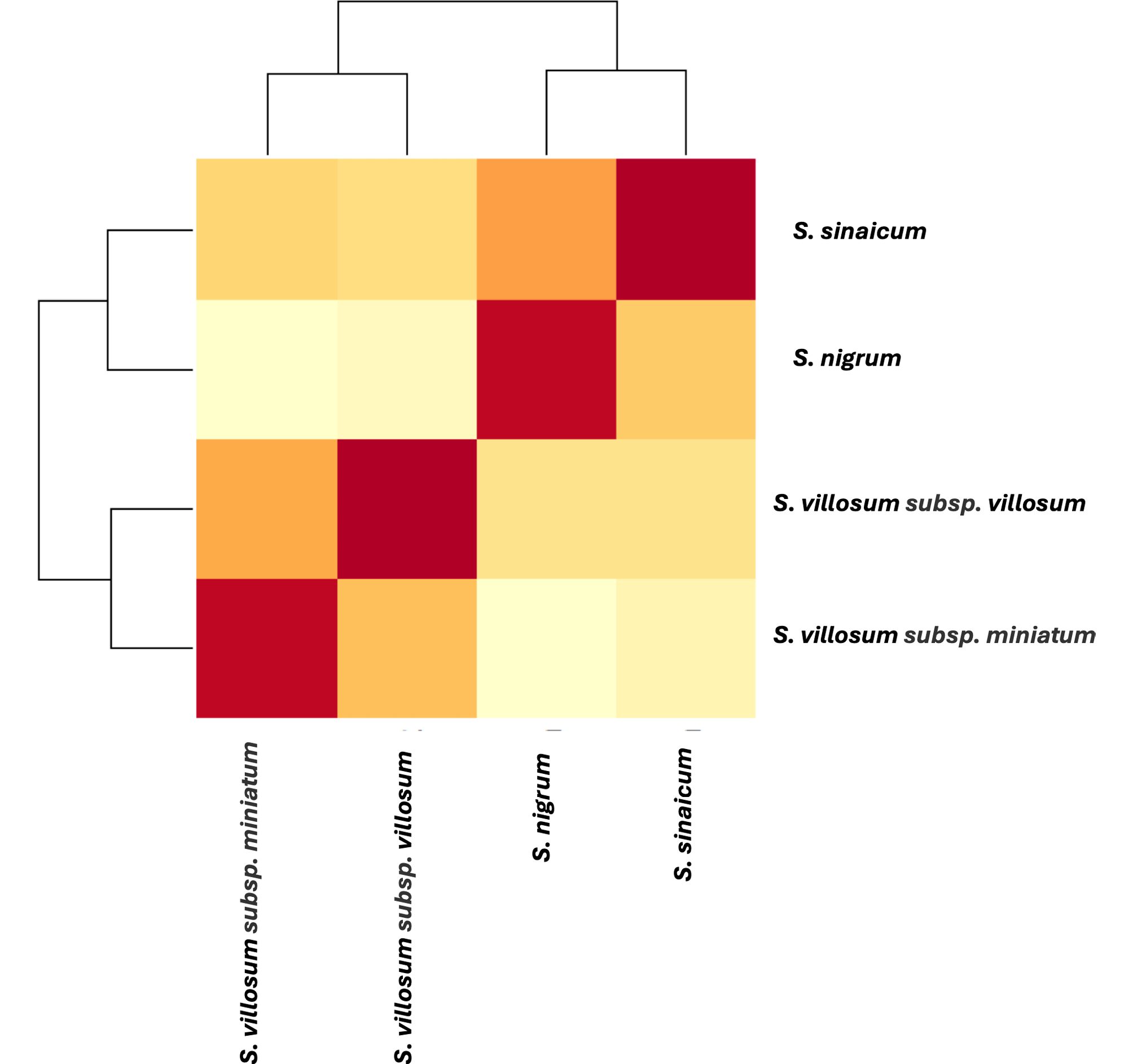
Based on the 44 morphological characters that were investigated, the correlation between S. nigrum, S. sinaicum, S. villosum subsp. miniatum, and S. villosum subsp. villosum was constructed (Figure 5, Table 2). A clustering of the heat map identified two groups. S. villosum subsp. miniatum and S. villosum subsp. villosum together constituted the first group. S. nigrum and S. sinaicum were included in the second group. The heat map revealed that S. nigrum and S. sinaicum had the highest correlation (0.429), S. villosum subsp. miniatum and S. villosum subsp. villosum also have a high correlation of 0.415, followed by S. sinaicum and S. villosum subsp. villosum with correlation of 0.314, and there was a negative correlation (-0.127) between S. villosum subsp. miniatum and S. nigrum.
| S. villosum subsp. miniatum | S. villosum subsp. villosum | S. nigrum | S. sinaicum | |
|---|---|---|---|---|
| S. villosum subsp. miniatum | 1 | |||
| S. villosum subsp. villosum | 0.415 | 1 | ||
| S. nigrum | -0.127 | 0.101 | 1 | |
| S. sinaicum | 0.217 | 0.314 | 0.429 | 1 |
Cytogenetics study
Chromosomes number and Karyotype Formula
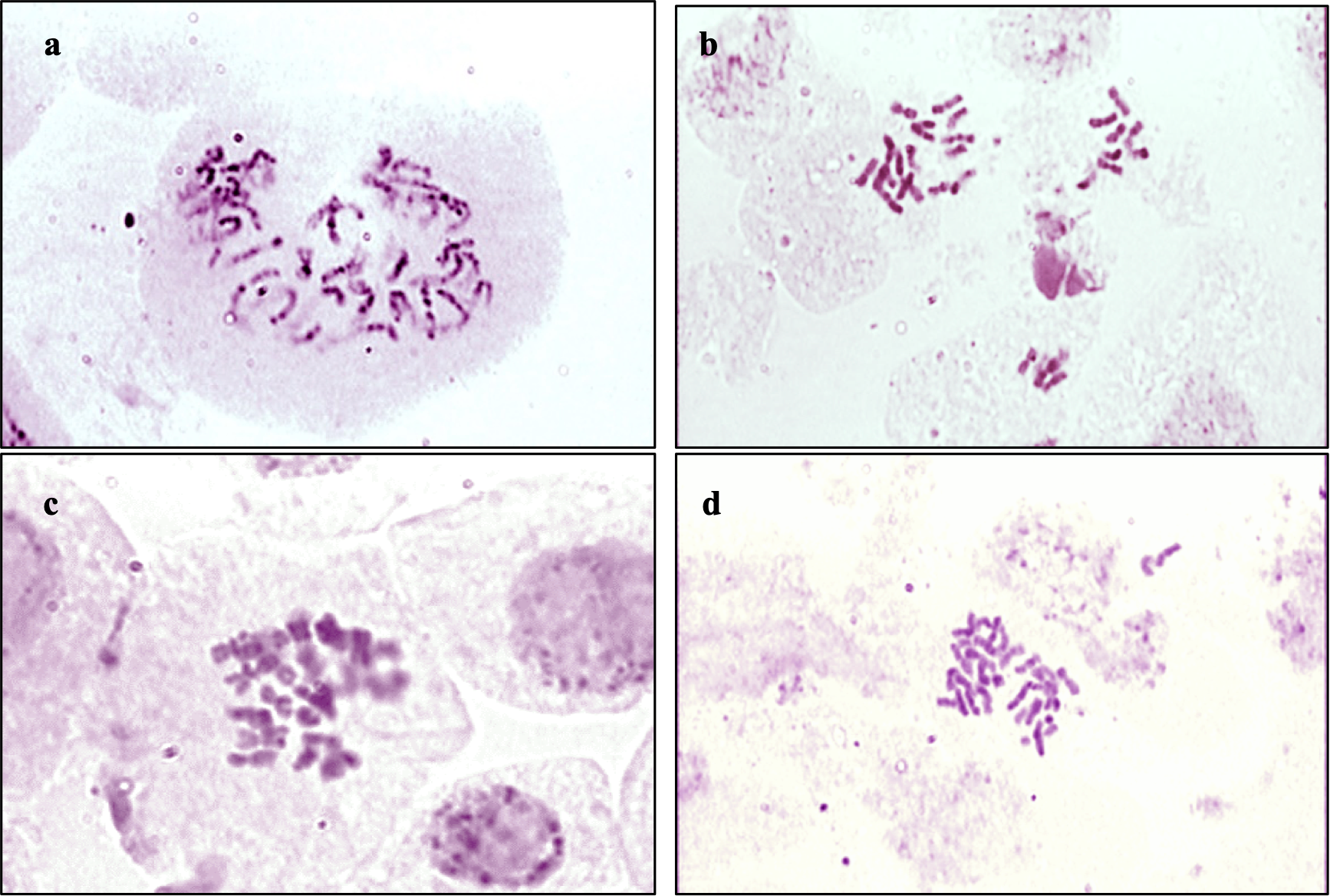
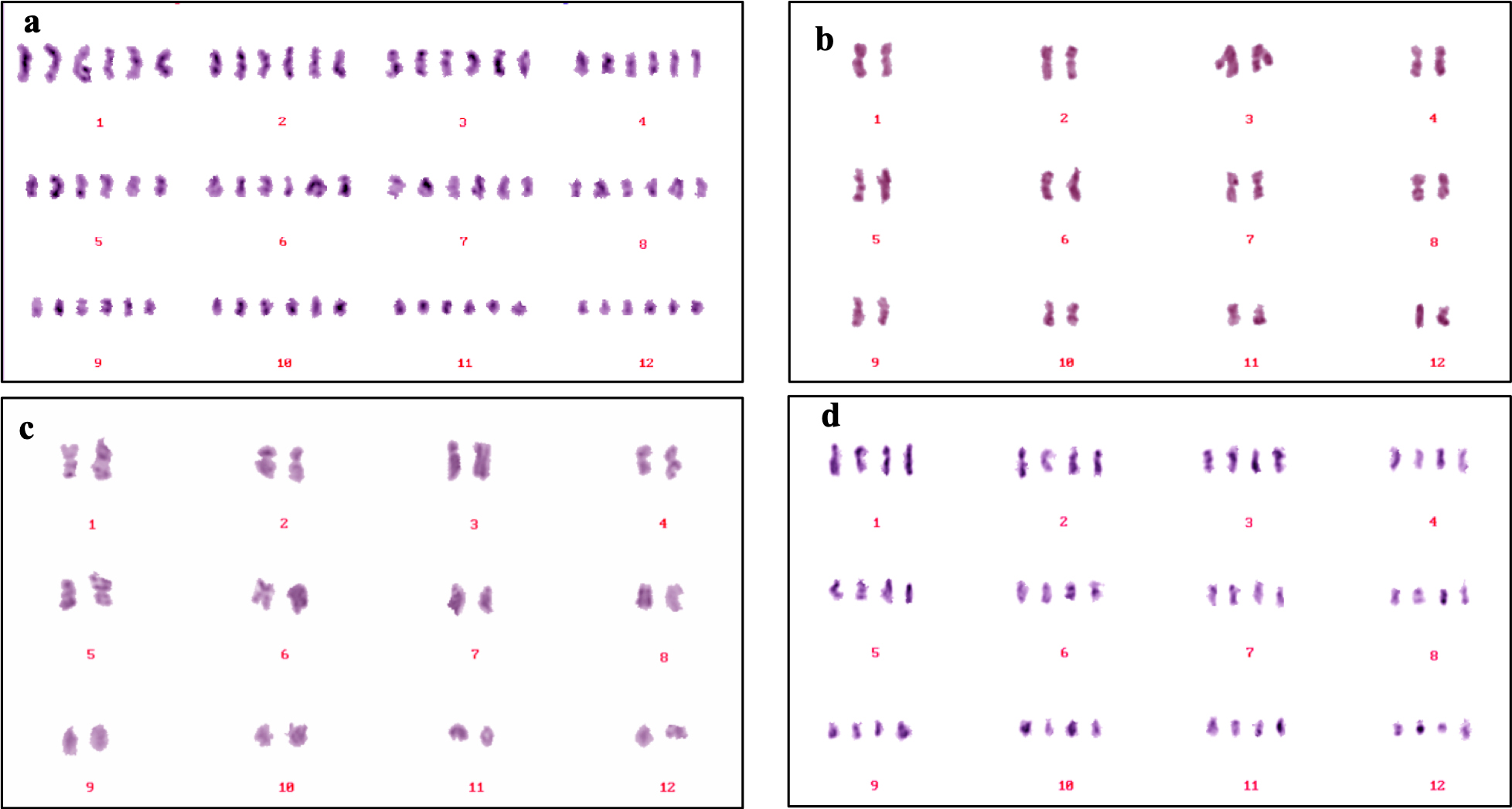
karyotype formula (Deanna et al., 2022), determined the fraction of m chromosomes for each of the three Solanum species (S. nigrum, S. sinaicum and two different subspecies of S. villosum) (Figure 6, Table 3) recorded highly variation. Chromosome counts from 10-20 well-scattered metaphase plates of each population of each species revealed interspecific differences in the diploid chromosome number. S. nigrum showed 2n = 72 chromosomes, while S. sinaicum 2n= 24 chromosomes. The two different subspecies of S. villosum subsp. villosum and S. villosum subsp. miniatum showed 2n=24 and 2n= 48 chromosomes respectively. Accordingly, the x number of genome of the three Solanum species has been determined (Table 3). Both S. nigrum (6x) and S. villosum subsp. miniatum (4x) showed polyploidy, while S. sinaicum and S. villosum subsp. villosum showed diploid number (2x). (Figure 6, 7).
| Species | Chro. No. (2n) | Genome No. (x) | Karyotype Formula | Satellite chromosomes | |||||||||||||||
|---|---|---|---|---|---|---|---|---|---|---|---|---|---|---|---|---|---|---|---|
| 1 | S. nigrum | (2n=72) | 6x | Mm36+Msm12+Mac24 | - | ||||||||||||||
| 2 | S. sinaicum | (2n=24) | 2x | Mm12+Msm4+Mac8 | Chro. No. 5 | ||||||||||||||
| 3 | S. villosum subsp. villosum | (2n=24) | 2x | Mm12+Msm4+Mac8 | Chro. No. 3 | ||||||||||||||
| 4 | S. villosum subsp. miniatum | (2n=48) | 4x | Mm24+Msm8+Mac16 | Chro. No. 3 and 5 | ||||||||||||||
| *M: medium, m: metacentric, sm: submetacentric, ac: acrocentric. | |||||||||||||||||||
Molecular analysis
The PCR amplification products of the four investigated Solanum specimens produced four distinct, high-quality bands during gel electrophoresis. The DNA sequences ITS1-5.8S-ITS2 of 4 Solanum specimens that were the subject of molecular study have been registered on the National Center for Biotechnology Information (NCBI), and the following accession numbers PP701899, PP707086, PP707087, and PP707088 were given to these sequences.
Genetic correlation between the studied Solanum species
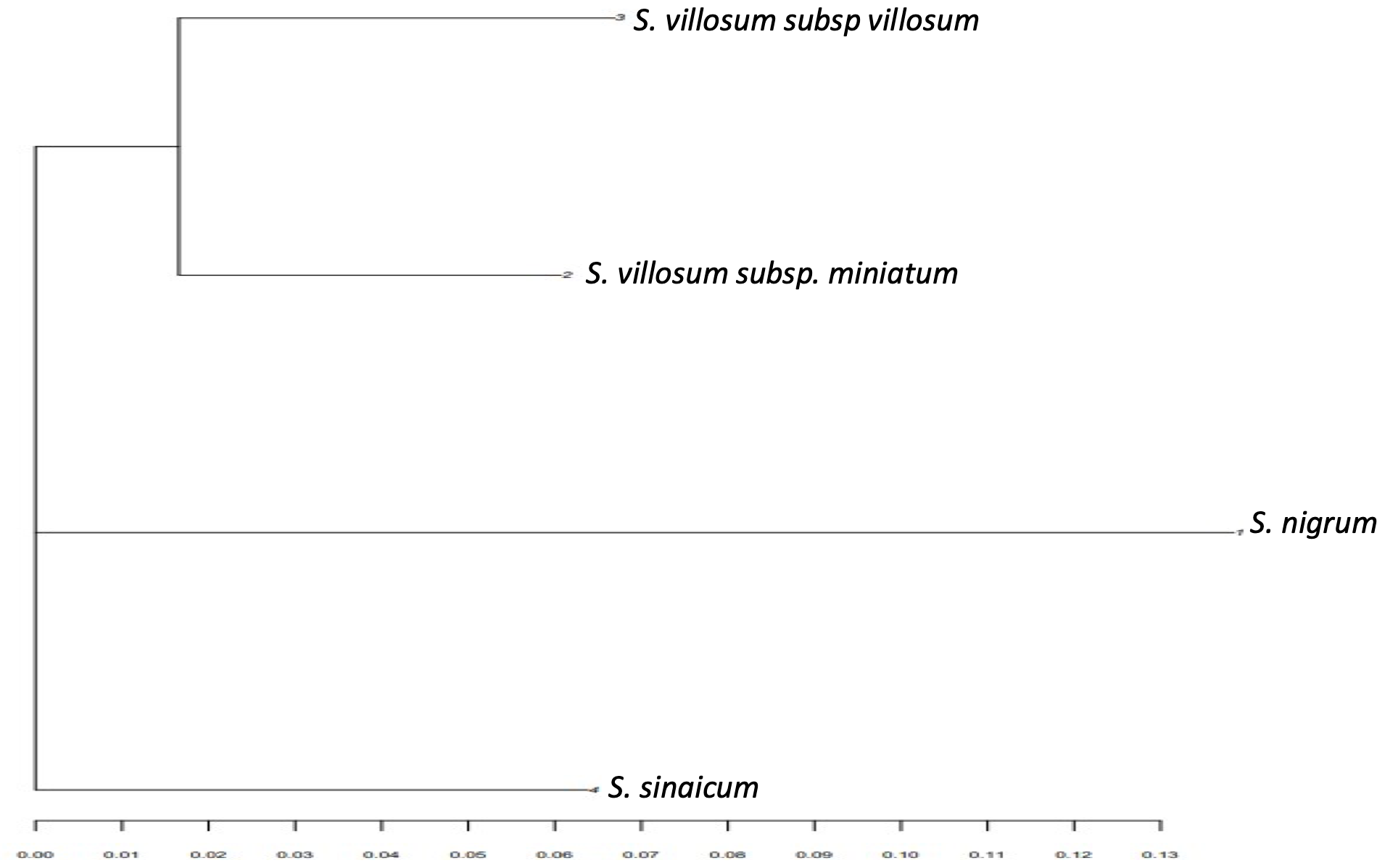
The phylogenetic dendrogram based on the ribosomal DNA ITS1-5.8S-ITS2 sequence of the three studied species from Egypt (Figure 8), showed that these sequences generate three clusters. The first cluster included the two subspecies of S. villosum that showed close affinity with low divergence distance of 0.02. The second cluster included S. nigrum that showed high divergence distance from both S. villosum subspecies especially S. villosum subsp. miniatum and this result is consistent with the morphological correlations across these taxa. The third cluster included S. sinaicum which showed moderate genetic distance from S. nigrum and both S. villosum subspecies.
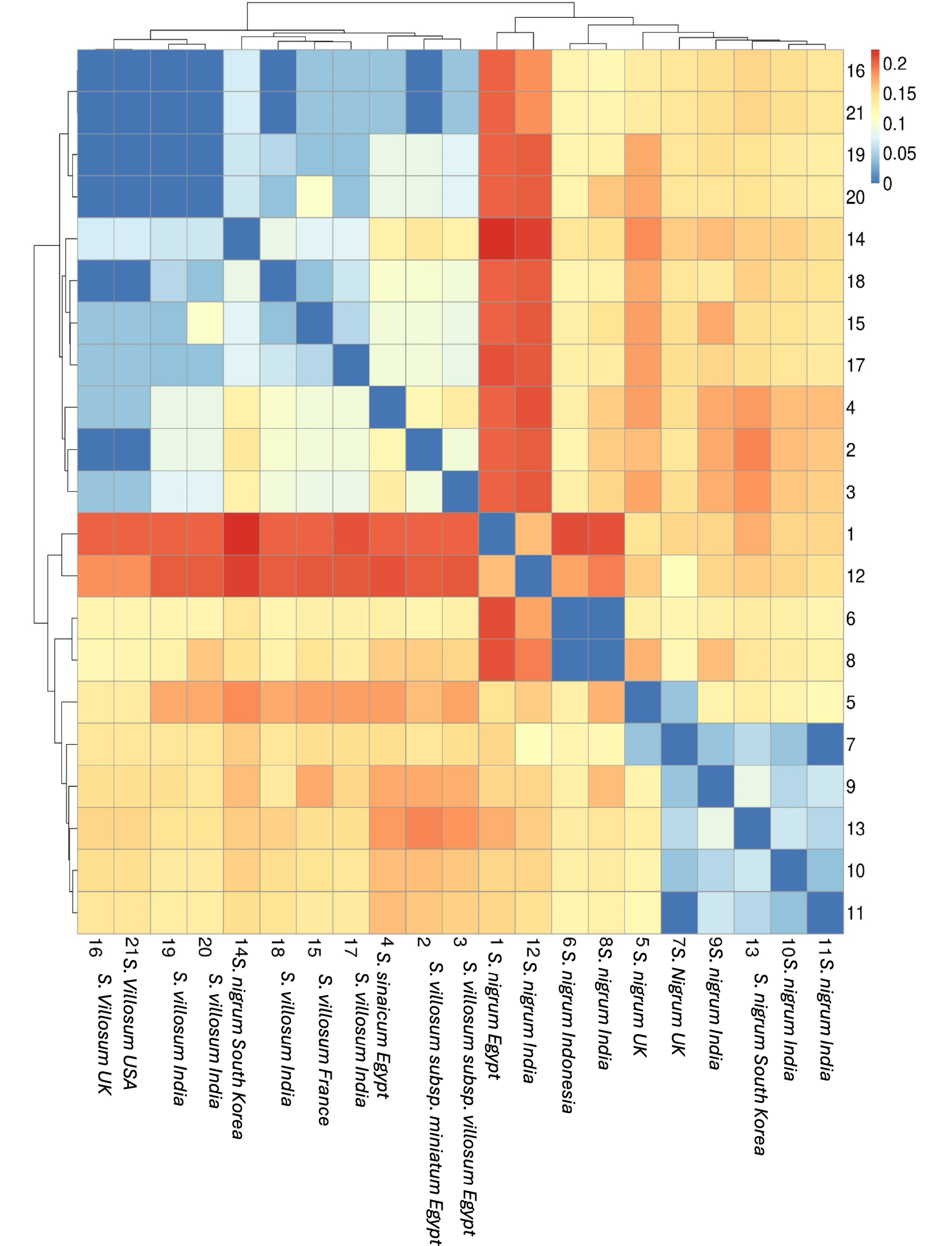
The genetic correlation between S. nigrum and S. villosum worldwide as shown in Figure 9 was indicated based on the constructed heat map using the ribosomal DNA ITS1-5.8S-ITS2 sequence and the genetic distance value between each two pairs, from the first sample to the last sample, is represented by each little square in the IBS distance matrix. The larger values of genetic distance between two specimens are closer to red, and smaller values are closer to blue. The heat map clustering separated two groups. The first group included specimens of S. nigrum, specimens 7 from UK and 11 from India have no genetic divergence, while specimens 9, 10 from India and specimen 13 from UK have very low genetic distance less 0.05, While other specimens of S. nigrum (Specimen 5 from UK, specimen 6 from Indonesia, specimens 6, 8 from India, specimen 1 from Egypt) have genetic distance from 0.05 to 0.2. S. villosum specimens comprised the second group, sp. 2 of S. villosum subsp. miniatum, sp. 3 of S. villosum subsp. villosum, and sp. 4 of S. sinaicum from Egypt comprised one subgroup with very low genetic distance less than 0.05, in addition the remaining specimens of S. villosum (sp. 17, 18, 19, 20 from India, sp. 15 from France, sp. 14 from South Korea, sp. 16 from UK, and sp. 21 from USA) also have low genetic distance less than 0.1.
Discussion
Morphological identification might not be a trustworthy way to identify species in the Solanaceae because their members are cryptic and share phenotypic features that have been altered by genetic and environmental factors (Nderitu et al. 2023). However, Pojarkova (1997) and Yousaf et al. (2010) confirmed that an essential source for the classification of Solanum species was provided by morphological features. According to Knapp et al. 2019, Solanum L. possesses challenges for identification due to the lack of group-specific regional keys. There are 17 identified sections within the Solanum subgenus (Manoko 2007). About 50 global species make up the section Solanum (Child and Lester 2001), the Solanum nigrum complex is another name for the section Solanum. Since Linnaeus first described S. nigrum in 1753, the species in this section have undergone numerous reclassifications up till the present. The ploidy levels of the species, which range from diploid to hexaploid, the genetic variation between populations of the same species, and finally their naturally occurring inter-specific hybridization all contribute to the taxonomic complexity of this section (Edmonds and Chweya 1997).
Morphological studies of freshly collected species, in addition to the herbarium specimens of S. nigrum, S. villosum, and S. sinaicum based on 44 morphological characters (Table 1) showed that flower, fruit, and leaf characters were the most distinctive characters among the studied species. The examined S. villosum populations in Egypt exhibited inter-specific variations in morphology. These morphological differences allowed S. villosum to be divided into two subspecies: subsp. villosum has fruit with orange color, and white corolla with yellow midrib, while subsp. miniatum has fruit with a bright red color and white corolla with black midrib. These results agree with Boulos (2002). The morphological correlation of the three studied species as shown in Figure 5, Table 2 detected that S. nigrum and S. sinaicum had the highest correlation (0.429), followed by S. villosum subsp. miniatum and S. villosum subsp. villosum with a correlation of 0.415.
For each of the three Solanum species, we found the x number of genomes (Table 3). Polyploidy was demonstrated in S. nigrum (6x), This result agrees with Melo et al. (2011), Sultana and Alam (2007), and Särkinen et al. (2018), S. sinaicum and S. villosum subsp. villosum displayed diploid number (2x), however S. villosum subsp. miniatum displayed polyploidy (4x), this agrees with Sultana and Alam 2007 and Särkinen et al. 2018.
It is possible to determine the genetic diversity of individuals or populations by using morphological and molecular markers. Given that environmental factors and the stage of plant development determine morphological traits (El-Domyati et al. 2011). Previous research studies showed that ITS2 provides more accurate results on interspecific variation than intraspecific variation compared to RBCL (Duan et al. 2019). In this investigation, the ribosomal DNA ITS1-5.8S-ITS2 sequences of the studied species were used to examine the interspecific similarities showed the creation of three clusters (Figure 8), the two S. villosum subspecies that exhibited strong affinity and a low divergence distance of 0.02 were included in the first cluster. S. nigrum in the second cluster, had a high divergence distance from both S. villosum subspecies, particularly S. villosum subsp. miniatum. These findings were confirmed with the morphological correlation seen among these taxa Figure (5). S. sinaicum shows a moderate genetic divergence from S. nigrum, and both S. villosum subspecies were separated in the third cluster.
The heat map clustering based on the ribosomal DNA ITS1-5.8S-ITS2 sequence from worldwide specimens separated two groups (Figure 9). The first group included specimens of S. nigrum from Egypt and worldwide, the second group included specimens of S. sinaicum, S. villosum subsp. miniatum, and S. villosum subsp. villosum from Egypt in addition to worldwide specimens of S. villosum.
Acknowledgements
We are grateful to all members of Taxonomy and Flora section in Cairo University Herbarium (CAI) for their assistance and providing all possible facilities.
References
Abdo AS, Ibrahim SD, Abd El Gawad ME. 2023. Biodiversity study of Zilla spinosa (L.) in Egypt. Egypt. J. Genet. Cytol. 52: 131-157.
Afroz M, Akter S, Ahmed A, Rouf R, Shilpi JA, Tiralongo E et al. 2020. Ethnobotany and Antimicrobial Peptides from Plants of the Solanaceae Family: An Update and Future Prospects. Front Pharmacol. 11. https://doi.org/10.3389/fphar.2020.00565
Bohs L. 2005. Major clades in Solanum based on ndhF sequences. In: Keating RC, Hollowell VC, Croat TB (eds) A Festschrift for William G. D’Arcy. the legacy of a taxonomist. Monographs in systematic botany from the Missouri Botanical Garden, vol 104. Missouri Botanical Garden, St. Louis. pp. 27-49.
Boulos L. 2002. Flora of Egypt. Verbenaceae - Compositae. Al-Hadara Publishing, Cairo. pp. 34-54.
Chiarini F, Bernardello G. 2006. Karyotype studies in South American species of Solanum subgen. Leptostemonum (Solanaceae). Plant Biol 8: 486-493. https://doi.org/10.1055/s-2006-923859
Child A, Lester RN. 2001. Synopsis of the genus Solanum L. and its infrageneric taxa. In: R. G. v. d. Berg, G. W. M. Barendse, G. M. v. d. Weerden, and C. Mariani (eds.), Solanaceae V: Advances in Taxonomy and Utilization. Nijmegen University Press. pp. 39-52.
Coulibaly S, Pasquet RS, Papa R, Gepts P. 2002. AFLP analysis of the phenetic organisation and genetic diversity of Vigna unguiculata (L.) Walp. reveals extensive gene flow between wild and domesticated types. Theor. Appl. Genet. 104: 358-366. https://doi.org/10.1007/s001220100740
Darlington CD, Wylie AP. 1955. Chromosome atlas of flowering plants. Allen & Unwin, London. pp. 325-326
Deanna R, Acosta, MC, Scaldaferro M, Chiarini F. 2022. Chromosome Evolution in the Family Solanaceae. Front. Plant Sci. 12: 787590. https://doi.org/10.3389/fpls.2021.787590
Despres L, Gielly L, Redoutet W, Taberlet P. 2003. Using AFLP to resolve phylogenetic relationships in a morphologically diversified plant species complex when nuclear and chloroplast sequences fail to reveal variability. Mol Phylogenet Evol. 27: 185-196. https://doi.org/10.1016/j.ympev.2003.09.006
Dehmer KJ, Hammer K. 2004. Taxonomic status and geographic provenance of germplasm accessions in Solanum nigrum L. complex: AFLP data. Gen. Res. Crop Evol. 51: 551-558.
Duan H, Wang W, Zeng Y, Guo M, Zhou Y. 2019. The screening and identification of DNA barcode sequences for Rehmannia. Sci Rep. 9(1): 1-12. https://doi.org/10.1038/s41598-019-53752-8
Edmonds JM. 1984. Botanical journal of the Linnean society. 89: 166.
Edmonds JM, Chweya JA. 1997. Black nightshades Solanum nigrum L. and related species. Institute of Plant Genetics and Crop Plant Research, Gatersleben / International Plant Genetic Resources Institute, Rome, Italy. pp. 5-113.
El-Domyati FM, Younis RAA, Edris S, Mansour A, Sabir J, Bahieldin A. 2011. Molecular markers associated with genetic diversity of some medicinal plants in Sinai. J Med Plants Res. 5(10): 1918-1929.
Elsayed SSA, Elshahawy IE, Hamden S, Abd Elgawad MEH, Sehsah MD. 2024. Genotoxicity by ear and kernel rots in three maize genotypes stored at different conditions. Egypt. J. Agric. Res. 102(1): 139-154. https://doi.org/10.21608/ejar.2024.250031.1467
El-Shaboury GA, Al-Wadi HM, Badr A. 2020. Biodiversity of some Solanum species from southwestern Saudi Arabia’s highlands. Botany Letters. https://doi.org/10.1080/23818107.2020.1846614
Henderson RJ. 1973. Solanum and its close relatives in Florida. Ann Missouri Bot Gard 61: 819-867.
Ibrahim MA, Bekhit M, Hassan N, Refaat M, El-Akkad T. 2019, C-Banding Karyotype and Molecular Characterization on Cumin, Caraway and Coriander. Mol. Biol. 8: 229. https://doi.org/10.2139/ssrn.3388044
Jacoby A, Labuschagne MT, Viljoen CD. 2003. Genetic relationships between Southern African Solanum retroflexum Dun. and other related species measured by morphological and DNA markers. Euphytica 132: 109-113.
Jainu M, Devi CS. 2005. Antiulcerogenic and ulcer healing effects of Solanum nigrum L. on experimental ulcer models: possible mechanism for the inhibition of acid formation. J Ethnopharmacol. 104: 156-163. https://doi.org/10. 1016/j.jep.2005.08.064
Jennifer ME, James AC. 1997. Black nightshades, Solanum nigrum L. and related species. Italy (Rome). IPGIR. pp. 5-113.
Jones CJ, Edwards KJ, Castaglione S, Winfield MO, Sala F, Wiel C, van de Bredemeijer G, Vosman B, Matthes M, Daly A, Brettschneider R, Bettini P, Buiatti M, Maestri E, Malcevschi A, Marmiroli N, Aert E, Volckaert G, Rueda J, Linacero R, Vazquez A, Karp A. 1997. Reproducibility testing of RAPD, AFLP and SSR markers in plants by a network of European laboratories. Mol Breed. 3: 381-390.
Kardolus JP, van Eck HJ, van den Berg RG. 1998. The potential of AFLPs in biosystematics: a first application in Solanum taxonomy (Solanaceae). Pl. Syst. Evol. 210: 87-103.
Khafagi AAF, El- Ghamery AA, Ghaly ON, Ragab OG. 2018. Fruit and seed morphology of some species of Solanaceae. Taeckholmia. 38: 123-140. https://doi.org/10.21608/taec.2018.13520
Knapp S, Vorontsova MS, Särkinen T. 2019. Dichotomous keys to the species of Solanum L. (Solanaceae) in continental Africa, Madagascar (incl. the Indian Ocean islands), Macaronesia and the Cape Verde Islands. PhytoKeys 127: 39-76. https://doi.org/10.3897/phytokeys.127.34326
Koopman WJM. 2005. Phylogenetic signal in AFLP Data Sets. Syst Biol. 54: 197-217. https://doi.org/10.1080/10635150590924181
Linnaeus C. 1753. Species Plantarum. Stockholm.
Mace ES, Lester RN, Gebhardt CG. 1999a. AFLP analysis of genetic relationships among the cultivated eggplant, Solanum melongena L., and wild relatives (Solanaceae). Theor. Appl. Genet. 99: 626-633.
Mace ES, Lester RN, Gebhardt CG. 1999b. AFLP analysis of genetic relationships in tribe Daturae (Solanaceae). Theor. Appl. Genet. 99: 634-633.
Manoko MLK. 2007. A systematic study of African Solanum section Solanum (Solanaceae). PhD thesis, Radboud University Nijmegen. http://dare.ubn.kun.nl/bitstream/2066/30032/1/30032.pdf
Meudt HM, Clarke AC. 2007. Almost Forgotten or latest Practice? AFLP applications, analyses and advances. Trends Plant Sci. 12: 106-117. https://doi.org/10.1016/j.tplants.2007.02.001
Miller P. 1768. The Gardeners Dictionary, 8th edn, no. 2. John & Francis Rivington. London.
Nderitu KW, Ager E, Mecha E, Nyachieo A. 2023. DNA Barcoding using ITS2 and RBCL markers for Solanaceae species identification. East Afr Med J. 100(1): 5567-5574.
Olet EA. 2004. Taxonomy of Solanum L. section Solanum in Uganda. Ph.D. thesis, Agricultural University of Norway.
Pinto-Magiio CAF, Pierozzi NL, Castro SCP, Soares-Scott MD. 1997. IOPB chromosome data 11. Newslett Int Organ PI Biosyst 26: 23-24.
Poczai P, Taller J, Szabó I. 2008. Analysis of phylogenetic relationship in the genus Solanum (Solanaceae) as revealed by RAPD markers. PI Svst Evol 275: 59-67. https://doi.org/10.1007/s00606-008-0051-x
Särkinen T, Poczai P, Barboza GE, Weerden GM, Baden M, Knapp S. 2018. A revision of the Old World black nightshades (Morelloid clade of Solanum L., Solanaceae). PhytoKeys 106: 1-223.
Täckholm V. 1974. Student’s Flora of Egypt, 2nd edn. Cairo University Press, Egypt. pp. 473-474.
Tiessen A, Cubedo-Ruiz EA, Winkler R. 2017. Improved Representation of Biological Information by Using Correlation as Distance Function for Heatmap Cluster Analysis. Am J Plant Sci 8: 502-516. https://doi.org/10.4236/ajps.2017.83035
White TJ, Bruns T, Lee S, Taylor J. 1990. Amplification and direct sequencing of fungal ribosomal RNA genes for phylogenetics. In: PCR Protocols: a guide to methods and applications. (Innis MA, Gelfand DH, Sninsky JJ, White TJ, eds). Academic Press, New York, USA. pp. 315-322.
Williams JG, Kubelik AR, Livak KJ, Rafalski JA, Tingey SV. 1990. DNA polymorphisms amplified by arbitrary primers are useful as genetic markers. Nucleic Acid Res. 18: 6531-6535.
Zohary M. 1966. Flora Palaestina. The Israel Academy of Sciences and Humanities. pp. 402.