

Illusive mural polyptychs: typology, distribution, and mapping between the 14th and 15th centuries in Tuscany, Umbria, and Northern Italy
 Omar Nappini
Published 2026-03-20
Keywords
- Illusive mural polyptychs,
- Late Medieval trompe-l’œil,
- Central and Northern Italy,
- Altarpiece typologies,
- 14th- and 15th-century mural painting

This work is licensed under a Creative Commons Attribution 4.0 International License.
Abstract
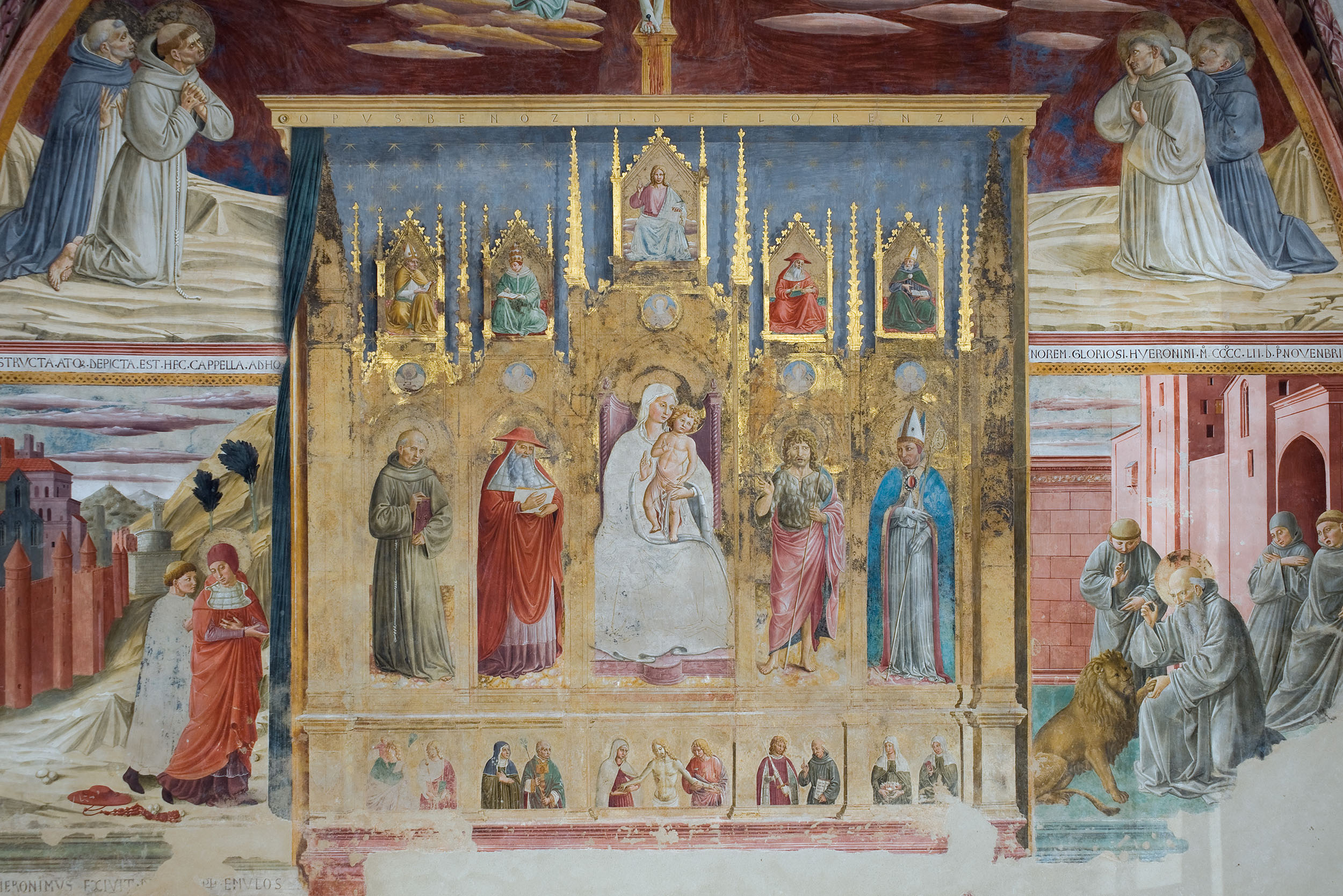
Illusive mural polyptychs represent a distinctive pictorial typology that emerged in Italy between the 14th and 15th centuries, devised to recreate on the wall – through illusionistic means – the carpentry and iconographic apparatus of contemporary wooden altarpieces, particularly the multi-panel Gothic examples. Although this practice was relatively widespread and functionally effective, capable of reconciling economic constraints with devotional aims and liturgical requirements, it has thus far been treated only marginally in the historiography as an autonomous category. This article aims to address this gap by offering the first comprehensive typological definition and a detailed mapping of this production in Tuscany, Umbria, and Northern Italy. The analysis confirms its flourishing during the 14th century, with a principal concentration in Umbria and Tuscany, and its subsequent expansion into the northern regions. Finally, the study highlights the artistic, social, and liturgical dynamics that fostered the success and dissemination of the mural polyptych.