
About

TRIBELON Journal of Drawing and Representation of Architecture, Landscape and Environment is the official journal of Architectural Studies, Identity, Memory, and Digitisation of Cultural Heritage within the Drawing area at the University of Florence. It provides a critical space for debate on the diverse lines of research that characterise the national and international panorama of the science of representation. The journal aims to bring together an engagement with contemporary issues, a dialogue with tradition, and an exploration of possible futures.
The journal promotes a close engagement with theoretical perspectives in the sciences of drawing, architectural survey, and representation, while maintaining and further developing the specificity of an applied approach to drawing and digital databases in the field of visual communication.


Editor-in-chief
Sandro Parrinello, University of Florence, Italy
DIDA - Department of Architecture, Via della Mattonia 8, 50122 Florence
sandro.parrinello@unifi.it - tribelon@dida.unifi.it
ISSN 3035-143X (print) - ISSN 3035-1421 (online)
Call for Papers - Vol. 3, No. 6 (2026)
Beyond the Model
The model serves as a foundational concept of representation, serving as a device through which reality is observed, interpreted, simplified and made transmissible. The need to reduce the complexity of the world within an intelligible structure, capable of selecting information, establishing relationships and enabling the communication of knowledge, gives rise to the model, which does not coincide with reality, but with an interpretation guided by a purpose, a culture and a specific system of knowledge.
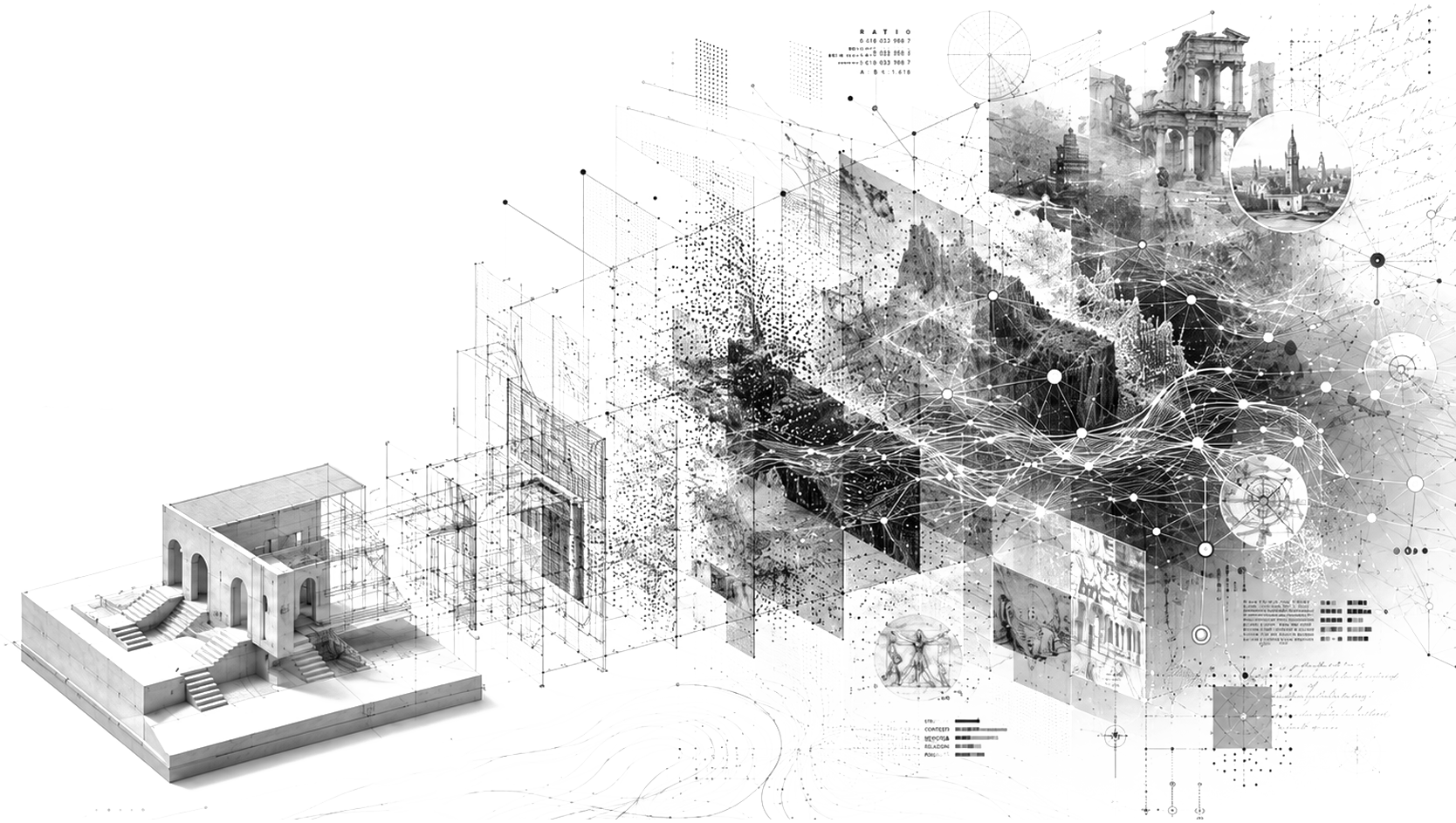
Every model possesses greater value the more it is able to generate new interpretations and can therefore be understood as an open platform, capable of being continuously enriched, verified and transformed through the integration of further data, points of view and levels of reading. In digital culture, the idea of a dynamic information model, able to evolve over time and to accommodate heterogeneous information from different disciplines, becomes the place where geometry, memory, data, relationships, interpretations and the ability to organise knowledge and make it searchable, updatable and shareable converge: a cognitive, digital environment in which knowledge continues to transform.
To go beyond the model, to see beyond it, means to consider the model itself as an organism capable of engaging with multiple forms of representation in a continuous redefinition of its attributes. Every model already contains the possibility of its own overcoming, because it incorporates the tools necessary to be expanded, corrected and reinterpreted. Its true scientific strength lies in this capacity to become other than itself. Representation is called upon to design models and knowledge infrastructures capable of preserving the past, interpreting the present and preparing the conditions for future acquisitions. Their value depends on uncertainty, multiplicity and change, transforming them from finished objects into open processes for the construction of knowledge.
This call for papers invites interdisciplinary contributions that explore the meaning of the model and its interoperable aspects through theoretical, empirical and practice-based research, proposing new perspectives or in-depth insights in concrete or abstract, historical, contemporary and future contexts.
Papers, in the form of essays/articles and following the editorial standards, should be submitted to the journal’s editorial office by the following dates:
Abstract: September 1st, 2026
Full paper: October 1st, 2026
Publication: December 2026
Download the journal’s editorial guidelines here:
(Norme editoriali ITA) (Editorial Standards ENG)
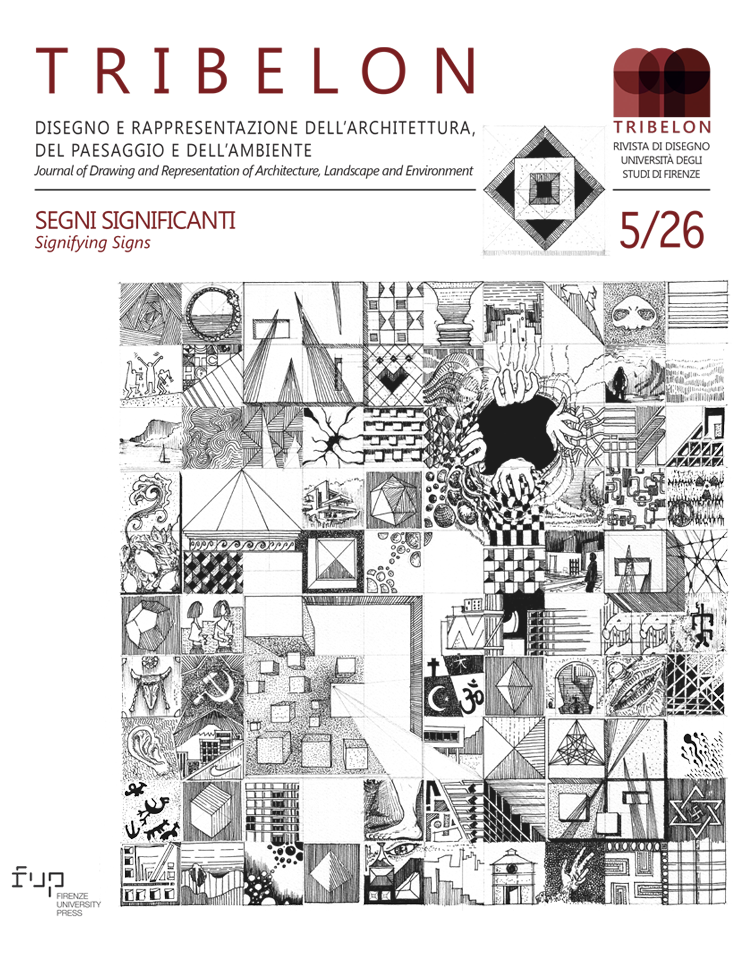
Current IssueVol 3, No 5 (2026): Signifying Signs
Published July 2, 2026
Issue Description
This journal issue proposes a reflection on drawing as expression, language, and a critical device for constructing meaning. Each line, mark, or graphic variation is understood not as a neutral trace, but as the result of a tension between intention, gesture, and significance. From this perspective, the sign transcends its material condition to become a semantic element, capable of activating imagination, organising thought, and generating new readings of represented reality. In an age dominated by digital drawing, where software produces perfect, repeatable, and modifiable signs, the volume questions the value of intentionality and the interpretative capacity of drawing. What emerges is a conception of drawing as a critical space of design: a place of synthesis, doubt, and resistan... More